Karmactive Team
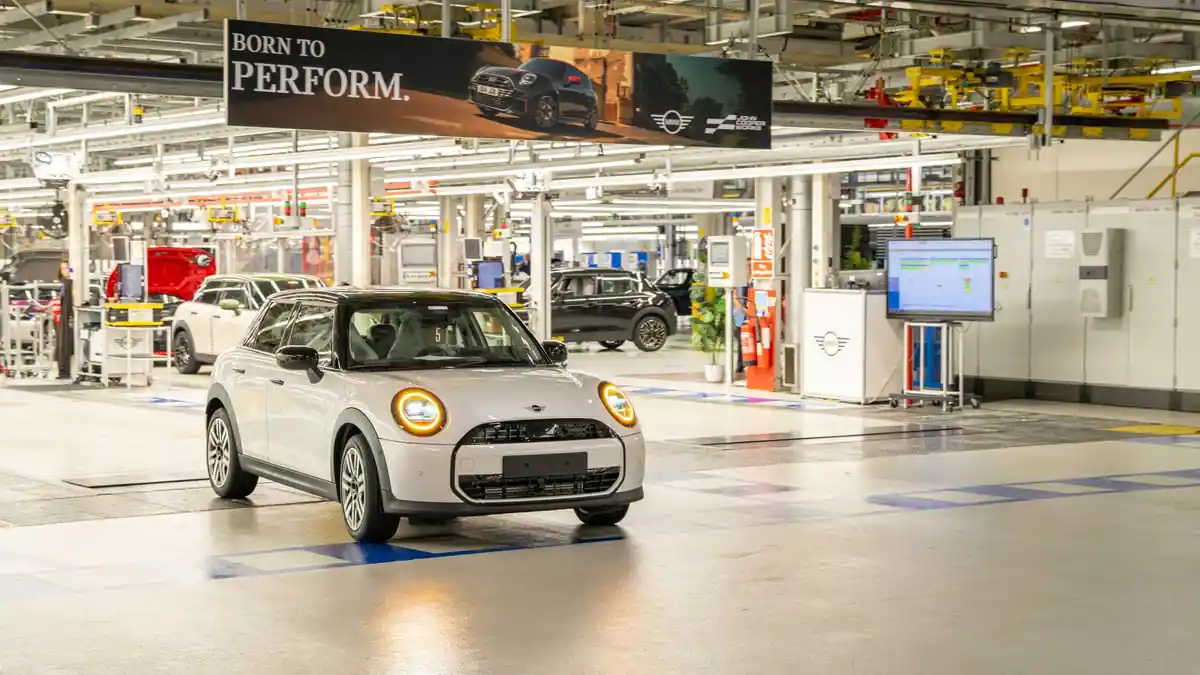
BMW says one million vehicles have now been moved and guided through its plants without drivers. Most of the sensing sits in the factory rather than in each car. For car buyers and factory workers, the question is how the system works and where it goes next.
BMW’s Automated Driving In-Plant system, known as AFW, was developed in close collaboration with the Swiss company Embotech, BMW said on 27 October 2026 (BMW Group PressClub). It is in use at four plants: Dingolfing, Leipzig and Regensburg in Germany, and MINI Plant Oxford in England. Testing began at Dingolfing in 2022. BMW says around 3,500 automated vehicle movements take place every day across its network, and more than 53,000 took place at MINI Plant Oxford in the past year. Rollout continues at Plant Spartanburg in South Carolina, which BMW says will become its fifth site, in series operation from 2027.
For car makers, the practical point is that the system does not depend on a car’s options. BMW says it moves vehicles regardless of their individual equipment specification, so a car’s extras do not decide whether it can be moved around the plant. Spartanburg, BMW’s US plant, is the next site, from 2027.
Sensors installed along the factory route form what BMW described in 2024 as the largest lidar infrastructure in Europe. Vehicles drive along a route of more than one kilometre from the assembly halls to the finishing area at Dingolfing, BMW said in November 2024. The sensors feed an external environment model and an external movement planner. BMW says a cloud-based solution enables the interaction between vehicles and plant equipment. On 28 January 2025, Hesai, Outsight and Embotech announced a partnership, with Hesai supplying lidar sensors and Outsight supplying software that tracks vehicles and obstacles in real time. BMW also says AFW is CE-certified for safe use in the production environment. Our earlier coverage of BMW’s Neue Klasse manufacturing explains how automakers are changing their production lines.
Self-driving cars on public roads rely mainly on sensors fitted to each vehicle. BMW’s approach puts the main sensing in the plant instead. BMW also says on-board technology will support those external sensors in the long term, so the split is not total. Its engineering partnership push also extends to powertrains: see our coverage of BMW’s dual-rotor electric motor.
How does BMW drive cars without drivers inside its factories?
BMW uses an in-plant system called AFW, developed with Embotech. The sensors needed for automated driving are installed in the plant infrastructure, and a cloud-based solution handles the interaction between vehicles and plant equipment. The system is in use at Dingolfing, Leipzig, Regensburg and MINI Plant Oxford.
BMW says one million vehicles have now been moved and guided at its plants, with around 3,500 movements a day. The next step is Spartanburg, from 2027.