Sunita Somvanshi
ScotRail New Train Fleet Shortlist: Five Builders Compete as Unions Threaten CAF Boycott
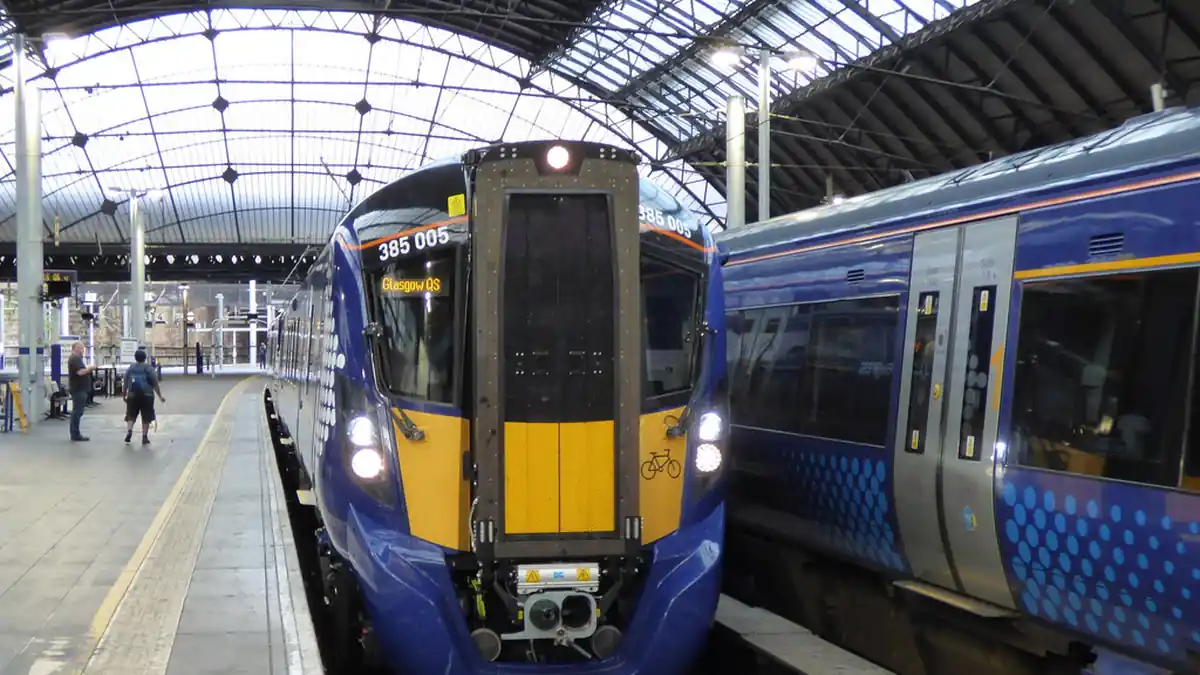
ScotRail has shortlisted five train manufacturers — including Spanish builder CAF — for a contract covering at least 69 new suburban electric trains. Scottish rail union Aslef has threatened to boycott any trains built by CAF over the company’s work on Jerusalem’s light rail network, putting the Scottish Government in a difficult position: procurement law makes removing a shortlisted bidder legally risky, and the contract is central to Scotland’s rail decarbonization plan.
The procurement is documented in Public Contracts Scotland notice FEB550557 (reference SR-PACT-PROJ-466), filed by ScotRail Trains Limited. The contract covers a minimum of 69 electric and battery-electric multiple units for ScotRail’s suburban network, with options for a further 37 units, totaling up to 106 trains. The five shortlisted manufacturers are Alstom, CAF, Hitachi Rail, Siemens Mobility, and Stadler Rail. Entry into service is targeted for the early 2030s. The contract is structured as a 30-year rolling stock lease, with a private financier owning the trains and leasing them to ScotRail.
Scottish commuters expecting greener suburban trains by the early 2030s face the prospect of industrial disruption if the contract award clashes with Aslef’s boycott pledge. Transport Scotland and ScotRail Trains Limited are seeking to replace diesel trains on routes including the Borders, Fife, and East Kilbride lines — fleet replacement that anchors Scotland’s 2045 rail decarbonisation target. Procurement regulations restrict ministers from excluding shortlisted manufacturers without risking legal challenge, which could push back the entire fleet delivery.
The Legal Constraints Behind the Politics
Public Contracts Scotland filing FEB550557 establishes a legally bifurcated structure. There are two separate contracts: a Manufacturing Supply Agreement with the chosen builder, and a separate 30-year commercial lease with a private financier who will own the trains. Disqualifying CAF at the Invitation to Negotiate stage would expose Transport Scotland to challenge under the Utilities Contracts (Scotland) Regulations 2016. That legal risk significantly constrains any political intervention.
Coverage of the story has focused on the Aslef objection while largely overlooking this structure. ScotRail is publicly owned, but the trains will be privately owned by a leasing company for three decades — a standard UK rail financing model that reduces the Scottish Government’s direct leverage over manufacturer selection.
The new fleet is specified to include battery-electric units for sections where overhead wire installation would be disproportionately costly, covering routes not currently on Scotland’s electrification plan.
Who is shortlisted to build ScotRail’s new suburban trains?
ScotRail shortlisted five manufacturers: Alstom, CAF, Hitachi Rail, Siemens Mobility, and Stadler Rail. The contract covers at least 69 electric and battery-electric trains entering service in the early 2030s, with options for up to 106 units total under a 30-year lease model.
The Invitation to Negotiate phase will proceed with all five shortlisted manufacturers. A contract award decision is expected ahead of the early 2030s entry-into-service target. Any update on the Aslef boycott position or ministerial intervention will be published as the ITN process advances.