Rahul Somvanshi
What Does “Menticide” Mean? The 1956 Thought-Control Term Explained
The word menticide has been circulating online recently, sometimes described as a companion to terms like genocide or femicide. But it is not a new coinage — it dates to 1956, when a Dutch-born psychiatrist named Joost A. M. Meerloo used it to describe a systematic assault on a person’s capacity to think freely.
Understanding where the term comes from, and what it actually means, is the clearest way to evaluate how it is being used today.
Who Was Joost Meerloo?
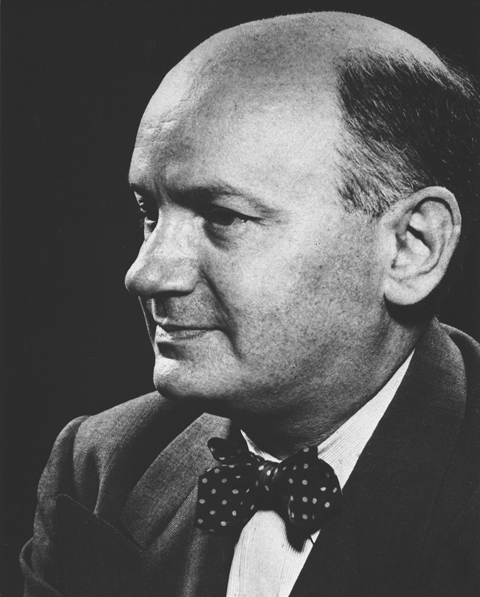
Joost Abraham Maurits Meerloo was born on 14 March 1903 in The Hague, Netherlands. He earned his medical degree and spent decades practicing psychiatry, eventually serving as an instructor in psychiatry at Columbia University and as a lecturer in social psychology at the New School for Social Research in New York.
His biography gave him unusual proximity to the subject he would later write about. During the Nazi occupation of the Netherlands, Meerloo worked under extreme risk: he changed his given name from Abraham to Joost to conceal his Jewish identity from occupying forces. In 1942 he fled to Belgium and then to England, barely escaping capture. He served as a colonel and chief of the Psychological Department of the Dutch Army-in-Exile, and after the war he advised international welfare bodies supporting the populations of occupied Europe.
He was, in other words, not a distant academic theorising about coercion. He had survived it.
The Book: The Rape of the Mind
In 1956 Meerloo published The Rape of the Mind: The Psychology of Thought Control, Menticide, and Brainwashing. The title was deliberately stark. Meerloo argued that the deliberate manipulation of a person’s beliefs, through sustained pressure rather than physical force alone, was a form of violence against the mind.
Menticide — literally the killing of the mind — was the word he coined for this process. He defined it as the systematic destruction of an individual’s independent thought, achieved through methods that undermined their ability to reason clearly and resist influence.
Meerloo identified a set of conditions that, in his analysis, made a person’s mind more susceptible to this kind of coercion: prolonged isolation, sustained confusion, and relentless bombardment of information or stimulation. Under these conditions, he argued, even people with strong critical faculties could be led to accept ideas they would otherwise reject.
The book was written in the context of Cold War anxieties about Soviet-era show trials and prisoner confessions — cases in which Western observers had watched apparently rational people denounce themselves publicly. Meerloo wanted to explain, clinically and historically, how such outcomes were achieved.
A Historical Term, Not a Clinical Diagnosis
It is important to note that menticide is not a recognised diagnosis in contemporary psychiatric or psychological classification systems such as the DSM-5 or ICD-11. It remains a term associated with Meerloo’s specific historical analysis. Using it to describe any present-day situation is an act of analogy, not clinical assessment.
That distinction matters. Meerloo’s framework is a tool for historical and critical analysis — a way of understanding how authoritarian systems have systematically worked to undermine independent thought. It is not a finding that can be applied to a media environment or a political moment without careful evidence and argument.
What Can We Do?
The impulse behind reaching for a term like menticide — the feeling that the sheer volume and pace of information is hard to process clearly — is widely shared. Researchers and educators have developed practical responses to this challenge under the name media and information literacy.
UNESCO’s Media and Information Literacy programme describes the goal as cultivating “informed, critical, and engaged citizens.” The practical skills involved include checking the source of a claim before sharing it, distinguishing between opinion and verified fact, and pausing before reacting to content designed to provoke an emotional response.
These are not remedies for a clinical condition. They are habits of mind that Meerloo — drawing on his experience of what systematic thought control actually looked like — might have recognised as the most ordinary and durable form of resistance available to ordinary people.
Rahul Somvanshi is an environmental journalist and co-founder of Karmactive.