Rahul Somvanshi
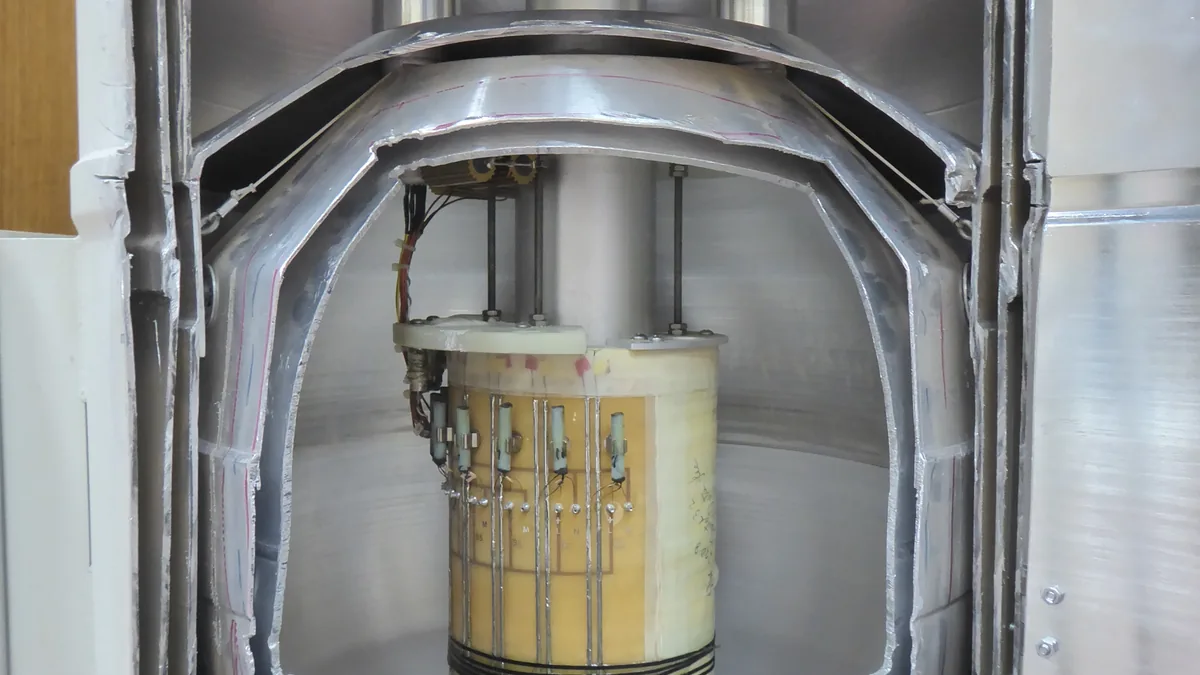
A team at Northwestern University has held a single positron—one particle of antimatter—in a controlled trap for several months. This is not a step toward antimatter power or bulk storage. What it provides is something experimental physics has needed: a stable, controllable antimatter particle that can be measured repeatedly and compared directly to its matter counterpart.
Gerald Gabrielse’s team at Northwestern University used electric and magnetic fields in an ultra-cold vacuum to trap and control a single positron for months, according to Northwestern’s research communications. A positron is the antimatter equivalent of an electron—the same mass, opposite charge. The positron trapped for months by the Northwestern team is a single particle, not a quantity of antimatter with any bulk properties. Holding one stable long enough to measure with precision has been a persistent practical barrier in experimental particle physics.
The months-long confinement matters because it allows the same particle to be measured repeatedly under controlled conditions. Physicists can compare the positron’s properties—mass, charge, magnetic moment—with a similarly trapped electron. If any measurable difference appears beyond what the Standard Model of particle physics predicts, it would point to a violation of CPT symmetry, a fundamental symmetry relating matter and antimatter. No such violation has been found. Precision tests require exactly this kind of controlled, repeatable measurement—brief confinement introduces too much uncertainty to resolve the tiny differences being tested for.
What the Electron–Positron Comparison Tests
The universe contains far more matter than antimatter. This is one of the open problems in physics. The laws of particle physics as currently understood predict that matter and antimatter were produced equally at the Big Bang and should have cancelled each other out entirely. Something caused an imbalance that allowed matter to survive. Finding what that was requires knowing whether particles and their antimatter counterparts behave identically under the same conditions.
CPT symmetry predicts that a particle and its antimatter twin should have identical mass and lifetime, and opposite but equal charge and magnetic properties. Any deviation would be evidence of physics beyond the Standard Model. The electron-positron comparison is one of the cleanest tests available because both particles are fundamental, well-understood, and can be trapped and measured with the same equipment.
Brief trapping periods—seconds or minutes—produced measurements with too much uncertainty to detect small differences. Months of confinement allows multiple measurement cycles on the same particle, narrowing the uncertainty with each run. The single antimatter particle approach also reduces the noise of bulk antimatter experiments, where interactions between particles add measurement complexity, as detailed in Northwestern’s physics department announcement of the trapped particle.
This research does not bring practical antimatter applications closer. Producing and trapping a single positron requires energy that far exceeds anything that could be extracted from the particle. The Northwestern work is a precision measurement program, not an energy technology experiment.
Why is trapping one positron for months important? It allows repeated, precise measurements of a controlled positron compared directly with an electron under the same conditions. Any measurable difference in their properties—beyond current physics predictions—could point to an asymmetry between matter and antimatter that the Standard Model does not account for. No difference has been found yet. Longer confinement makes the measurements more precise.
Gabrielse’s team at Northwestern will use the extended confinement period to conduct electron-positron comparisons at greater precision than has been possible before. The matter-antimatter asymmetry remains one of the open questions in particle physics. Results from precision experiments like this one add to the experimental record that either confirms or challenges the Standard Model. Further measurements from this line of research will develop over years.