Sunita Somvanshi
A social-media reel says that 21 square kilometres of contaminated land remain in Sri Lanka and appeals for a final push to return land to farming communities. The video’s central message—that mine and explosive-remnant clearance remains a serious, long-term safety and livelihoods issue—is consistent with independent mine-action reporting. Its precise 21-square-kilometre figure, however, could not be independently confirmed for this article and is not presented here as a current national estimate.
What can be independently established
Mine Action Review, an independent monitoring project, says Sri Lanka remains contaminated with anti-personnel mines. It separately reports that Sri Lanka is not believed to be contaminated with cluster-munition remnants and is a state party to the Convention on Cluster Munitions.
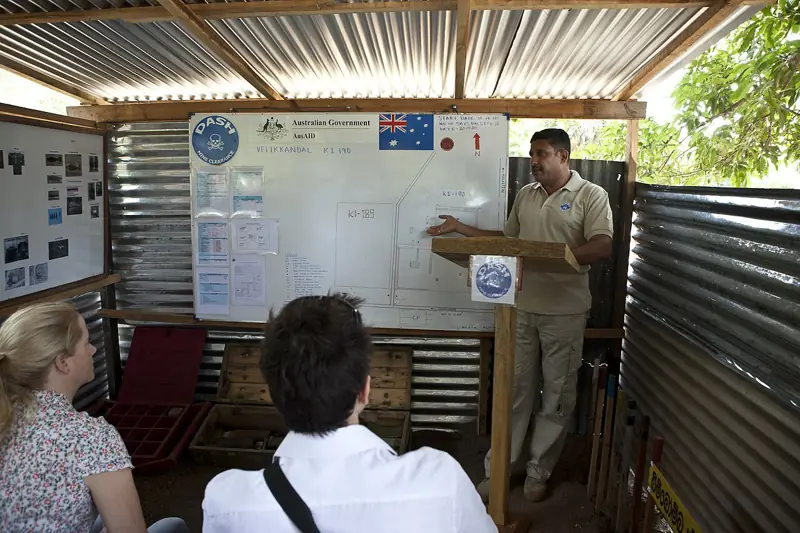
The legacy is linked to the country’s civil war, which ended in 2009. Clearance is not simply a matter of removing visible munitions: teams survey suspected land, identify hazards, clear them to an agreed standard and return areas for safe use. That work can affect whether families can farm, travel, build homes or send children along ordinary routes without risk.
Why the exact number needs caution
Contamination totals can change as surveys identify new suspected areas, land is cleared and previously recorded areas are reclassified. The reel does not identify the dataset, date or definition behind its “21 square kilometres” claim. Readers should therefore treat that number as an unverified claim from the video rather than as a confirmed current national total.
It is also important not to collapse different hazards into one figure. Anti-personnel mines, unexploded ordnance and other explosive remnants can be recorded under different programmes and methodologies. The verified point is narrower but significant: independent monitoring still identifies anti-personnel-mine contamination in Sri Lanka.
What mine-action groups say their work involves
MAG, an international humanitarian organisation working on mine action, describes its wider work as finding and destroying landmines, cluster munitions and unexploded bombs, alongside risk education for affected communities. Those functions matter even where a specific video’s figures cannot be verified: clearance reduces direct danger, while risk education can help people avoid hazardous items until land is formally released.
Bottom line
The video’s exact remaining-area estimate is unverified in the material reviewed for this article. But its broader concern is supported: Sri Lanka still has anti-personnel-mine contamination, and the work of survey, clearance and risk education remains relevant to community safety and land use. For current totals and programme progress, readers should consult Sri Lanka’s mine-action authorities and independently maintained monitoring updates rather than rely on a single social-media post.
Source note: This article treats the reel’s “21 square kilometres” figure and its account of the footage as unverified. It relies on Mine Action Review for the independently verified contamination context and on MAG for a description of mine-action work.
Source reel: https://www.instagram.com/reel/DejQ7l7Os_k/