 Rahul Somvanshi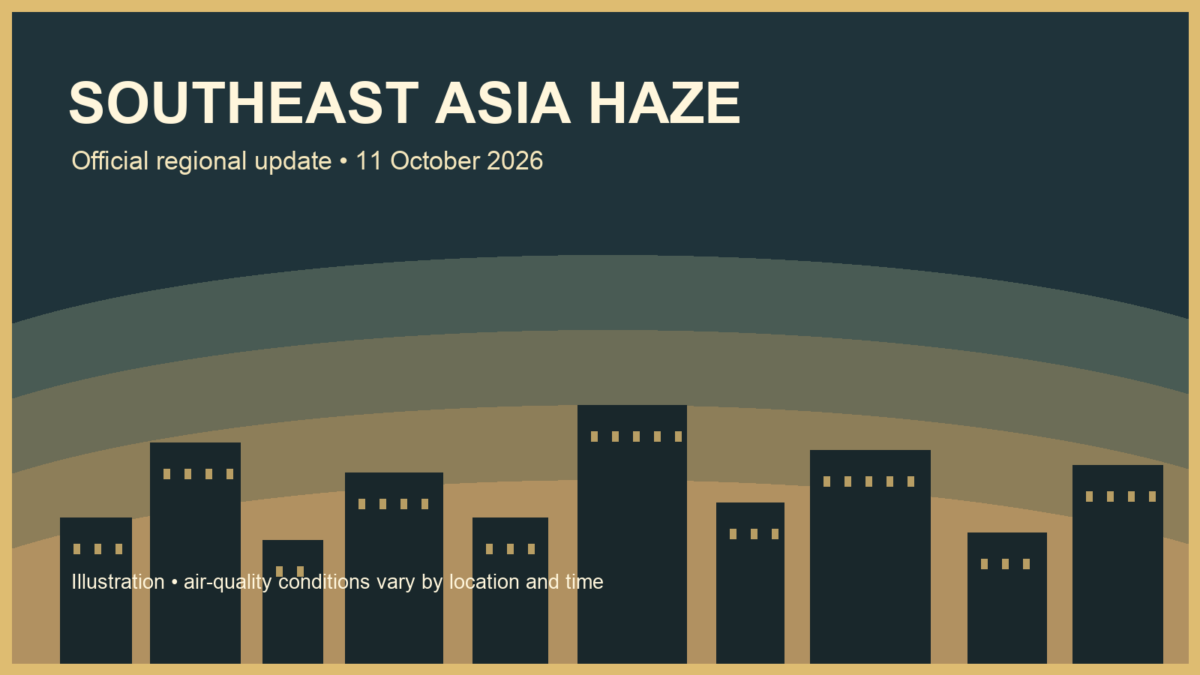
Haze conditions remain elevated across parts of Southeast Asia, with Singapore’s National Environment Agency reporting on 11 October that moderate transboundary smoke haze was affecting parts of Singapore, Peninsular Malaysia, Kalimantan, Sumatra and western Sarawak.
The agency said many air-quality stations in Peninsular Malaysia, Singapore, Borneo and Sumatra were reporting readings from Unhealthy to Hazardous. It also said cloud and thick smoke prevented a full assessment of hotspots in parts of Kalimantan.
For people with heart or lung conditions, and for children, older people and pregnant women, the immediate question is how much outdoor activity is safe. Singapore’s health guidance says that at a 24-hour PSI reading of 101 to 200, healthy people should reduce prolonged or strenuous outdoor exertion. People with chronic heart or lung disease should avoid it. The PSI is Singapore’s air-quality index; a reading of 101 or higher is classed as Unhealthy.
Dry conditions keep the regional risk elevated
NEA said dry conditions were continuing over parts of southern ASEAN, although showers were forecast in parts of Peninsular Malaysia, Sumatra and Borneo. Rain may improve conditions locally, it said, but fire-prone areas with prolonged dry weather could still face severe transboundary haze.
Smoke haze in Singapore can be carried across borders from regional land and forest fires. NEA says open burning for agricultural land clearing, dry weather, low rainfall and wind direction can all worsen the problem. Fine particulate matter known as PM2.5 is the main pollutant of concern during haze episodes.
Singapore first recorded a haze-related 24-hour PSI in the Unhealthy range in this episode on 4 September, when the central region reached 101. The government said its Haze Task Force had activated health measures, including daily forecasts and advisories. Schools were to use air-quality readings in their response plans, while workplaces were urged to reduce prolonged or strenuous outdoor work when readings were Unhealthy.
What should people do when haze levels rise? Check the current PSI and PM2.5 guidance before extended outdoor activity. NEA advises people to reduce exertion as air quality worsens. It says those who feel unwell, especially children, older people and people with chronic heart or lung conditions, should seek medical attention. For short exposure such as a commute, Singapore’s September advisory said an N95 mask was not required; people should follow the latest official advice because conditions can change.
The 11 October outlook does not set a date for conditions to improve. The agency said the risk would remain elevated in fire-prone areas that stay dry, so residents and travellers should rely on current official readings rather than assume conditions are the same from one day to the next.