 Govind Tekale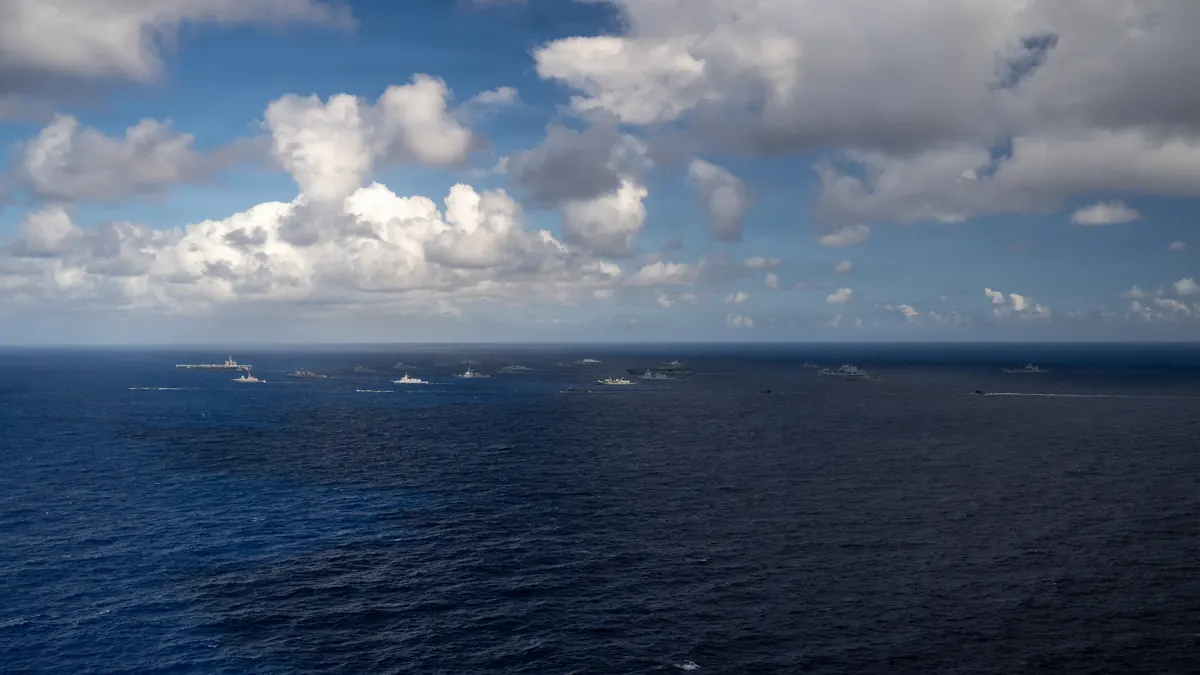
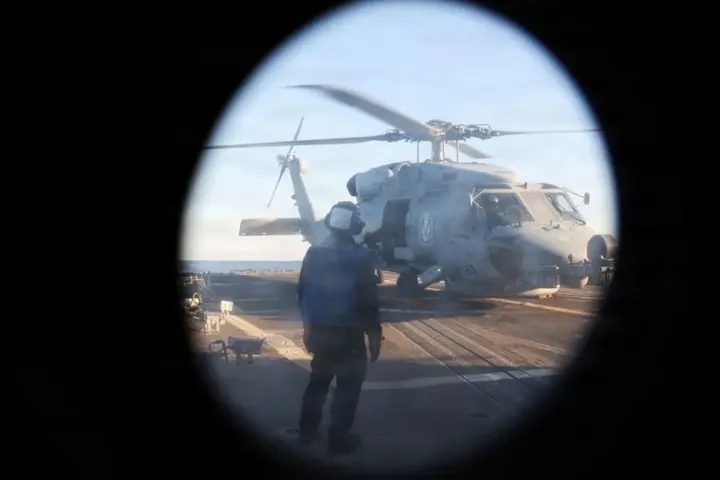
The American military presence near Iran is about to expand significantly. A U.S. official told Bloomberg that the Pentagon is deploying the USS Theodore Roosevelt carrier strike group and approximately 10,000 additional sailors and Marines toward the Persian Gulf, a move that could give U.S. commanders three carrier strike groups operating in the region.
The USS Theodore Roosevelt departed San Diego, according to the U.S. official cited by Bloomberg and confirmed through reporting in The Japan Times. This follows the USS George H.W. Bush and USS George Washington, which have been operating in the region. When the Roosevelt arrives, the deployment could result in three full carrier strike groups in the region — each one a floating airbase with dozens of combat aircraft, guided-missile destroyers, and support vessels. The deployment also includes the Makin Island Marine Expeditionary Unit aboard amphibious assault ships, adding an expeditionary ground-force capability alongside the air-defense posture the prior deployments established. The total troop addition of approximately 10,000 personnel comes from a single U.S. official and has not yet been confirmed through a public Pentagon announcement; coverage should reflect that sourcing.
The deployment of approximately 10,000 additional American troops and a third carrier strike group toward the Persian Gulf carries direct financial consequences for consumers at home. As maritime insurers may hike war-risk surcharges for tankers transiting the Strait of Hormuz, global crude oil benchmarks have risen following deployment news, with Brent crude trading around $102 per barrel on October 2, reflecting broader geopolitical risk premiums in energy markets. That oil price environment can translate to higher pump prices and increased shipping surcharges for consumer goods.
What's New Since the Previous Coverage — and Why This Deployment Differs
Karmactive’s reporting through late September covered U.S. and Iranian diplomatic and military tensions in the Strait of Hormuz corridor, including Iran's rejected seven-day proposal to pause Hormuz operations. The latest development is materially different: it shifts the U.S. posture from deterrence through existing forces to active reinforcement with additional strike capability.
The operational significance of a potential three-carrier concentration in CENTCOM is hard to overstate logistically. Naval carrier rotations are typically planned months in advance to avoid strain on maintenance schedules and crew deployment cycles. Moving three strike groups into the same theater pulls combat power and support logistics away from the Pacific, where U.S. military planners have publicly prioritized INDOPACOM deterrence against Chinese military activity near Taiwan and in the South China Sea.
The Makin Island MEU’s inclusion shifts the math further. Amphibious expeditionary units are optimized for coastal operations — embassy evacuations, limited beach raids, and rapid-response ground insertions — not purely for missile defense coverage. Their presence alongside air-defense batteries and carrier aircraft tells a more complex operational story than simple deterrence.
The Energy Market Consequences
Roughly one-fifth of the world’s traded petroleum supply transits the Strait of Hormuz daily. When military tensions in the region intensify, commercial tanker operators pay higher war-risk insurance premiums and some reroute ships around the African Cape of Good Hope rather than transit the strait — a journey that adds weeks to delivery times and drives up shipping costs globally.
Brent crude was trading around $102 per barrel on October 2, reflecting the geopolitical risk premium that has built as U.S.-Iran tensions have intensified. The prior September reporting on Strait of Hormuz tension captured the first oil market reaction; the current troop and carrier surge represents a further escalation of the same pressure on commodity prices. Energy analysts tracking global oil supply and geopolitical risk are watching whether OPEC+ adjusts output targets at its next scheduled policy meeting.
What the Deployment Does Not Confirm
No U.S. official has stated that military action against Iran is imminent or decided upon. Al Jazeera’s framing of “Is the war about to escalate?” reflects analytical uncertainty, not established fact. Prior military buildups in the region — including the 2019 carrier deployment after tanker attacks — did not result in direct military conflict. The deployment gives U.S. commanders options; whether those options get used depends on diplomatic and military developments that remain unresolved.
The USS Theodore Roosevelt’s arrival in the northern Arabian Sea marks the first public milestone to watch. OPEC+ output discussions and any direct Iranian response to the troop announcement are the next significant developments. Check back as the Roosevelt’s position and Pentagon operational statements become available.