Karmactive Team

The Grid Is Not as Reliable as You Think
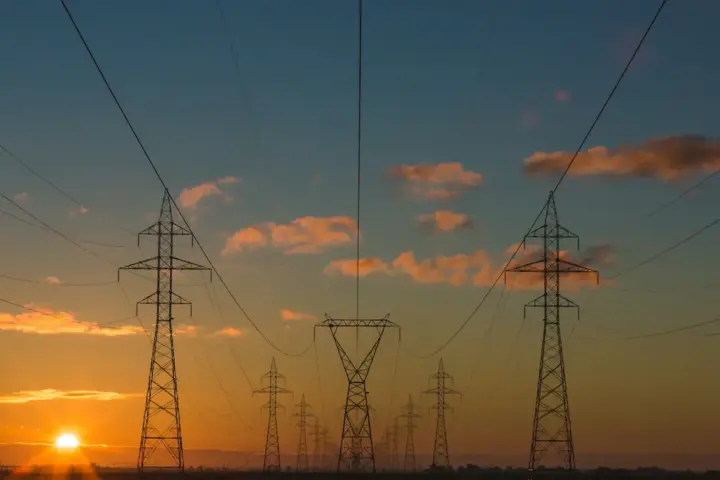
The U.S. grid lost more than 1.2 billion customer-hours of power in 2023, according to the EIA. That number has climbed every year for over a decade. Severe weather events — ice storms, hurricanes, derecho wind events — are disabling transmission infrastructure for days at a time. Rural and suburban homeowners in storm corridors are bearing the highest risk.
Gas-powered standby generators have been the standard answer since the 1970s. Generac and Kohler dominate that market. Their drawbacks are real and growing. These include fuel scarcity during regional emergencies, annual maintenance requirements, 65–75 dB noise output, and carbon monoxide risk in attached garages.
High-capacity solar generator systems — sometimes called solar power stations or solar backup generators — have entered the whole-home backup market. EcoFlow, Bluetti, Anker, and Schneider Electric all now sell units aimed at residential emergency use. The marketing frequently claims these systems can “run your entire home for days.”
That claim deserves scrutiny before you spend $4,000 to $20,000.
Solar vs. Gas Standby: A Direct Comparison
Understanding the tradeoffs between these two technologies matters before you buy either one.
Gas standby generators produce continuous AC power as long as natural gas or propane flows. A Generac 22kW Guardian runs on a permanent natural gas line. It can sustain a full-sized home indefinitely. It costs roughly $6,000 to $12,000 installed.
Its problems are well documented. It needs annual professional servicing. It produces loud exhaust noise. It requires a working utility gas line or on-site propane tank. It emits carbon monoxide, which kills people in poorly ventilated spaces. During regional disasters, propane delivery may be impossible.
High-capacity solar generator systems produce AC power from stored lithium iron phosphate (LiFePO4) batteries. They recharge from solar panels during daylight. They run silently, indoors or outdoors, with no emissions and no combustion.
Their limits are equally real. They carry finite stored energy. They depend on sunlight for recharging. Most residential units do not natively output the 240V split-phase power required by central HVAC systems, well pumps, and electric dryers.
The right choice depends on your load profile, your location, and your willingness to manage system complexity.
The Most Expensive Mistake: Ignoring Surge Watts
Skipping the surge watt calculation is the most common and costly error in solar generator purchasing. Buyers who skip it end up with a system that trips offline the moment the air conditioner starts, leaving their family without power or cooling during the worst conditions.
Every electric motor draws two separate power values. The first is running watts: the continuous power needed to keep it operating. The second is surge watts, also called startup watts or Locked Rotor Amperage (LRA).
A standard 3-ton central air conditioner draws roughly 3,500 watts continuously. At startup, however, the compressor motor demands an inductive surge of 7,000 to 9,600 watts. This spike can reach 60 to 80 amps and lasts three to five seconds. That surge instantly trips most solar generators rated at 30A continuous output.
The EcoFlow Delta Pro Ultra advertises 7,200W continuous AC output. That sounds sufficient for most homes. Its peak surge capacity is 14,400W. If your 3-ton AC requires a 9,600W surge, you have headroom. If you add a simultaneously running well pump, you may not.
The fix for oversized loads is not always a bigger generator. A micro-air soft starter — models like the EasyStart 364 — physically wired into your condenser unit reduces the LRA surge by 65–75%. That single $300 device can make a $6,000 solar generator viable for central air conditioning. Without it, the generator trips and goes offline every time the AC starts.
**Can a solar generator run a whole house?**
**Yes, provided it is a high-capacity 240V split-phase system with a minimum 6,000W–12,000W continuous output, connected to the home’s breaker panel via a transfer switch or smart subpanel. It also requires soft-starters installed on high-draw appliances like heat pumps and well pumps to manage inductive startup surges.**
Building Your Load Inventory: Running Watts vs. Surge Watts
You cannot size a backup solar generator without cataloguing every load you intend to run. This step is not optional.
Build a simple spreadsheet. List each appliance. Record its running watts from the nameplate label or spec sheet. Record its surge watts — typically 1.5x to 3x the running wattage for motors.
Here are reference figures for common household loads:
Refrigerator: 150–400W running, 1,200W surge. Chest freezer: 100–200W running, 800W surge. Central AC (3-ton): 3,500W running, 7,000–9,600W surge. Window AC (12,000 BTU): 1,200W running, 3,600W surge. Well pump (1 HP): 750W running, 2,000W surge. Electric furnace blower (1/2 HP): 400W running, 1,200W surge. LED lighting (10 rooms): 200W running, negligible surge. Phone and laptop chargers: 100W combined, negligible surge. Microwave (1,000W): 1,000W running, 1,000W surge. Electric water heater (4,500W): 4,500W running, negligible surge.
Your total running load determines the minimum continuous output needed. Your largest simultaneous surge load determines the peak output specification.
For a typical four-bedroom suburban home running refrigeration, lighting, phone charging, one window AC unit, and an electric furnace blower, the running load is roughly 2,100W. The peak surge load is under 5,000W. A 5,000W continuous solar generator handles this configuration.
Add a well pump and central AC, and that number climbs to 8,000W running and 12,000W peak surge without soft starters installed.
Electrical Integration: Transfer Switches, Interlock Kits, and Smart Subpanels
Plugging a solar generator into a wall outlet via a backfeed cord is illegal in most jurisdictions and physically dangerous. Live power flowing back through the utility meter can electrocute linemen working to restore power down the street. This is not a theoretical risk. Backfeed fatalities have occurred.
NEC Article 702 governs optional standby systems — the classification that covers solar generator backup setups. It requires a means to prevent simultaneous connection of standby and utility power sources in the same circuits.
There are three compliant integration methods.
The first is a manual transfer switch. A licensed electrician installs a separate sub-panel with critical circuits pulled from your main breaker. The manual transfer switch physically disconnects utility power before connecting generator power. Cost: $500–$1,500 installed. This is the simplest and least expensive option.
The second is a main panel interlock kit. The interlock is a mechanical device bolted to your existing main breaker panel. It allows your main breaker and generator inlet breaker to be on, but never simultaneously. This feeds generator power through your entire existing panel. Cost: $200–$600 installed. It requires a compatible panel model — not all panels accept interlock kits.
The third is a smart transfer subpanel, such as the EcoFlow Smart Home Panel 2. This device installs between your main panel and your generator. It monitors grid status, automatically transfers selected circuits to generator power during outages, and communicates with EcoFlow’s Delta Pro Ultra via a proprietary bus connection. Cost: $1,000–$2,500 for the panel itself, plus installation.
The smart subpanel is the most seamless solution. It eliminates manual switching. It allows granular circuit prioritization — you decide in an app which loads the system powers first when battery capacity is limited.
None of these options should be self-installed unless you are a licensed electrician. Working inside a live panel is fatal if done incorrectly.
Top Whole-Home Solar Generator Systems: Spec Breakdown
Several systems now credibly target whole-home backup. Here are the leading options as of 2025–2026.
**EcoFlow Delta Pro Ultra**
Battery capacity: 6kWh base, expandable to 90kWh with Smart Extra Batteries. Continuous AC output: 7,200W. Peak surge: 14,400W. AC output type: 240V split-phase via smart panel pairing. Solar input: up to 5,600W. Compatible with EcoFlow Smart Home Panel 2 for automatic transfer. Weight: 125 lbs per unit. Price: approximately $5,500 for the base unit.
This is currently the most capable residential solar generator for whole-home use in North America. The 240V split-phase output is built-in, not an add-on. The expandable battery capacity handles multi-day outages. Its solar input acceptance rate is among the highest in the category.
**Bluetti EP900 + B500**
Battery capacity: 4,961Wh base, expandable to 19,840Wh. Continuous AC output: 9,000W. Peak surge: 10,000W. AC output type: 240V split-phase. Solar input: 3,000W. Compatible with Bluetti Home Integration Kit. Price: approximately $6,999 for the EP900 unit plus B500 battery.
The EP900 delivers higher continuous wattage than the Delta Pro Ultra in its base configuration. Its solar input is lower, which matters for recharge speed during extended outages. It suits high-draw outages of shorter duration with less reliance on daily solar recharge.
**Anker SOLIX F3800**
Battery capacity: 3,840Wh base, expandable to 26,880Wh. Continuous AC output: 6,000W. Peak surge: 12,000W. AC output type: 240V split-phase. Solar input: 2,400W. Home integration: Anker Portable Power Station Interface (APPI). Price: approximately $3,999 for the base unit.
The F3800 is the most accessible price point among 240V-capable residential solar generators. Its expandable capacity is competitive. Its solar input is the lowest of the three listed here, which limits recharge rate in winter or consistently cloudy conditions.
You can read more about the LiFePO4 cell chemistry that powers these systems in this detailed breakdown of lithium-ion battery pack assembly and cylindrical cell design.
Solar Array Sizing and Winter Production Derating
The battery stores power. The solar panels refill it. Getting the recharge math wrong leaves you short on the second night of an extended outage.
A 6kWh battery at 80% depth of discharge holds 4.8kWh of usable energy. If your critical loads draw 2,000W continuously, the battery lasts approximately 2.4 hours. For a full 12-hour overnight, you need closer to 24kWh of storage.
Solar panels refill the battery during daylight. The standard metric is peak sun hours — the daily equivalent of full-intensity sunlight (1,000W/m²) for your location. Houston averages 5.5 peak sun hours in summer. Minneapolis averages 2.8 peak sun hours in December.
A 2,400W solar array in Minneapolis in December produces roughly 6,720Wh on a clear day. Real-world efficiency losses — panel temperature, wiring resistance, inverter conversion — reduce actual output by 15–25%. Realistic December production in Minneapolis: approximately 5,000–5,700Wh on a clear day.
Consecutive cloudy days can reduce solar input to near zero. This is the fundamental constraint of solar backup systems in northern latitudes during winter. A 6kWh base battery depleted by one full day of outage cannot be fully replenished before the next night without an expanded storage configuration.
The mitigation is expanded battery capacity. A 24kWh storage configuration handles 72–96 hours of moderate loads without any solar input. That covers most storm outage durations.
Snow accumulation on panels matters. Ground-mounted or adjustable-angle panels simplify snow clearing. Roof-mounted panels require a roof rake for removal after snowfall.
10-Year Total Cost of Ownership
The upfront price of a solar generator system understates the full cost comparison against gas standby.
**High-capacity solar generator system — EcoFlow Delta Pro Ultra, 2 expansion batteries, 4,000W solar array, transfer switch, and professional installation**
Equipment: approximately $12,000–$15,000. Electrical installation (licensed electrician, panel work, solar mounting): $2,000–$4,000. Annual maintenance cost: near zero. Fuel cost over 10 years: $0. Battery replacement (LiFePO4 at 3,500+ cycles before 80% capacity): unlikely within 10 years under typical emergency-use patterns. Total estimated 10-year cost: $14,000–$19,000.
Federal tax credit: Under IRA Section 25D, residential battery storage systems now qualify for a 30% investment tax credit independent of solar panel installation. A $12,000 system yields a $3,600 federal credit. After credit, total out-of-pocket cost drops to approximately $10,400–$15,400.
California’s NEM 3.0 net billing structure has changed the economics of paired solar-storage systems significantly. For California homeowners evaluating both daily solar economics and emergency backup, this detailed analysis of NEM 3.0 and its impact on solar-plus-storage returns is worth reviewing before sizing your array.
**Gas standby generator — Generac 22kW Guardian, fully installed**
Equipment and installation: $7,000–$12,000. Annual maintenance (tune-up, oil change, load test): $200–$300/year. 10-year maintenance total: $2,000–$3,000. Propane or gas consumption during outages: variable but can exceed $500 per extended event. 10-year estimated total: $9,000–$15,000.
Gas standby costs less upfront in most configurations. It is more reliable for extended northern-winter outages with little or no solar input. It carries ongoing fuel and service costs that solar systems do not. Solar generator systems recover their premium through zero operating costs and federal tax credit eligibility.
For a household in a region with 4–5 winter peak sun hours and moderate outage frequency, the solar system reaches cost parity with gas standby between years 6 and 10.
Pre-Purchase Specifications Checklist
Use this checklist before committing to any whole-home solar generator purchase.
Does it output 240V split-phase? Central AC, electric dryers, and well pumps require this. If not, you cannot run these loads.
What is the continuous wattage output? Minimum 6,000W for a medium home with HVAC. 9,000W or higher for large homes.
What is the peak surge capacity? It should exceed your highest single motor startup load — typically the central AC — by at least 20%.
Can battery capacity expand? A base 3–6kWh unit is insufficient for multi-day outages. Confirm expansion units are available and priced before purchasing.
What is the maximum solar input rate? Higher input means faster recharge. Under 2,000W is limiting for whole-home use.
Does it include a compatible transfer switch or smart subpanel? Or must you source one separately? Factor in that added cost and installation complexity.
Is it UL 9540 or UL 9540A certified? These standards cover residential battery energy storage system safety. Do not install a non-certified battery system inside your home.
Does it qualify for the IRA Section 25D residential battery storage tax credit? Confirm this with the manufacturer before purchase.
What This System Cannot Do
A solar generator system is not a complete grid replacement for every home. It has real limits you should understand before buying.
It cannot run a full electric-resistance water heater (4,500W) while simultaneously running central AC and a well pump without an extremely high-capacity system (15kW+). Load prioritization is necessary.
It cannot reliably recharge during extended cloudy weather in northern latitudes without substantial storage depth behind it.
It does not start automatically during a power outage unless paired with a smart transfer panel. Manual-transfer setups require someone home to initiate the switchover.
It cannot handle loads you have not calculated. If you add an EV charger or a new HVAC system after sizing the solar generator, you may exceed its capacity.
A solar generator system works when it is correctly sized, properly integrated, and paired with an adequate solar array. It fails when buyers skip the load calculation or ignore the need for a licensed transfer switch installation. Do both steps correctly and you have a silent, clean power source that gas generators cannot match. Skip them and you have an expensive device that trips offline during the first heat wave of your outage.