 Tejal Somvanshi
One in every eight new cancer diagnoses worldwide can be traced back to an infection — a pathogen that altered cell behavior over years. A major new analysis from the World Health Organization’s cancer research arm puts the 2024 figure at 2.3 million infection-attributable cancer cases, and identifies five organisms that account for the vast majority of them.
The International Agency for Research on Cancer published the study on September 28 in The Lancet Oncology, analyzing infection-linked cancers across 185 countries. In 2024, approximately 2.3 million new cancer cases — roughly 12% of all new cancers globally — were attributable to infections linked to cancer. The analysis included newly established associations between Epstein-Barr virus and additional cancer types not counted in earlier estimates. Five pathogens account for most of the burden: Helicobacter pylori, Human Papillomavirus (HPV), Hepatitis B virus, Hepatitis C virus, and Epstein-Barr virus. H. pylori alone accounted for more infection-attributable cancer cases worldwide than HPV — a fact that gets relatively little public attention compared to the resources directed at HPV vaccination.
About 2.3 million new cancer cases in 2024 were attributable to infections, according to IARC. You can take concrete steps today: ask your doctor about a Hepatitis C blood test (the infection is now curable with a short course of oral medication), discuss non-invasive H. pylori testing if you experience chronic acid reflux or indigestion, and verify whether you or your children qualify for HPV and Hepatitis B vaccination programs. These are not hypothetical future interventions — they are available now at primary care appointments in the US, UK, and Australia.
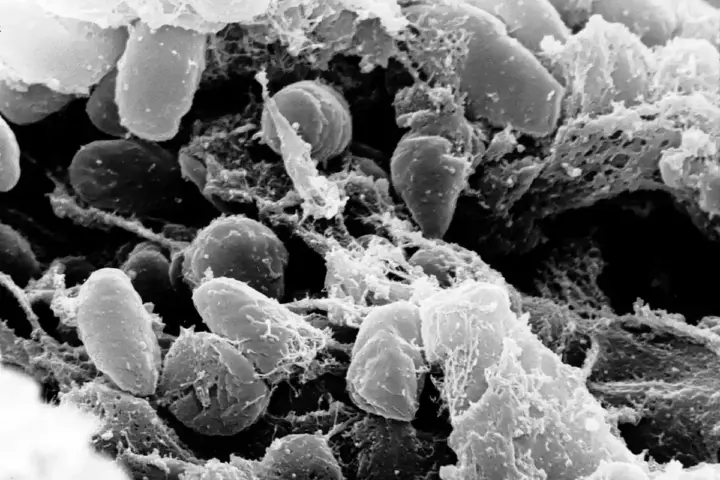
The Five Pathogens and What They Cause H. pylori is a bacterial infection most people acquire in childhood, usually through contaminated water or close contact. The majority of carriers have no symptoms for decades, but it is the single largest infectious cause of stomach cancer globally. A breath test or stool antigen test can detect it, and H. pylori can often be eradicated with combination antibiotic treatment, although treatment failure can occur.
HPV causes cervical cancer and cancers of the throat, anus, penis, and vulva. Routine childhood vaccination against the most cancer-associated strains has been highly effective. Adults who were not vaccinated before exposure remain at risk; catch-up HPV vaccination availability varies by age and jurisdiction — confirm current guidance with a GP if you are unsure of your vaccination history.
Hepatitis B and Hepatitis C both cause liver cancer when chronic inflammation goes untreated over years. Hepatitis B has an effective vaccine available since childhood immunization programs began. Hepatitis C has no vaccine but is curable in most patients through a short course of direct-acting antiviral medication — making a one-time blood test at a routine physical genuinely impactful for any adult who has not previously been tested.
Epstein-Barr virus, the pathogen behind mononucleosis, has been associated with certain lymphomas for some time. The updated IARC analysis incorporated newly recognized EBV-linked cancer types, which accounts for part of the increase in total infection-attributable cases compared with prior global estimates.
Prevention: What Actually Reduces Your Risk The 12% figure is a population-level estimate. It does not mean that 12% of any individual’s personal cancer risk comes from infection. What it does mean is that a meaningful share of global cancer burden is addressable through tools that already exist: vaccines, simple diagnostic tests, and short antibiotic or antiviral treatment courses.
Western public health investment has concentrated heavily on HPV and Hepatitis B, both of which have vaccines. H. pylori — which drives more cancers than HPV globally — has no licensed vaccine, and the IARC analysis frames increasing detection and treatment as a gap worth addressing.
For adults in the US, UK, and Australia: if you were not vaccinated against Hepatitis B as a child, that vaccination is available and recommended. If you have persistent digestive symptoms you have never investigated, H. pylori testing is a reasonable conversation to start with your primary care provider. The earlier these infections are identified and cleared, the less time they have to accumulate cellular damage.
For the full IARC announcement and Lancet Oncology paper, both are publicly available at the IARC website. For CDC guidance on Hepatitis C testing, see the CDC’s Hepatitis C screening page.
Updated data from the IARC and WHO progress reports on cervical cancer and hepatitis elimination targets are expected over the coming year. Check back for developments.