Karmactive Team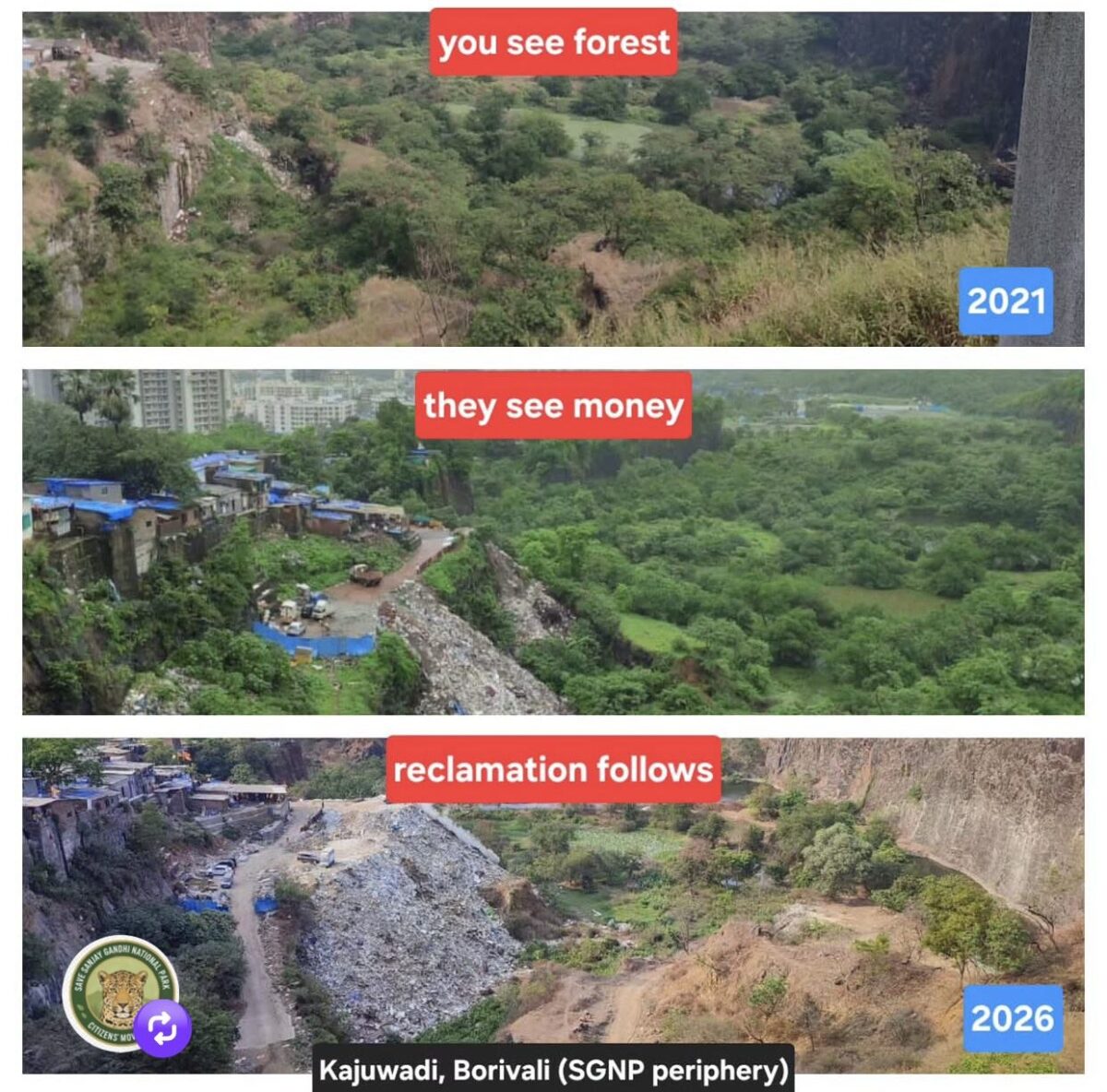
A striking three-panel photographic sequence tells the story of Kajuwadi Borivali’s transformation. In 2021, dense forest canopy dominated. In recent years, encroachment, makeshift shelters, and landfill sites had carved into the landscape. Today, patches of stripped vegetation and debris mark what remains. The visual evidence has become central to the Save SGNP Citizens Movement’s campaign to halt further degradation at the Sanjay Gandhi National Park Sanjay Gandhi National Park periphery.
The urgency intensified this year. On March 20, 2026, the Zonal Master Plan for the area gained official approval—a decision that activists argue threatens the park’s ecological integrity. Their response has been swift. Over 34,579 citizens signed a petition opposing the plan. On July 6 and August 2, residents organized human chain protests, their physical presence asserting a collective commitment to conservation.
According to the Wildlife Conservation Trust, the periphery continues to degrade at a rapid pace due to pressure from tens of thousands of residents. The concern extends beyond visual decline. Sanjay Gandhi National Park, spanning 103.84 square kilometers, functions as a critical wildlife refuge. The park hosts over 250 bird species and provides habitat for leopards and deer—apex predators and herbivores whose presence indicates ecosystem health. Yet wildlife corridors are increasingly fragmented, threatening the movement patterns essential to population survival—corridors already under pressure as documented in recent Thane leopard sighting Thane leopard sighting analyses.
The park has not remained entirely passive. SGNP authorities planted 11,000 trees in restoration efforts, acknowledging the need for intervention. However, conservation experts question whether localized tree-planting can counteract systemic pressures created by the master plan—a plan that a detailed SGNP Draft Plan Risk analysis flagged as threatening 634,689 residents across 33% developed land in the eco-sensitive zone.
At the heart of the conflict lies the question of land use and human settlement. The master plan designates 27 Adivasi padas—indigenous communities’ settlements—as “slums,” a classification that carries implications for their legal status and land rights. Critics argue this framing obscures the centuries-long presence of tribal communities in the region and sets a precedent for displacement policies. “The terminology itself is flawed,” conservationists contend. “These are established communities, not informal encroachments.”
Beyond nomenclature, substantive objections highlight procedural shortcomings. Activists point to the absence of biodiversity assessment data—crucial information for evaluating how development will affect species dependent on the park’s resources. They also note that the plan was circulated in English, effectively excluding many local stakeholders whose primary languages are Marathi or other regional tongues. Meaningful public consultation, they argue, requires accessibility.
The tribal displacement concern resonates beyond environmental circles. The proposed zoning and rehabilitation policies risk severing communities from territories they have inhabited and managed sustainably for generations. Their knowledge systems—accumulated wisdom about seasonal patterns, wildlife behavior, and resource management—represent irreplaceable conservation assets.
Maharashtra Chief Minister Devendra Fadnavis addressed the controversy with the statement, “Rehabilitation with responsibility.” The phrase signals an attempt to balance development pressures with conservation commitments, yet ambiguity surrounds what “responsibility” entails in practice. Will rehabilitation prioritize tribal land rights? Will biodiversity protection override infrastructure expansion?
The Save SGNP Citizens Movement continues mobilizing. The petition, the protests, and the photographic documentation represent escalating public pressure on policymakers. The three-panel collage—forest to encroachment to degradation—functions as visual testimony to what stakes the decision carries.
As the zonal master plan enters implementation phases, the movement’s central demand remains unmet: comprehensive biodiversity surveys, genuine community consultation including tribal voices, and development frameworks that do not compromise the park’s ecological function. Whether SGNP’s 103.84 square kilometers remain a functioning wildlife refuge or transition toward fragmented patches of habitat depends on decisions made in the coming months.
Sources: Save SGNP Citizens Movement (savesgnp.org), Free Press Journal, Wildlife Conservation Trust