 Govind Tekale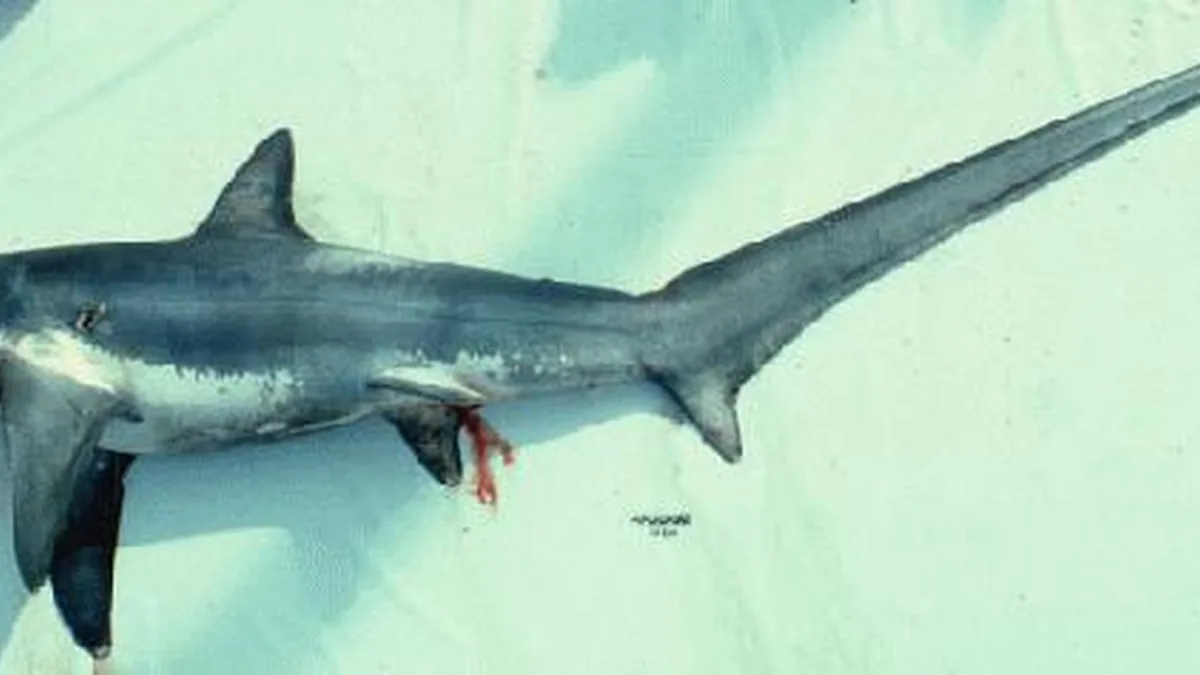
A thresher shark that washed ashore on a Washington state beach was found with its head removed in the days after it arrived. The Washington Department of Fish and Wildlife is investigating what happened—and researchers say whoever removed the head eliminated important scientific evidence.
The shark was discovered at Ocean Shores, on Washington’s Pacific coast. It arrived on the beach intact. At some point after it was found, the head was cut off. The Washington Department of Fish and Wildlife became involved after the carcass was tampered with.
WDFW researcher Lisa Hillier explained why the missing head matters beyond the obvious. A shark’s head contains key measurements researchers need: jaw structure, tooth condition, and physical markers that help determine the animal’s biological condition. Without the head, those measurements cannot be taken. The missing head also limited researchers’ ability to examine the carcass and investigate its condition and possible cause of death. Tampering with a stranded wildlife carcass can also violate Washington state regulations, which is why WDFW is treating this as a formal investigation.
Why this matters beyond one dead shark
Thresher sharks are known for their distinctive long upper tail fin. They are found in Pacific coastal waters off Washington. A dead thresher shark washing ashore is unusual enough to attract attention; a decapitated one is rarer still.
Wildlife authorities have not publicly identified a suspect or confirmed the exact timing of when the head was removed. The investigation is open. Whoever removed the head may not have understood the legal exposure or the scientific cost, but authorities are treating the act as something worth pursuing rather than a minor incident.
The scientific loss is the detail that most coverage has underweighted. Dead marine animals that wash ashore in good condition give researchers something they rarely get: a physical specimen they can examine. Ocean Shores has seen shark strandings before. This particular data point has been partially destroyed.
Why is removing a shark’s head potentially illegal in Washington?
Tampering with a stranded marine animal carcass can violate Washington state regulations governing wildlife. Beyond legality, removing the head destroys the physical evidence researchers need to record key biological measurements and investigate the animal’s condition. In this case, those measurements are now permanently unavailable.
WDFW has not released a timeline for the investigation. Anyone with information about the Ocean Shores shark carcass can contact the Washington Department of Fish and Wildlife directly.