 Sonali Tiwary
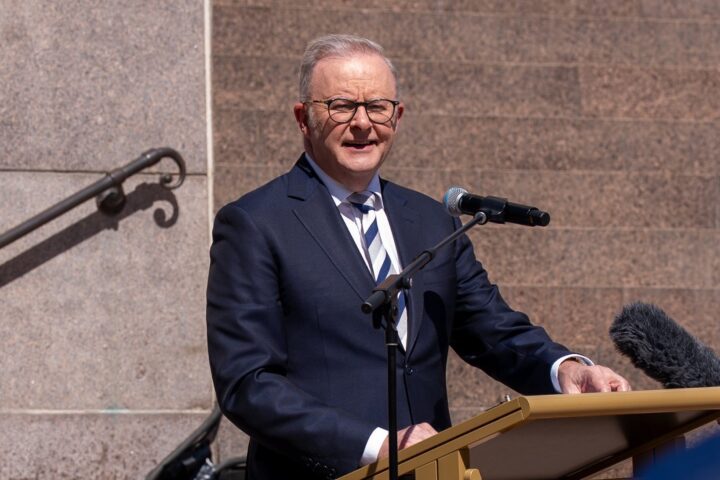
Reserve Bank of Australia Governor Michele Bullock has issued a public economic warning, cautioning that the world is facing an increased frequency of supply shocks—sudden disruptions to the availability or cost of goods, commodities, and productive inputs—that complicate the task of keeping inflation under control and maintaining economic growth simultaneously.
A supply shock, in economic terms, is a sudden event that changes the amount of available supply in an economy independently of demand. The COVID-19 pandemic provided a vivid demonstration: lockdowns shut factories and ports across Asia and Europe at a time when household spending on goods—particularly electronics and home equipment—surged. The resulting mismatch between constrained supply and elevated demand drove inflation in most developed economies to multi-decade highs between 2021 and 2023.
What makes supply shocks particularly awkward for central banks is that the standard monetary policy tool—raising interest rates—addresses demand-driven inflation effectively but supply-driven inflation only indirectly, and at significant cost. Higher rates reduce household and business spending, which eventually reduces demand sufficiently to bring prices down. But if prices are rising because there simply isn’t enough of something to go around, higher rates cannot create more of it. They can only slow the economy until demand contracts enough to match the limited supply. The collateral damage is slower growth and higher unemployment.
Bullock’s warning reflects concern that the global environment is structurally more prone to supply disruptions than the relatively stable decade before the pandemic. Several factors contribute to that assessment. Geopolitical fragmentation—including tensions between the United States and China, the war in Ukraine, and instability in the Middle East—has introduced persistent uncertainty into energy, food, and semiconductor supply chains. Climate change is increasing the frequency of extreme weather events that damage crops, disrupt logistics infrastructure, and affect energy generation. And the concentration of manufacturing in a small number of geographic locations, which made global supply chains efficient, also makes them brittle when those locations are affected by disruption.
Australia’s economy is exposed to these dynamics in specific ways. The country is a major exporter of commodities—iron ore, coal, liquefied natural gas, and agricultural products—whose prices are set in global markets and can swing sharply with supply conditions. At the same time, Australia imports a wide range of manufactured goods, meaning supply disruptions elsewhere translate into higher import prices and domestic inflation.
The RBA has been navigating an unusually difficult policy environment since 2022, when it began the fastest rate-hiking cycle in decades to combat inflation that peaked at around 7.8 percent in the December 2022 quarter. By mid-2026, inflation has moderated considerably, but the governor’s warning signals that the RBA does not regard the inflationary risk as resolved—it sees a structural elevation in the likelihood of future shocks that could reignite price pressure even as the current episode subsides.
For households and businesses, the practical implication of a world with more frequent supply shocks is persistent price volatility and less predictability in planning. Energy, food, and goods prices may continue to move in ways that are difficult to forecast and not easily offset by changes in interest rates alone. The International Monetary Fund and the Bank for International Settlements have both published analyses in recent years suggesting that supply-side factors are playing a larger role in inflation dynamics globally—consistent with the direction of Bullock’s remarks.
The speech is part of the RBA’s regular public communication effort to explain the rationale behind its policy decisions to the Australian community. Whether it presages a change in the cash rate target depends on how actual economic data—inflation, employment, and output—evolves in the coming months.