 Karmactive Staff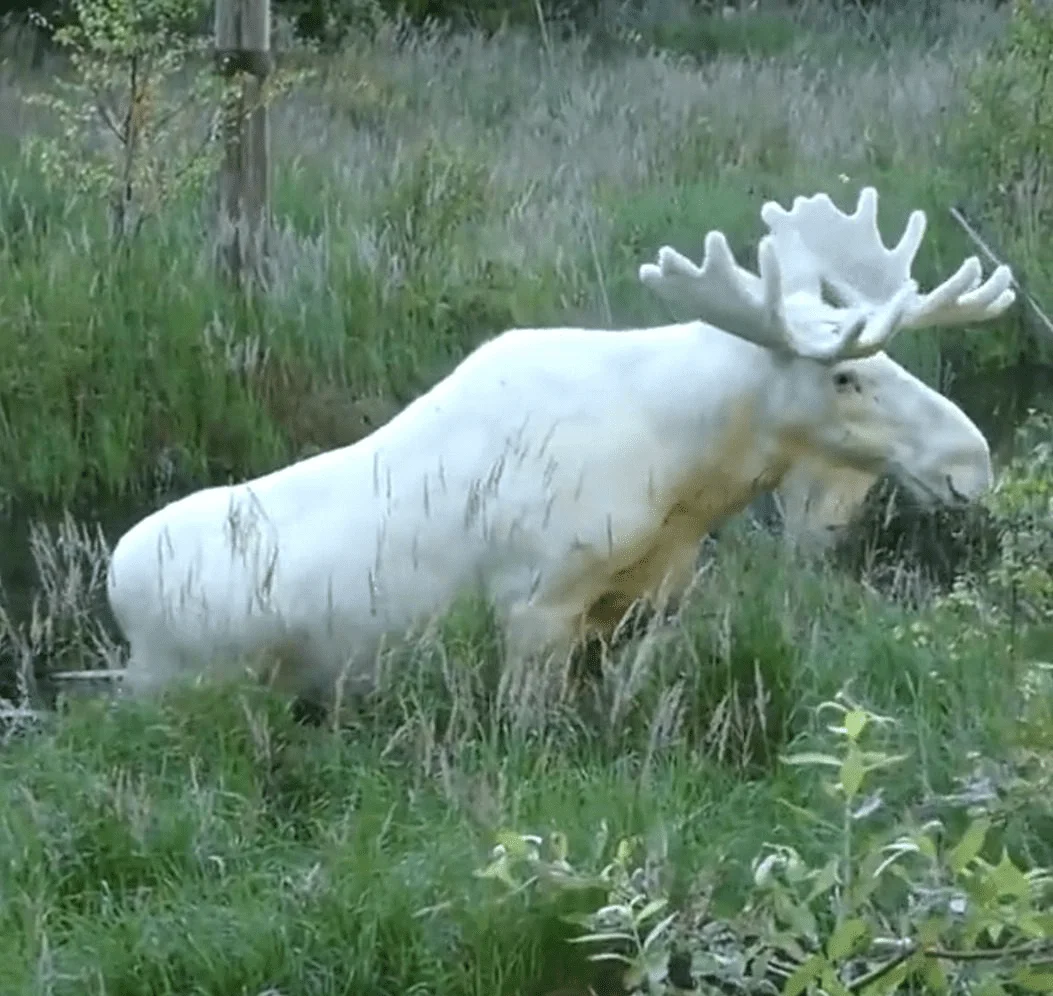
White Moose In Sweden: Rare Genetic Phenomenon Captivates Wildlife Experts
In July 2022, a rare white moose was spotted in the forests near Värmland, Sweden, captivating wildlife enthusiasts and researchers alike. This unusual coloration, caused by a genetic recessive trait, affects approximately 1 in 100,000 moose births according to the Swedish Environmental Protection Agency. The sighting has since sparked renewed interest in wildlife genetics and conservation biology, with experts noting that such rare occurrences provide valuable insights into genetic diversity in large mammal populations.
The Science Behind the White Coloration
The distinctive white or cream-colored coat results from a genetic mutation that reduces pigment production, a condition known as leucism. Unlike albinism, leucistic animals retain some pigment in their eyes and internal organs, allowing for partial camouflage despite the white fur. Wildlife biologists from the University of Stockholm note that while the condition doesn’t inherently harm the animals, it can affect survival rates in the wild due to increased visibility to predators and potential social challenges within moose herds.
Wildlife conservation efforts in Scandinavia have successfully maintained stable moose populations despite climate pressures affecting habitat quality across the region. The Swedish moose population stands at approximately 300,000 individuals, making this sighting exceptionally rare—statistically expected once every few decades given current population dynamics and genetic distribution patterns.
Ecological Significance and Research Value
This rare sighting highlights ongoing discussions about wildlife genetics and biodiversity conservation. According to the International Union for Conservation of Nature (IUCN) Red List, the global moose population has declined by 30% over the past 25 years due to habitat loss, climate change, and tick infestations. The genetic diversity represented by leucistic individuals may prove crucial for long-term population viability under changing environmental conditions.
Recent biodiversity research from Scandinavian institutions emphasizes that rare genetic traits like leucism provide natural laboratories for studying evolutionary adaptation. DNA analysis of related moose populations shows that the leucism gene persists at low frequencies, suggesting it may confer subtle survival advantages in certain environmental contexts, though this remains an active area of scientific investigation.
Cultural and Tourism Impact
The white moose has become a symbol of local pride in the Värmland region, drawing photographers and wildlife enthusiasts from around the world. Tourism officials report a 25% increase in wildlife tour bookings following the sighting, demonstrating how rare natural phenomena can support local economies while raising awareness about conservation. The Saami people, indigenous to northern Scandinavia, view moose as spiritually significant animals, adding cultural depth to the scientific interest in these remarkable creatures.