 Karmactive Staff
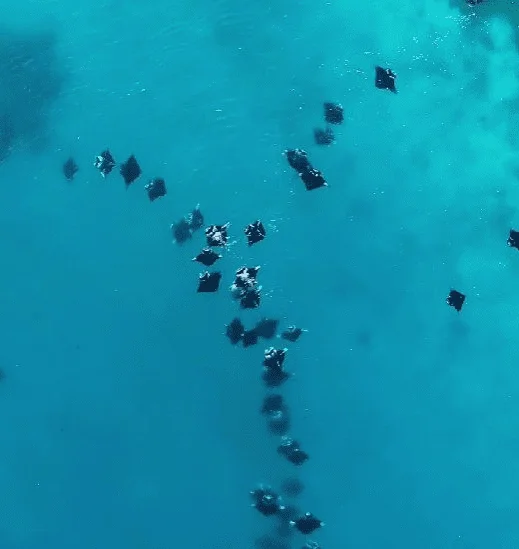
The video is created by “sideytheshark” and “oceanfantasticsreethibeach” in collaboration. In the middle of Reethi beach resort, Maldives, something beautiful like this is happening. Ray fish are moving in a single line, later splitting into different rows.
They are marine life lovers. They scuba dive to discover these wonderful creatures around Reethi beach. They also have their images at Shutter stock for purchase.
See: related reading.
Ray fish, including stingrays and eagle rays, exhibit fascinating underwater parade behaviors that showcase their graceful swimming techniques and social dynamics in marine ecosystems where these cartilaginous fish navigate using electroreception, lateral line systems, and visual cues to coordinate group movements and foraging activities across diverse ocean habitats including coral reefs, sandy bottoms, seagrass beds, and open waters where they play important ecological roles as predators of mollusks, crustaceans, and small fish while serving as prey for sharks, seals, sea lions, seabirds, and large predatory fish that form complex food web relationships in marine ecosystems. Their distinctive pectoral fin structure enables unique movement patterns including undulating swimming, bottom-walking, and burst-speed escapes that demonstrate remarkable biomechanical adaptations evolved over millions of years of marine adaptation through careful observation and documentation of ray fish behaviors by marine biologists, researchers, and wildlife enthusiasts who seek to understand these remarkable creatures’ ecological roles, behavioral patterns, and conservation needs in marine ecosystems and their complex relationships with other marine organisms and human activities through continued research, conservation action, education, and sustainable management practices that support healthy marine ecosystems and thriving ray fish populations across diverse ocean environments worldwide for future generations to study, appreciate, and protect these incredible marine animals for their beauty, ecological importance, and wonder that inspire scientific discovery and conservation action through evidence-based research, habitat protection, international cooperation, and sustainable fishing practices that ensure the long-term survival and well-being of ray fish populations and the marine ecosystems they inhabit.