 Rahul Somvanshi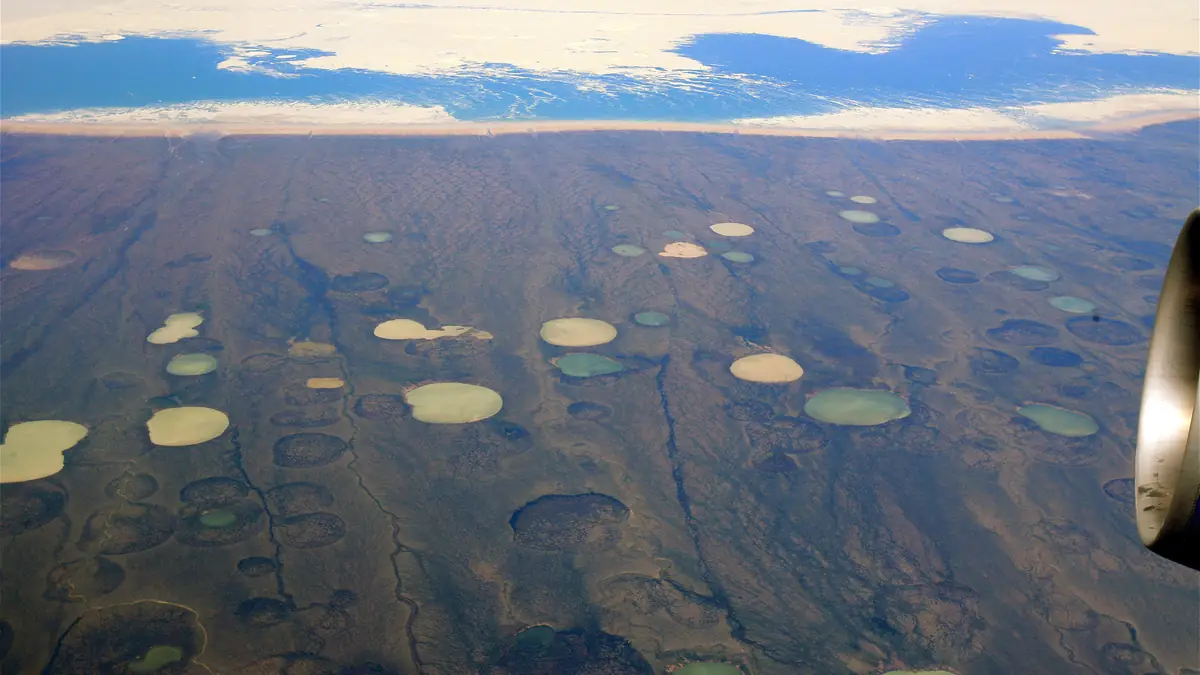
UN Climate Report Warns Tipping Points Closer Than Expected
The point of no return is closer than most people realise. The IPCC Sixth Assessment Report (AR6) and subsequent UN climate assessments warn that several of the 16 identified tipping elements — from permafrost thaw to Amazon rainforest dieback — are already showing early warning signs, and crossing even one could trigger cascading failures that make the 1.5C target 1.5C warming limit impossible within years rather than decades.
The IPCC AR6, published in 2021-2023 across its three working groups and synthesis report, identified 16 probable tipping points in the Earth system. Five are already showing early warning signals according to the UN Intergovernmental Panel on Climate Change assessment. The World Meteorological Organization confirmed that 2024 was the hottest year on record, reaching 1.45C above pre-industrial levels — dangerously close to the 1.5C threshold that the Paris Agreement aims to hold.
If global warming exceeds 1.5C and triggers multiple tipping points simultaneously, some climate models estimate cascading effects could push global temperatures to 3-4C by 2100. This could displace an estimated 500 million people through sea-level rise, drought, and crop failure, according to IPCC WG2 projections under high-emission scenarios. The economic cost of inaction far exceeds the cost of transition — the Stern Review estimated that climate change could reduce global GDP by 5-20% annually without action.
The permafrost threat is particularly acute. Arctic permafrost holds an estimated 1,400-1,600 gigatonnes of carbon — roughly 1.7 times the amount currently in the atmosphere. As permafrost thaws, it releases methane and CO2, which warm the planet further, which thaws more permafrost. This feedback loop is already underway in Siberia and northern Canada, where scientists have recorded methane bubbling from thawing lake beds. Once triggered, permafrost thaw cannot be reversed on human timescales — it would take centuries for carbon to be reabsorbed.
The Amazon rainforest faces a similar trap. Deforestation has already cleared 17% of the Amazon. Scientists warn that crossing the 20-25% deforestation threshold could trigger dieback, transforming the rainforest from carbon sink to carbon source. The Amazon already absorbs 2 billion tonnes of CO2 annually — losing it would accelerate warming by decades. Brazilian deforestation rates have fluctuated under different administrations, with periods of decline followed by resurgence.
The Atlantic Meridional Overturning Circulation (AMOC) — the ocean current system that keeps Europe warm — is slowing. The IPCC AR6 assesses it as a low-probability, high-impact risk, but recent studies suggest AMOC could weaken by 15-30% by 2100 under current emissions trajectories. A collapse would drop European temperatures by 5-10C within decades, disrupt monsoon patterns across Asia and Africa, and raise sea levels on the US East Coast by a metre.
## What Are Climate Tipping Points
Climate tipping points are thresholds where a small change triggers self-reinforcing feedback loops that lock in irreversible shifts. The IPCC identifies 16 likely tipping elements including Greenland and West Antarctic ice sheet collapse, Amazon rainforest dieback, permafrost thaw, and AMOC slowdown. Several are already showing early warning signs. Once crossed, these changes cannot be undone on human timescales — ice sheet collapse takes centuries to reverse, permafrost carbon release takes millennia. The 1.5C threshold is critical because the IPCC warns that tipping point risk increases sharply above 1.5C warming.
The policy window is closing. The next COP conference — COP30 in Belem, Brazil — is scheduled for November 2025. Countries must submit updated Nationally Determined Contributions (NDCs) before the conference. Current NDCs put the world on track for 2.5-2.9C warming by 2100 — well above the 1.5C target. The gap between ambition and reality is widening, not narrowing.
The global methane pledge, signed by 150+ countries at COP26, aims to cut methane emissions 30% by 2030. Methane is 80 times more potent than CO2 over 20 years. Cutting methane is the fastest way to slow warming in the short term — the IPCC says methane reductions could avoid 0.2C of warming by 2050. But implementation is lagging: global methane emissions reached record highs in 2024 according to Copernicus Atmosphere Monitoring Service data.
Energy transition momentum is real but insufficient. Solar and wind capacity is growing at 15% annually, and renewables now provide 30% of global electricity. But fossil fuel investment continues to rise — the IMF reported $7 trillion in fossil fuel subsidies in 2022, more than triple the level needed for a 1.5C pathway. The transition is happening, but not fast enough.
For households, the implications are direct. Climate-driven extreme weather is increasing home insurance costs across the US, UK, and Australia. Flood risk zones are expanding. Food prices are rising as droughts and heatwaves reduce crop yields. The IMF estimates that climate change could push up to 130 million people into poverty by 2030 through agricultural losses alone.
The 1.5C target is not impossible — but the window is narrowing fast. The IPCC says global emissions must peak before 2025 and fall 43% by 2030 to have a 50% chance of staying below 1.5C. Current trajectories put emissions rising, not falling. The difference between 1.5C and 2C is not linear — every 0.1C matters. At 2C, tipping point risk doubles. At 3C, it becomes near-certain. The UN climate report is not a prophecy — it is a warning. The next COP30 in Belem is the last realistic chance to act before feedback loops accelerate beyond human control.