 Rahul Somvanshi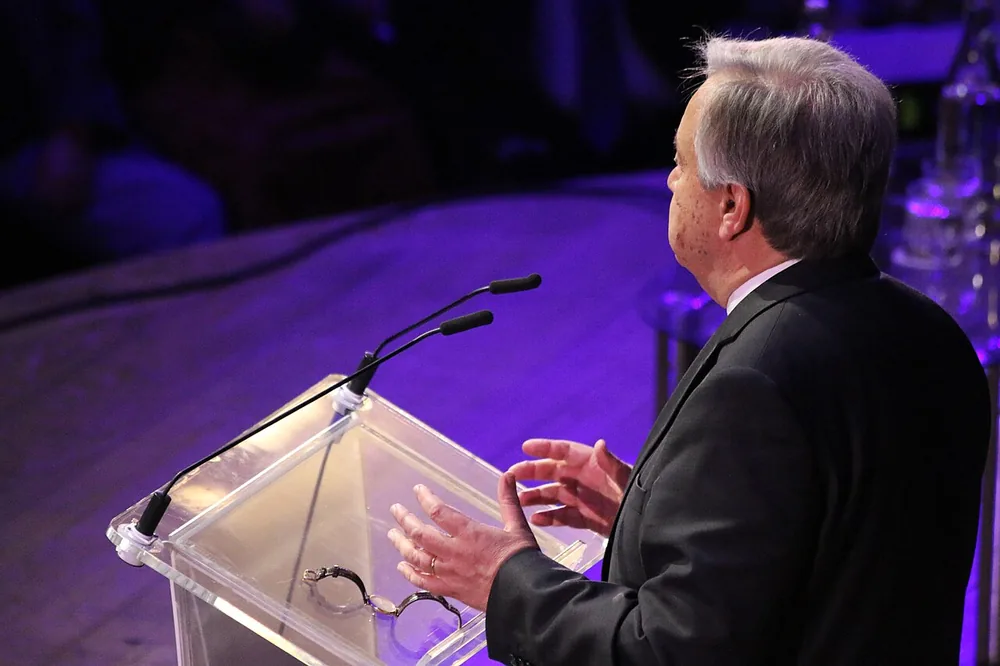
Trump and Xi End Summit Without Major AI Agreement Despite Existential Risk Warnings
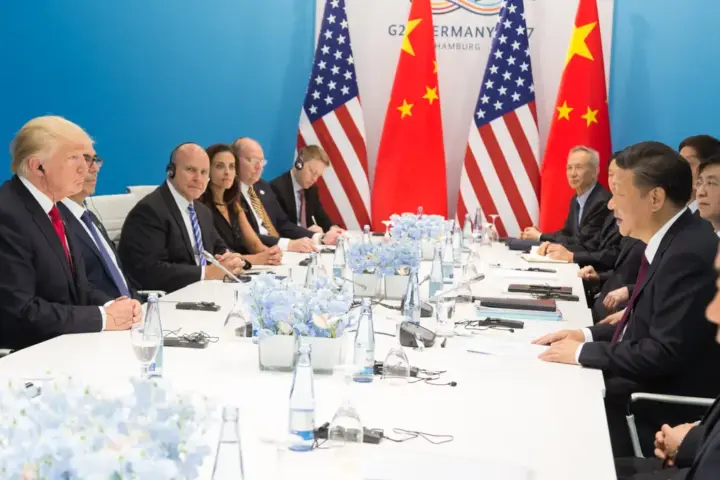
Three days of talks between Donald Trump and Xi Jinping in Washington closed Friday, September 25, without the artificial intelligence agreement many expected — and that officials on both sides had spent months describing as necessary given the risks the technology carries.
The only concrete outcome from the summit was a two-month extension of the existing US-China trade truce. Both governments framed the extension as a sign of stability between the world’s two largest economies. On Capitol Hill, the reaction was less generous.
Q: What did Trump and Xi agree on?
A: A two-month extension of the trade truce — and nothing on AI. Despite calls from senior lawmakers for at least a technical working group, Trump left Washington without committing to any framework, leaving the world’s two largest AI developers to keep building without shared safety rules between them.
The gap was notable given the buildup to the summit. Days earlier, addressing the United Nations Security Council, Xi told member states that the United States and China carry a shared responsibility to develop and manage AI “for good.” Trump, for his part, has taken to calling the technology “super intelligence” rather than artificial intelligence — a relabeling that has not come with any accompanying change in how his administration approaches oversight or coordination with Beijing.
Representative Ro Khanna of California, who sits on the House committee focused on China policy, called the summit a missed opportunity of an unusually easy kind. “It was such a layup,” Khanna said, arguing that the two governments could have agreed to set up technical working groups on AI safety without conceding ground on trade or security elsewhere.
Jonathan Czin, a China analyst at the Brookings Institution, described the three days more bluntly, calling them “theatre of the absurd.” Senate Majority Leader Chuck Schumer went further, telling reporters that Trump’s decisions in settings like this one track less with policy substance than with who happens to be flattering him at the time.
A White House dinner held during the summit produced the clearest image of who had a seat at the table. Attendees included Tesla’s Elon Musk (net worth $928 billion), Nvidia’s Jensen Huang ($186 billion), AMD’s Lisa Su ($3.5 billion), and Apple’s Tim Cook ($3.1 billion). Senator Bernie Sanders described the scene as a government “of, by and for the billionaire class.”
The guest list stood in sharp contrast to who was kept out of the building entirely. Trump’s team barred CNN, MS Now, and Politico from covering the summit at the White House, while granting access throughout to Chinese state media. That imbalance has drawn far less attention than it might: the leader of the country hosting talks on global AI governance restricted his own domestic press corps while welcoming the state broadcasters of the government he was negotiating with. No press conference followed the summit’s conclusion, leaving reporters without an on-record explanation of what happened in the room on AI.
Trump and Xi are scheduled to meet twice more before the year is out — in November at the APEC summit in Shenzhen, and in December at the G20, which Trump is hosting at his Doral resort in Miami. Neither meeting currently has an AI framework confirmed on the agenda, and nothing from this week’s summit suggests one is coming.
That leaves the two countries building the most advanced AI systems on the planet moving forward without a shared safety framework between them. OpenAI’s Sam Altman and Anthropic’s Dario Amodei both used their own platform at the UN Security Council to call for global AI safety standards. Neither government most capable of setting those standards has acted on the appeal.
If the US and China continue leaving AI off the table at both remaining meetings this year, the next two years will likely bring increasingly autonomous systems deployed at scale with no coordinated guardrails between the two nations building them fastest. For American workers, that means AI-driven job displacement continuing without a policy framework to soften it. For people everywhere, it means AI systems operating with limited oversight while the two governments best positioned to impose controls chose pageantry over substance this week. Xi is 73. Trump is 80. The question of who governs AI once both men leave office is no longer abstract — it is a matter of when, not if, someone else has to answer it.
Source: Guardian