 Karmactive Team
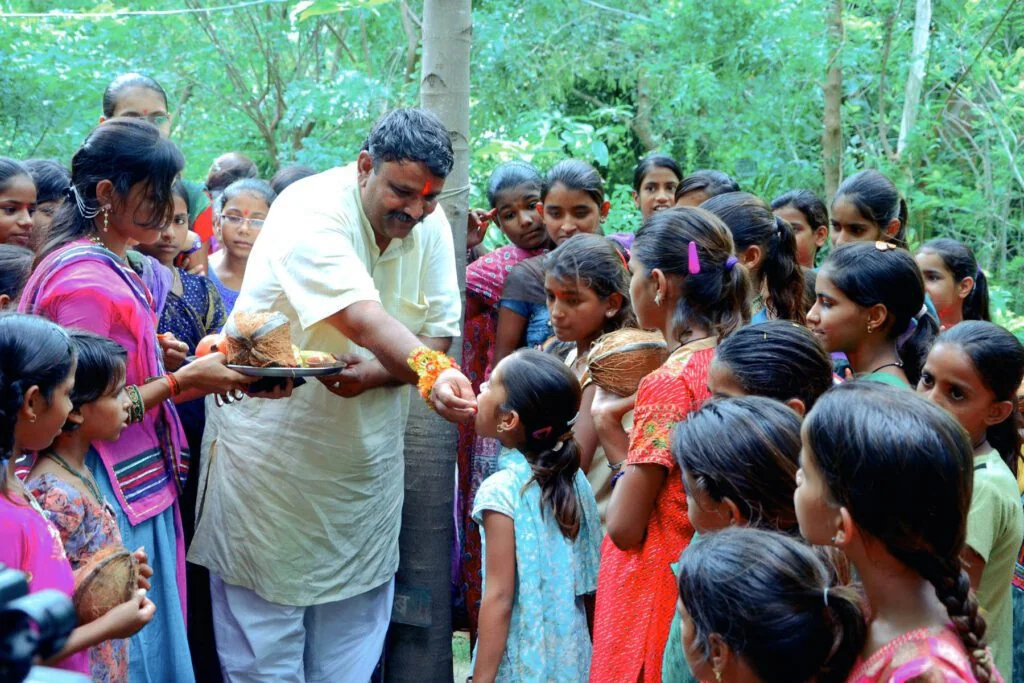
Shyam Sundar Paliwal has dedicated his life to planting trees and encouraging the wellbeing of a girl child. Paliwal lost his daughter in 2006. After coming over the loss he began a campaign named ‘Kiran Nidhi Yojana’ by planting 111 trees for every girl child born in his village along with a financial scheme.
The local Panchayat opens a fixed bank deposit account in the name of the new born as a part of the campaign. The parents of the girls are supposed to nurture the saplings and also sign an affidavit saying that they would not marry off their daughters before18 or practicing female foeticide. His campaign garnered results and sex ratio in his village improved drastically.
Soon his model started being followed up by several villages. The Pipalantri Village, as a result survived Rajasthan’s chronic drought & water scarcity thanks to the campaign. This initiative also helped building check dams on the pastures on nearby hills to recharge the groundwater level under Paliwal’s leadership and turned Rajsamand into an oasis full of trees.
For his pioneering work for eco – feminism the prestigious Padmashri Award was conferred on him by the President R N Kovind on 10 November, 2021. On this occasion he said that it is said that Gods rejoice where the women are honoured : Yatra Naryastau Poojyante Ramante Tatra Devatah.
Shyam Sundar Paliwal’s championing of ecofeminism in India linked environmental protection with women’s rights through grassroots activism that recognized the interconnected nature of ecological degradation and social injustice in rural communities where women bear the primary responsibility for resource collection and agricultural production while facing systemic barriers to land ownership and political participation that limit their ability to advocate for environmental protection and sustainable development policies that would address both climate change impacts and gender inequality through integrated approaches to rural development and natural resource management that empower women as environmental stewards and decision-makers in local governance structures and community-based conservation initiatives that protect forests, watersheds, and biodiversity while improving livelihoods and social equity through sustainable agriculture practices that conserve soil health, water quality, and ecosystem services that support both human communities and wildlife populations across diverse landscapes from arid rangelands to tropical forests where traditional knowledge systems developed by women provide crucial insights into sustainable resource use and climate adaptation strategies that complement scientific research and modern conservation planning efforts through collaborative partnerships between researchers, practitioners, and local communities that recognize the vital role of women’s knowledge and leadership in achieving environmental sustainability and social justice outcomes that benefit entire ecosystems and human societies through integrated landscape-level approaches to conservation and development that prioritize both biodiversity protection and human welfare through participatory planning processes that engage local communities as equal partners rather than passive recipients of external interventions and technical assistance programs that respect traditional ecological knowledge and cultural values while supporting capacity building and institutional strengthening that enables communities to effectively manage their natural resources and adapt to climate change through locally appropriate solutions that are grounded in scientific evidence and traditional wisdom and supported by adequate funding and technical assistance that builds on existing strengths and assets rather than imposing external solutions that may not be culturally appropriate or environmentally sustainable in the long term.
The Chipko movement exemplified ecofeminist principles by mobilizing women to embrace trees facing felling, literally hugging them to prevent deforestation in the Himalayan region of Uttarakhand. This nonviolent resistance highlighted women’s crucial role in protecting natural environments, as they directly experience the impacts of resource scarcity on daily life including water collection, fuelwood gathering, and agricultural productivity in mountain villages where deforestation leads to soil erosion, landslides, and reduced crop yields that disproportionately affect women who manage household resources and care for family members during environmental stress periods when community resilience depends on collective action and solidarity to protect shared resources from exploitation by commercial interests that prioritize short-term profits over long-term sustainability and community well-being through participatory governance models that recognize the rights of local communities to manage their natural resources sustainably while ensuring equitable benefit-sharing arrangements that support poverty reduction and rural development objectives that align with broader goals of environmental conservation and social justice through integrated approaches that address root causes of environmental degradation rather than merely treating symptoms of unsustainable resource use and climate change impacts on vulnerable communities who contribute least to global emissions yet face disproportionate burdens from environmental degradation and climate change through loss of livelihoods, displacement, and reduced access to basic services like clean water, sanitation, healthcare, education, and nutritious food that are essential for human dignity and sustainable development outcomes that require urgent attention from policymakers and development practitioners who must prioritize investments in climate resilience, renewable energy, sustainable agriculture, and ecosystem restoration as pillars of a more equitable and sustainable future for all.
Paliwal’s approach emphasized sustainable development that respects both ecological limits and community needs, promoting renewable energy adoption, water conservation programs, and organic farming practices that reduce environmental impact while empowering local women through training and economic opportunities in eco-tourism, handicraft production, and sustainable agriculture value chains that generate income while preserving traditional knowledge and cultural practices that have sustained rural communities for generations through adaptation to local environmental conditions and climate variability using indigenous techniques refined over centuries and passed down through oral traditions and practical demonstration that inform contemporary approaches to sustainable development and climate change adaptation through integration of traditional ecological knowledge with modern scientific methods and technologies.
Contemporary environmental movements continue drawing on ecofeminist principles, recognizing that diverse leadership including women’s voices strengthens climate action and conservation efforts through inclusive decision-making processes that incorporate multiple perspectives and values in environmental policy and management that reflect the interconnected nature of social and ecological systems and the need for holistic approaches that address root causes of environmental degradation while promoting equity, justice, and sustainability through transformation of dominant economic paradigms that prioritize endless growth and profit maximization over ecological integrity and human well-being in ways that are consistent with principles of environmental justice, human rights, and sustainable development for present and future generations of all species on Earth.
See related: women’s health.
See related: community conservation.