 Karmactive Staff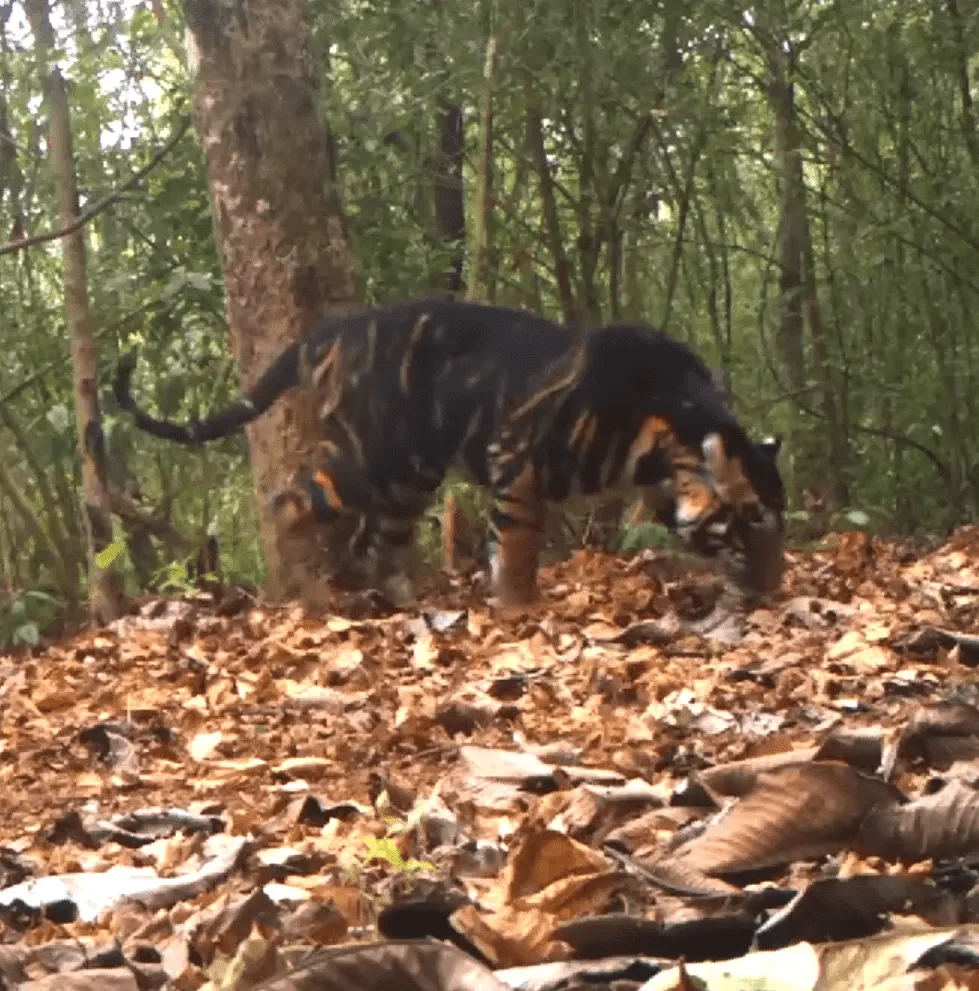
Rare Black Tiger Spotted In Odisha: Conservation Hope Amid Endangered Species Crisis
A rare melanistic black tiger was photographed in Odisha’s Simlipal National Park in August 2022, marking a significant conservation success. The sighting highlights ongoing efforts to protect India’s endangered tiger population through advanced wildlife monitoring and habitat restoration.
Simlipal’s Black Tigers
Simlipal National Park is the only habitat in the world where melanistic (black) tigers naturally occur, thanks to genetic isolation and a recessive allele. The park currently supports an estimated 24-28 tigers, including at least 6 black individuals. The latest cub, born in May 2022, was captured on camera traps deployed by the Wildlife Institute of India, providing hope for genetic diversity in this unique population.
Conservation Success Story
Project Tiger, launched by the Government of India in 2006, has contributed to a 30% increase in the national tiger population since 2018. The latest census recorded 3,167 tigers across India. Odisha’s tiger population rose from 28 in 2018 to 43 in 2022, reflecting improved anti-poaching measures and habitat restoration. The state’s investment in drone surveillance and GPS collar tracking has significantly enhanced protection efforts.
Scientific Research
A 2019 study in Current Science documented the genetic basis of melanism in Simlipal tigers, identifying a mutation in the SLC45A2 gene. The research team from the National Centre for Biological Sciences confirmed that the black phenotype provides no survival disadvantage in the dense forest canopy of Simlipal. The genetic uniqueness of this population makes it critical for global tiger conservation research.
Threats and Protection
Despite conservation successes, tigers face threats from habitat fragmentation and human-wildlife conflict. A 2020 study in Biological Conservation found that 42 tigers were poached or killed in human-wildlife conflicts in India between 2017 and 2020. The Wildlife Trust of India recommends corridor connectivity between protected areas to maintain genetic flow.
Related conservation stories: Rare wildlife sightings in Scandinavia and Extinct bird species rediscovery.