 Karmactive Staff
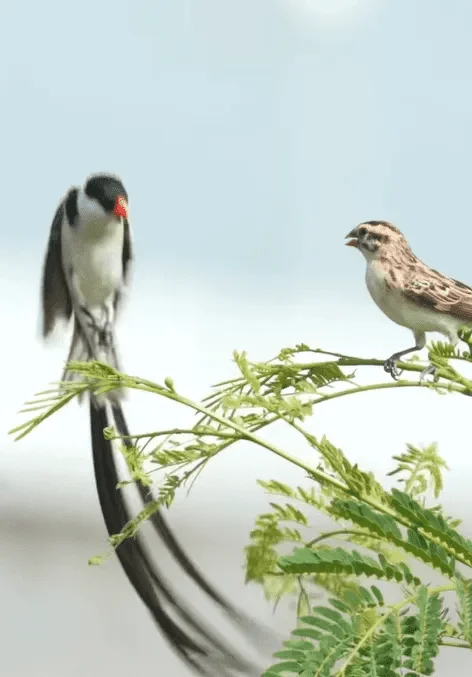
The bird in the video is a bird, but it seems to be a good dancer. The name of the bird
is Pin-taled Whydah. One can see another silently watching the birds dancing. The
background is blurred for the birds to be in focus
https://www.instagram.com/reel/Cd0wlnfLc4S/?igshid=YmMyMTA2M2Y%3D
Jonathan Lin is a wildlife photographer. He clicks photos of birds and clicks a few
animal photos as well. He uses a Sony camera for capturing photos. His photos
have been featured in magazines in New Zealand.
The pin-tailed whydah, a brood-parasitic bird native to sub-Saharan Africa, exhibits complex mating behaviors that have fascinated ornithologists studying evolutionary biology and sexual selection mechanisms in these remarkable avian species. Male whydahs perform elaborate aerial displays involving high-speed dives, hovering flight patterns, and distinctive tail feather movements that create captivating visual performances for potential mates in grassland and savanna habitats across their native range. These displays incorporate specific vocalizations and courtship rituals that have evolved over generations through natural selection pressures that favor traits enhancing mating success and reproductive fitness while also serving to establish territorial boundaries and social hierarchies within whydah populations across diverse ecosystems including open woodlands, grasslands, farms, and gardens where these adaptable birds have successfully colonized human-modified landscapes and agricultural areas that provide abundant food sources including seeds, insects, and nectar from flowering plants that support their energetic lifestyle and reproductive needs throughout the year in regions where seasonal variations in temperature, rainfall, and resource availability influence breeding cycles, migration patterns, and population dynamics of these remarkable birds that continue to captivate researchers and birdwatchers alike through their unique behaviors, striking plumage, and ecological roles as seed dispersers, insect controllers, and prey species for various predators including hawks, snakes, and mammals across their vast range and diverse habitats where conservation efforts and habitat protection measures support stable populations and promote biodiversity conservation through research, education, and community engagement initiatives that connect people with nature through birdwatching, photography, citizen science projects, and sustainable tourism practices that generate income for local communities while supporting environmental protection and conservation goals for future generations of whydahs and other wildlife across Africa and beyond through continued commitment to habitat preservation, research, and education programs that raise awareness about the importance of protecting these remarkable birds and their ecosystems for future generations.
See: related article.
See: related article.