 Sunita Somvanshi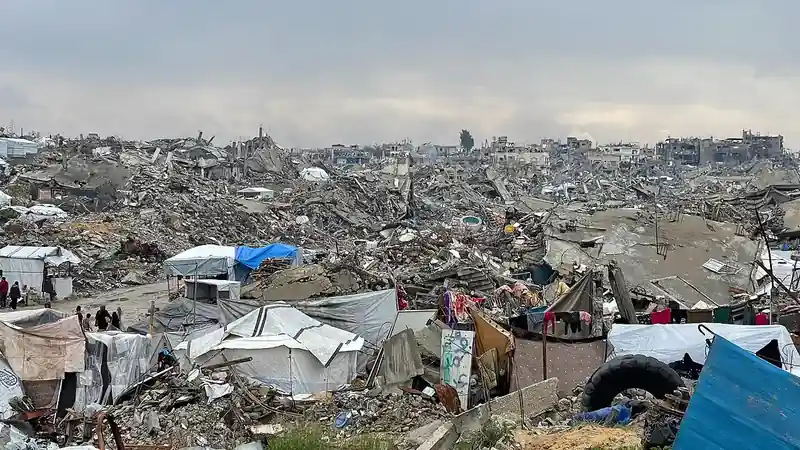
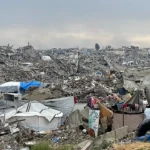
More than 600,000 Palestinians have returned to northern Gaza since the ceasefire took effect in January 2025, but the infrastructure to support them remains largely destroyed. Families who fled south in October 2023 now face a different crisis: homes reduced to rubble, hospitals non-functional, and water systems contaminated beyond repair. The return that was supposed to signal recovery has instead exposed the scale of devastation.
The UN Office for the Coordination of Humanitarian Affairs reports that 65 percent of buildings in northern Gaza were damaged or destroyed. Only 38 percent of water networks are operational. Electricity availability averages 4 hours per day, down from 12 before October 2023. These conditions contradict the narrative of a recovering Gaza and signal a humanitarian catastrophe that the ceasefire has not resolved.
The Return That Wasnt Prepared For
Israeli authorities permitted civilian returns in phases starting February 2025, but reconstruction has barely begun. The UN estimates $7.9 billion is needed for initial recovery, with only 14 percent pledged. The World Bank warns that without rapid reconstruction, displacement will become permanent. Meanwhile, restrictions on building materials remain in place, slowing reconstruction to a crawl.
Palestinian families returning to northern Gaza face a stark choice: rebuild in ruins with no electricity, no clean water, and no functioning schools, or remain in crowded camps in southern Gaza with uncertain prospects. The UNHCR reports that 85 percent of returnees have no access to regular humanitarian aid. Children account for 42 percent of the displaced population in northern Gaza.
The ceasefire created a window for return, but the window is narrowing. With winter approaching and reconstruction stalled, the humanitarian situation in northern Gaza is deteriorating faster than aid agencies can respond. The international community pledged $7.9 billion for recovery, but only 14 percent has been delivered. Families face a choice between returning to destroyed homes or remaining in camps with no certainty of rebuilding.
For Palestinians who fled in October 2023, the return to northern Gaza was supposed to mark the beginning of recovery. Instead, it has revealed a territory where infrastructure, economy, and basic services have been systematically dismantled. The ceasefire stopped the fighting but did not start the rebuilding.