 Sunita Somvanshi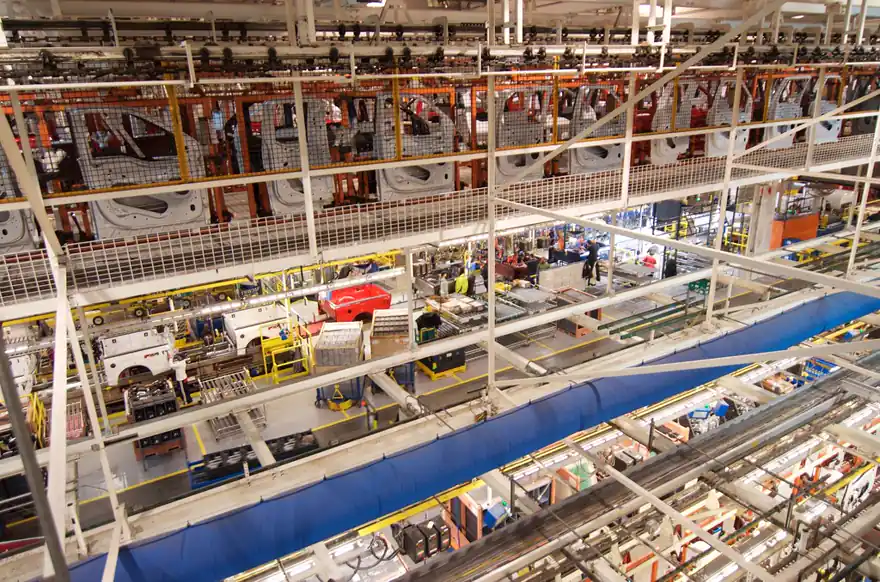
America’s biggest automakers are beating a hasty retreat from their ambitious electric vehicle plans, while Chinese competitors race ahead with cheaper, more competitive products. The exodus accelerated this month when General Motors sold off half its battery manufacturing partnership to Samsung.
GM’s decision to exit its 50-50 joint venture with Samsung SDI marks the latest retreat. The company cited “slower-than-expected EV demand”—the polite way of saying the business isn’t working. General Motors isn’t alone. Ford has taken even more dramatic action, writing down $19.5 billion in EV-related losses since December 2025, including $8.5 billion in asset impairments and roughly $6 billion tied to its partnership with SK Innovation.
The numbers tell a stark story. Ford’s electric vehicle sales plummeted 69 percent in the first three months of 2026, dropping to just 1,743 units. The company’s electric division, called Model e, posted a $919 million loss in the second quarter despite generating $1 billion in revenue. Ford now expects full-year 2026 losses of $4 to $4.5 billion from electric vehicles—a slight improvement only because 2025 was even worse at $4.8 billion.
Ford isn’t abandoning electrification entirely, but it’s changing course sharply. The company plans to cut 1,000 jobs at its Cologne plant and has announced 2,900 job cuts across European operations by the end of 2027. Instead of pursuing maximum electrification, Ford is now building hybrids and extended-range electric vehicles that combine battery power with gas engines—hedging its bets.
The American automakers face a structural problem: manufacturing costs. Tesla remains profitable selling electric vehicles while legacy automakers lose money on every unit. That’s partly because traditional car companies structured their factories around gasoline engines and struggled to adapt. Ford is trying to address this with a new universal electric platform that requires 20 percent fewer parts and 40 percent fewer workstations to build.
Meanwhile, BYD, China’s battery and vehicle maker, is capturing global markets with affordable electric cars. The company’s average selling price sits around $20,300—less than half Tesla’s $41,300 and significantly lower than premium brands like Rivian. In the second quarter of 2026, BYD delivered 557,000 fully electric vehicles globally, up sharply from the same period last year, becoming the world’s largest EV maker by volume.
BYD is winning on price. The company developed flash charging technology that delivers more than three times the charging speed of anything currently deployed in North America, yet charges vehicles dramatically faster. That feature, introduced in March 2026 using BYD’s Blade Battery 2.0 technology, gives Chinese consumers capability American drivers can’t yet access.
The timing matters. America’s federal EV tax credit ended September 30, 2025, and the demand cliff coincided exactly with that change. Without subsidies propping up sales, American automakers faced the harsh reality that customers weren’t yet willing to pay premium prices for electric vehicles. Legacy automakers are now recalibrating for a slower transition to electrification, while Chinese competitors accelerate past them.