Karmactive Team

Energy Development Corporation President and Chief Operation Officer Richard Tantoco were recognized as one of this year’s ESG, Diversity, and Climate Trailblazers in Governance, Risk, Compliance (GRC) company Diligent’s 2022 Modern Governance 100 honorees. EDC president and COO Richard Tantoco said during the Virtual Business World Insight that at the moment they are constructing two new plants and in the next twelve months two more new plants would be constructed with an investment of in excess of P20 billion. The two new projects are the 100-megawatt (MW) Aya pumped-storage project in Pantabangan, Nueva Ecija and the 20-MW Tanawon geothermal power plant in Bicol.


The Energy Development Corporation (EDC) is the leading 100% clean, renewable energy company in the Philippines, with over 40 years of experience in geothermal technology. With power plants situated across the country, the company also strives to provide the best customer and value-adding services to all its customers and stands to be one of the world’s largest vertically integrated geothermal companies.
EDC said that the Aya project is eyed to become the largest battery system that the country will have, which can discharge over eight to 12 hours of support to the grid, unlike the traditional lithium-ion battery systems that have a typical max discharge of three hours. Meanwhile, the Tanawon plant in Bicol is part of the expansion of the Bacon-Manito (BacMan) geothermal power plant in the Bicol region in the next four years. EDC also has two ongoing projects – the 29-megawatt (MW) Palayan binary plant in Bicol and the 3.6-MW Mindanao 3 binary plant. The Palayan binary plant which is targeted to be completed in 2022, with an estimated cost of P6.4 billion is found to overtake the overall power generation capacity of existing geothermal power plants—120 MW Bacman I and 20 MW Bacman II.


Meanwhile, the Mindanao 3 binary plant, which is targeted to be completed in the first half of 2022, expands the 52.3-MW Mindanao I and 50.93-MW Mindanao II geothermal power plants in Mt. Apo. Tantoco said that Bicol projects would produce geothermal power at a more efficient level, as they use a lot less cement when they are being constructed by the use of new technology called radial outflow turbines , which they are buying from an Italian manufacturer called Exergy, marked as first in Philippines.
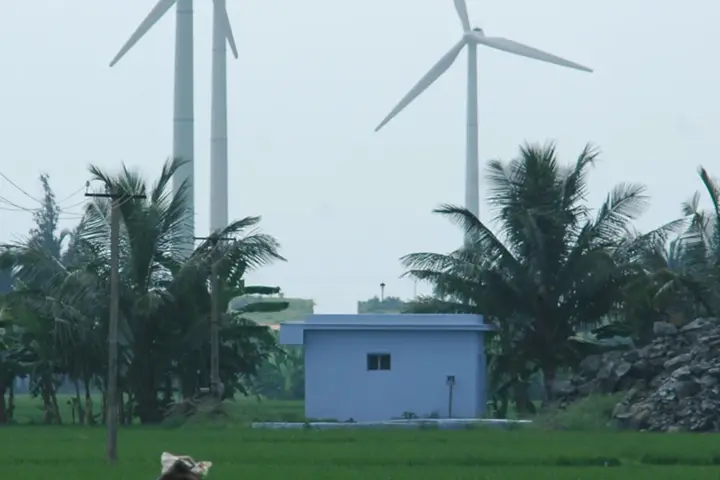
EDC with the recognition as a world leader in wet steam field technology, operates in various locations in the country, including in Bicol, Leyte, Negros Island, and Mindanao. Through its subsidiaries, it also operates the biggest combined wind and solar farm in the region, located in Burgos, Ilocos Norte, and has substantial hydropower assets located in Nueva Ecija.
With 19 percent of the country’s total installed renewable energy capacity and 62 percent of the total installed geothermal capacity, EDC has put the Philippines on the map as the third largest geothermal producer in the world. The path to decarbonizing the Philippines is long and difficult. Still, leaders like Tantoco and companies like EDC are forging the way for others to follow, which shows the role businesses can play in finding growth opportunities while achieving a clean and regenerative future.
See also: Fema Court Solar Puerto Rico Grid; Aboitizpowers Mega Watt Leap Charting The Philippines Renewable Energy Surge