 Rahul Somvanshi
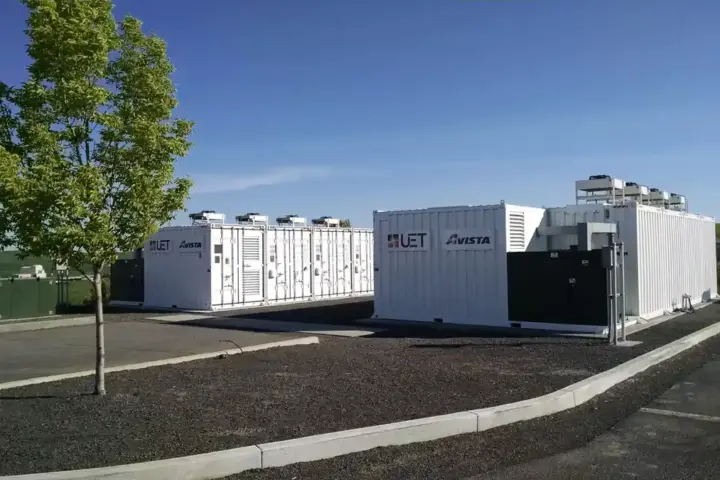
Developer Green Flexibility has started construction on the first of six grid-neutral battery storage sites in Germany, all in Lower Saxony. The batteries will store surplus power and release it when it is needed.
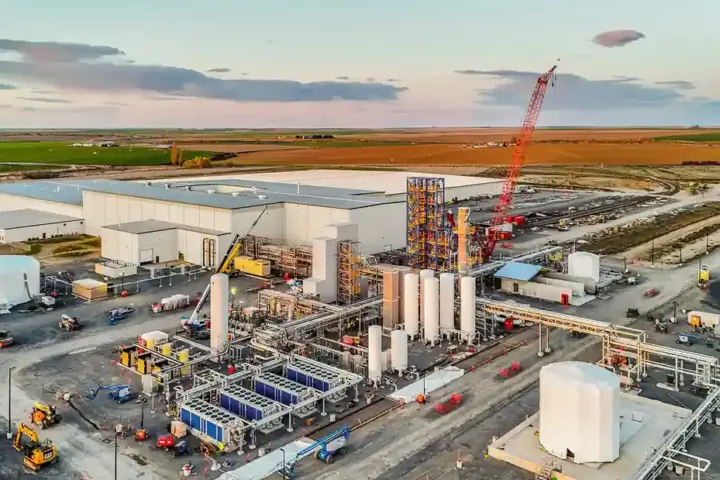
Green Flexibility is starting with Bad Bederkesa, in the Cuxhaven district of Lower Saxony. The site is rated at 10 MW of power and 24 MWh of storage. A megawatt (MW) measures how fast a battery can release power, like the flow from a tap. A megawatt-hour (MWh) measures how much energy it holds, like the size of the tank. Commercial operation is scheduled for the second quarter of 2027. The full six-site portfolio totals 120 MW and 480 MWh, with an investment of roughly €150 million (about $165 million).
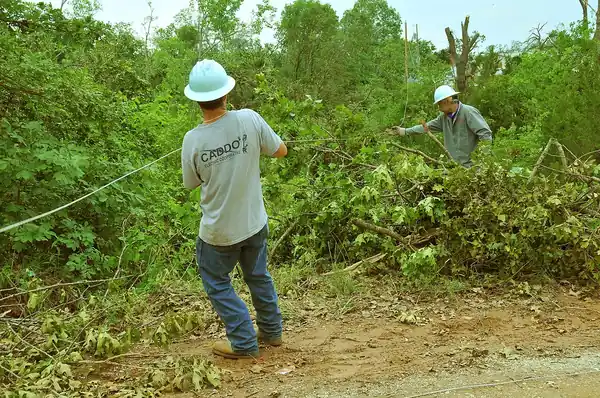
For people living near one of the six locations, the change visible so far is construction work, which has started at Bad Bederkesa. For everyone else, the effect is more indirect. The batteries are designed to store surplus wind and solar power and feed it back when the local grid needs it. That is an inference from the project design, not a measured result.
Christian Meyer, Lower Saxony’s Minister for Environment, Energy and Climate Protection, attended the symbolic construction start at the site. The Bad Bederkesa battery is the first of six facilities. The others are at Lindern, Hagen im Bremischen, Esterwegen, Bremervörde and Zeven. Together they add up to 120 MW of power and 480 MWh of storage.
Simple division gives a rough sense of how long each site can run. Bad Bederkesa’s 24 MWh at 10 MW works out to about 2.4 hours at full output. The full portfolio’s 480 MWh across 120 MW averages four hours. These figures are calculations from the published totals, not measured performance.
How Flexible Connection Agreements Keep Batteries Grid-Neutral
A flexible connection agreement, or FCA, lets a project plug into the grid under terms that allow its output to be adjusted when the local network is under strain. All six Lower Saxony sites are covered by an FCA with regional grid operator EWE Netz. Think of it like a restaurant that can seat more guests on quiet nights but asks some to wait when the room is full.
Green Flexibility’s operating concept, called REGIOlink, adjusts when each battery charges and discharges. The developer says that timing reflects two inputs: electricity market price signals and the needs of the regional grid. The company uses the term grid-neutral for this approach.
The rollout reaches beyond the north. In Obergünzburg, in the Ostallgäu district of Bavaria, Green Flexibility’s 40 MW battery with 90 MWh of storage is largely complete. The investment is about €35 million. The site has a dedicated substation for its high-voltage grid connection to LEW Verteilnetz, the local distribution network operator.
The company opened the site to the public shortly before its official commissioning. By simple division, 90 MWh at 40 MW gives about 2.25 hours at full output.
Wind and solar output rises and falls with the weather, not with when people use power. When production runs ahead of local demand, power lines can become overloaded. When production drops, supply can tighten. Storage sits between those moments, taking power in one and releasing it in the other.
Matching each battery to its regional grid, as these FCAs do, aims to keep that storage useful where the lines need it, as well as where prices are high. The developer’s stated aim is to serve both at once.
Construction has started at Bad Bederkesa, the first of six Lower Saxony sites that make up a 480 MWh grid-neutral battery storage portfolio. Commercial operation at that site is scheduled for the second quarter of 2027. In Bavaria, the 40 MW Obergünzburg site is largely complete. Each of the Lower Saxony facilities is set to run under an agreement with EWE Netz.