Rahul Somvanshi
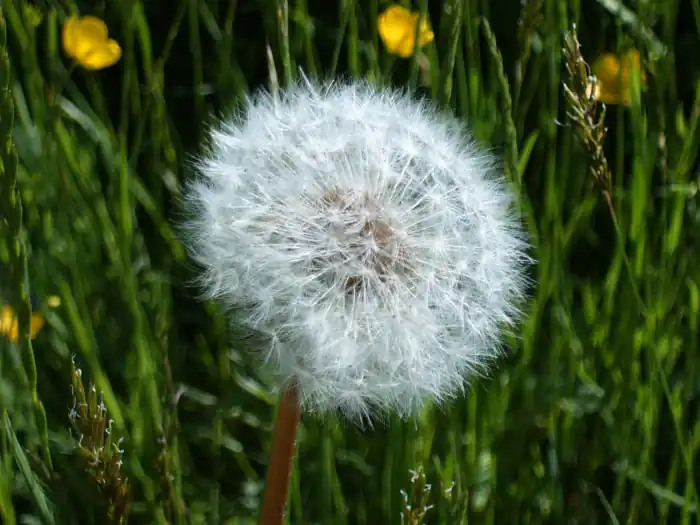
Dandelions are often treated as lawn weeds, but Taraxacum officinale has a long record as food and traditional herbal medicine. Young leaves have been eaten as bitter greens, roots have been roasted or dried for drinks and teas, and the plant appears in European and other herbal traditions long before the modern lawn-care industry.
Historical use is not the same as proof of medical benefit. But the cultural record is strong enough to correct the idea that dandelions were always disposable weeds.
What old herbals show
Dandelion appears in early modern European herbals. The US National Library of Medicine preserves an illustration in Elizabeth Blackwell’s A Curious Herbal (1737). It also notes that editions of Nicholas Culpeper’s widely circulated English herbal described dandelion as a remedy for “obstructions” of the liver, gallbladder and spleen. These are historical medical claims, not modern clinical conclusions, but they document the plant’s place in household and professional herbal practice.
Later botanical and materia-medica traditions continued to list dandelion root and leaf. Across cultures, dandelion has been used as food, a bitter digestive herb and a diuretic. The fact that a remedy was traditional does not prove it works for a modern diagnosis; it does show that the plant was valued and used, not forgotten by accident.
How a food plant became a lawn weed
The transformation was largely cultural and commercial, not a demonstrated pharmaceutical plot. Post-war suburban landscaping promoted a uniform grass lawn as an ideal. Selective herbicides made it easy to remove broadleaf plants from turf, and dandelions became the visual shorthand for an imperfect lawn.
2,4-D, introduced in the 1940s, became one of the most widely used selective herbicides for broadleaf weeds. It is relevant to the Agent Orange story, but the distinction matters: Agent Orange was a mixture containing 2,4-D and 2,4,5-T. The US Environmental Protection Agency says 2,4-D is not Agent Orange, and the notorious dioxin contamination associated with Agent Orange was tied to 2,4,5-T.
There is no credible evidence that pharmaceutical companies caused dandelions to lose their food or medicinal roles in order to sell chemicals. The more supportable explanation is the growth of lawn culture, herbicide marketing, changing diets and a separation between home gardening and everyday herbal knowledge.
What modern research can—and cannot—say
Dandelion contains compounds of scientific interest, and laboratory and animal studies have explored antioxidant, anti-inflammatory and metabolic effects. Those findings can guide research. They do not establish that dandelion tea or root extracts cure liver, kidney, heart, digestive or skin disease in people.
The US National Center for Complementary and Integrative Health says there is little scientific evidence to support dandelion for any health condition. Claims that it “detoxifies” organs or heals chronic illness go beyond the available clinical evidence.
Food and safety
For many people, dandelion can be approached first as a food plant rather than as a medicine: young leaves are commonly eaten in salads or cooked, while roots are used in teas and roasted drinks. But avoid harvesting from roadsides, lawns or fields that may have been treated with herbicides or exposed to pollution, and be certain of the plant’s identity.
Concentrated supplements deserve more caution. Dandelion can cause allergic reactions and may interact with medicines, including diuretics, diabetes medicines, blood thinners and some antibiotics. People who are pregnant, breastfeeding, have gallbladder or kidney problems, or use regular medicines should consult a qualified clinician or pharmacist before using extracts.
The case for leaving some dandelions in a garden does not need exaggerated health claims. It rests on history, food culture, reduced herbicide dependence and a more diverse idea of what a healthy lawn can look like.
Historical and evidence references: US National Library of Medicine historical collections; NCCIH on dandelion safety and evidence; US EPA on 2,4-D and Agent Orange.