 Govind Tekale
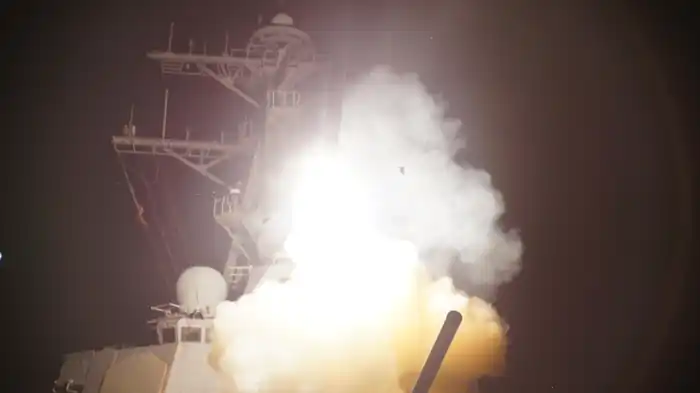
A US Army Tomahawk cruise missile was launched from Tacloban Airport in Leyte during the May 5 Balikatan exercise and struck a designated impact area in Laur, Nueva Ecija, more than 600 kilometres away, according to Philippine military reporting and accounts from the exercise.
The launch was a first for the US Army’s Typhon mid-range missile system in the Philippines. Reports said the test missile carried no explosive payload. It nevertheless drew criticism because it was fired from an airport used for civilian aviation and crossed a long stretch of Philippine territory before reaching the military area at Fort Magsaysay.
Some local and activist accounts have said the missile came down in farmland in Nueva Ecija. The Philippine military’s reported account is different: it says the missile reached a designated impact area in Laur. Karmactive has not found an independently released impact-site assessment that resolves that discrepancy, so neither description should be presented as settled fact.
A test in the Philippines, and a Tomahawk in the Iran war
The Philippines launch was a training event under a defence alliance. But the Tomahawk is not only a training weapon. In a separate conflict, extensive reporting and a preliminary US military assessment have linked a US Tomahawk strike on February 28 to the deadly destruction of a girls’ primary school in Minab, southern Iran.
UN experts said at least 165 schoolgirls were reportedly killed in the strike during US and Israeli attacks on Iran. News reports citing US officials said an early military inquiry pointed to outdated intelligence. The circumstances, accountability and final findings remain matters of investigation.
That does not mean the missile fired during Balikatan was the same physical weapon used in Iran. It was not. The connection is that both events involved the same US Tomahawk cruise-missile system: one was an inert test shot conducted with Philippine cooperation, while the other was a wartime strike that has been linked to a mass-casualty school attack.
For the Philippines, the test highlights the strategic role the country now plays in US regional military planning. Supporters describe the exercise as strengthening a treaty ally’s deterrence and interoperability. Critics ask what safeguards, transparency and public consent are required when long-range weapons are tested across populated national territory.
The outstanding facts matter. Authorities have yet to make public a detailed, independently reviewable account of the missile’s final impact location and any effect beyond the designated range. Until that happens, the contrast between local claims of farmland impact and the official description of a military target area should remain clearly attributed.