Rahul Somvanshi
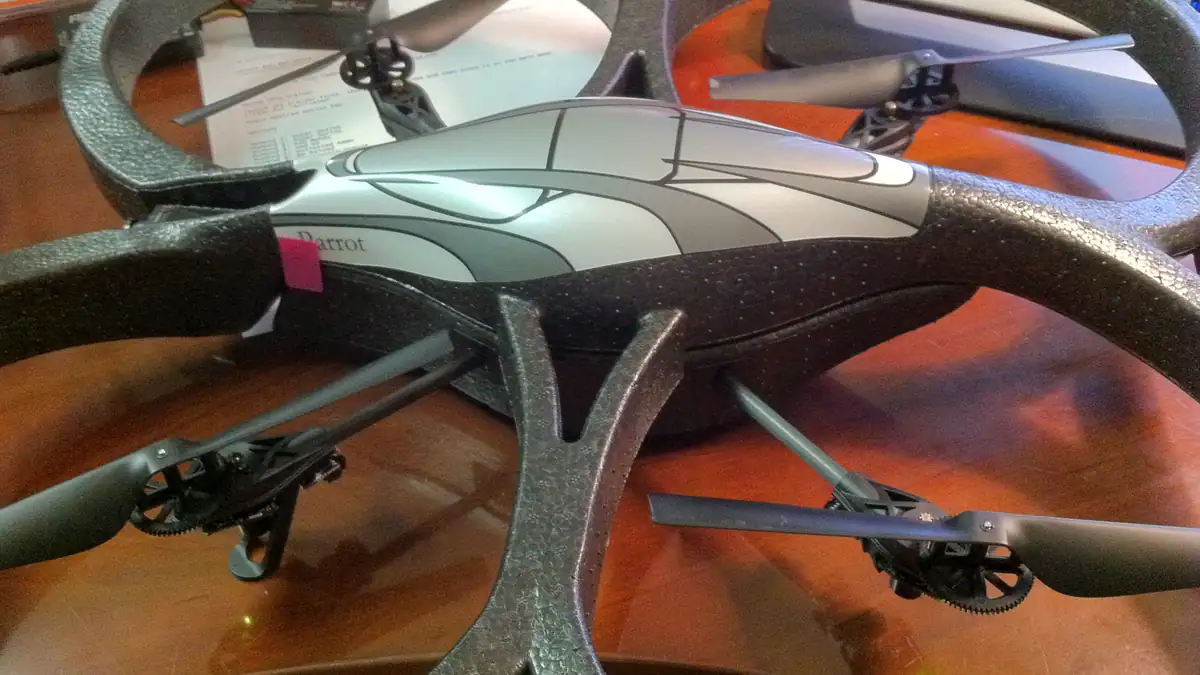
The Ring Drone Cam is Amazon’s first indoor flying security camera since the 2020 Always Home Cam, and it cannot be sold yet. The FCC has not authorized it, so the January 27, 2027 ship date is conditional. Ring also announced a Rover Cam for December 16, 2026. Both rely on cloud-based AI Pilot navigation. Can a drone that thinks in a data center fly safely at home?
Here is how the two devices compare.
Ring Drone Cam: 165 grams, 2K (1920×1920) video, 148-degree field of view, 360-degree rotation, dual LEDs, and an 8-minute flight. It has no microphone and no speaker. Charging runs at an 8:1 ratio, so a flight needs about an hour of dock time. It needs 10 Mbps upload (5 Mbps minimum) and runs on 90-265 VAC USB-C power. It is assembled in the USA.
Ring Rover Cam: 20.6 pounds (9.35 kg), 4K video on an adjustable 4-foot periscope, a siren, two-way talk, and an LED light tower. It covers 5,000 square feet, runs 30 minutes per 45-minute charge, and uses an 18Vdc 9A (162W) Li-ion charger. 4K streaming needs 15 Mbps upload.
Scheduled patrols, 180-day video history, and video search require a Ring Protect subscription at $5 per month or $60 per year. The Drone Cam does not do much on its own without one.
The limits arrive quickly. Both devices work on a single floor only at launch, so a two-story home needs a second unit or a skipped floor. Both need strong upload bandwidth, and 15 Mbps is more than many home plans offer. Both are also picky about flooring and walls. In Illinois, AI Video Search is unavailable because of the state’s biometric privacy law, BIPA. Buyers there get a smaller feature set.
How Cloud Brain Offloading Solved the Drone Weight Spiral
Indoor drones have a weight problem. Onboard computing for navigation needs a bigger battery. A bigger battery needs a heavier frame. A heavier frame needs stronger rotors, and strong rotors become dangerous in a living room. Each fix makes the next problem worse.
Ring’s answer is to move the thinking off the aircraft. AI Pilot does its vision navigation in the cloud, so the Drone Cam only has to carry a camera and fly. That is how it reaches 165 grams. It also explains the 10 Mbps upload requirement. The drone is only as smart as its connection.
The tradeoff is a battery that cannot be removed. Ring says performance decreases over time, and when the cell wears out, the product wears out with it. Smaller flyers face the same limits. Festo’s 34-gram BionicBee shows how hard it is to make a flying robot both light and capable. Ring’s approach is to make it dependent on the cloud instead.
Amazon’s robotics push is wider than one product. It acquired Fauna Robotics in March 2026. That fits a broader pattern of AI moving from screens into physical machines.
From Generalist Companions to Single-Purpose Guards (And Privacy Guardrails)
Both products reuse older hardware. The Drone Cam revives the 2020 Always Home Cam. The Rover Cam repurposes the 2021 Amazon Astro and the 2023 Astro for Business, which launched at $2,350. Amazon once pitched Astro as a roaming household companion. It is now a patrol guard with one job.
Moving cameras raise the stakes on privacy, and Ring built docking rules around that. When the Drone Cam docks, it powers off its camera. In Sleep Mode, the Rover Cam retracts its periscope and disables its microphones. The Drone Cam has no microphone at all, which removes one concern.
The bigger question is who can see the footage. Ring’s TAKE encryption rotates keys every 5 minutes inside AWS Nitro Enclaves. Ring’s cloud copies of those keys are destroyed after 24 hours. That means Ring cannot decrypt older footage, even for law enforcement. For a company that has faced criticism over police access, this is a real change. Whether it satisfies skeptics is another matter. See our look at Flock camera surveillance for how contested this area is.
Ring also commits to four years of software security updates for the Rover Cam after it leaves sale. It makes no similar promise for the Drone Cam in the facts we have.
What Will Break Your Setup
Ring’s own failure list is the most useful part of the announcement. The Drone Cam is disrupted by polished marble, wet tile, blank matte walls, frameless glass, and mirrors. That covers many bathrooms, entryways, and modern open-plan rooms.
The Rover Cam fails on black glossy floors, curved edges, and sunken areas. It cannot cross transitions taller than 1.375 inches. Its dock must sit at least 3 feet from stairs, with 5 feet of clear space in front. It is not suitable for children under 3 or small pets.
A white-walled room with a mirror and glossy tile could defeat the Drone Cam. A black glossy floor could defeat the Rover Cam. Check your floors before you check the price.
Why Can’t You Buy the Ring Drone Cam Yet?
The Ring Drone Cam is not FCC authorized. Any device that emits radio signals, as a Wi-Fi drone does, needs that approval before it can be sold in the United States. Until the FCC grants it, Amazon cannot legally sell the Drone Cam. The January 27, 2027 shipping date depends on that approval. If it slips, the date slips with it. The Rover Cam is not on hold and is scheduled to ship December 16, 2026.
What Comes Next
The Rover Cam arrives December 16, 2026, so buyers get the first real test. Watch for early reports on floor transitions and upload demands. Then watch the FCC for the Drone Cam. The biggest open question is multi-floor support. Ring has not announced a date for a software update that would add it. Until it does, treat both devices as single-floor tools, and wait for approval before paying for the Drone Cam.