 Tejal Somvanshi

The Ebola outbreak in the Democratic Republic of Congo has crossed a major threshold: cases have officially surpassed 10,000, making it the largest and deadliest Ebola epidemic in Congolese history—and the rare strain driving it has no approved vaccine or specific treatment.
Congolese health authorities confirmed that the outbreak has reached 10,060 confirmed cases and 4,887 deaths as of October 25, 2026, with the fatality rate at approximately 48.3 percent, per WHO data. The outbreak, first declared in May 2026, has produced imported cases in Uganda, Kenya, Nigeria, and France, though active transmission outside the DRC has been contained. One case—a 42-year-old Swiss woman who fell ill after a trip to Uganda—was medically evacuated to Geneva, Switzerland.
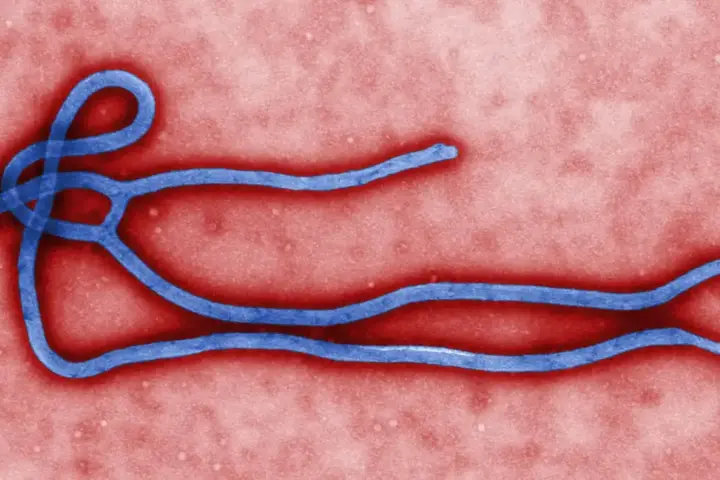
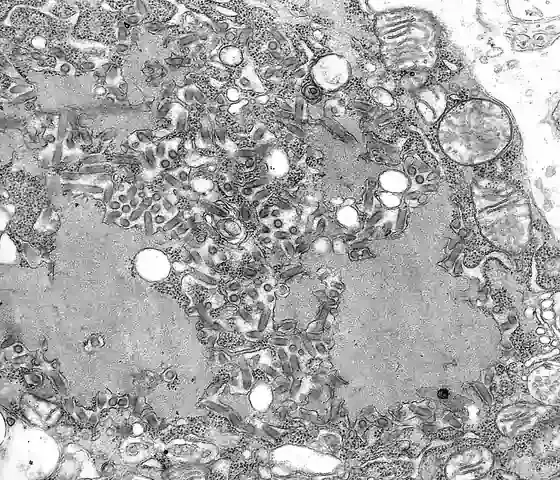
Because this outbreak is driven by the rare Bundibugyo species of Ebola—for which there are currently no approved vaccines or targeted antiviral treatments—health agencies cannot rely on the rapid vaccination campaigns used to contain past outbreaks caused by the Zaire species. Healthcare systems in affected and neighboring countries face heightened surveillance requirements and are awaiting experimental Bundibugyo countermeasures under clinical trials.
Why the Rare Bundibugyo Strain Complicates Containment
Global Ebola preparedness has been built almost entirely around the Zaire ebolavirus species. The licensed vaccines Ervebo and Zabdeno/Mvabea, as well as the monoclonal antibody treatments Inmazeb and Ebanga, were developed and approved for use against Zaire strains. None are currently approved or established as effective for the Bundibugyo species.
This means frontline health workers cannot deploy ring vaccination—the strategy that, alongside isolation, contact tracing, and infection prevention, formed the backbone of previous Zaire outbreak responses. Any containment effort must rely on those other measures, plus experimental treatments being tested in field trials.
The WHO has described the multi-country containment challenge as complex. Uganda had earlier cases that were declared over; Kenya, Nigeria, and France reported imported cases with no sustained local transmission.
Despite decades of global investment that produced effective vaccines and antibody treatments for the Zaire ebolavirus species, this outbreak became the largest in Congolese history in part because it was triggered by the rare Bundibugyo species, for which no approved vaccine or treatment currently exists.
Why isn’t the Ebola vaccine working in the 2026 Congo outbreak? Existing licensed Ebola vaccines and treatments—including Ervebo and Zabdeno/Mvabea—were developed and approved specifically for the Zaire ebolavirus species. The current outbreak is caused by the Bundibugyo species of Ebola, for which there are currently no approved vaccines or targeted antiviral treatments. This is distinct from saying these products have zero effect; rather, they are not approved or established as effective for Bundibugyo.
Updates on WHO emergency committee actions and clinical trial deployments for candidate Bundibugyo vaccines will follow as announced. More on CDC infectious disease and superbug warnings and WHO global health emergency protocols at cruxbuzz.com.