 Sonali Tiwary
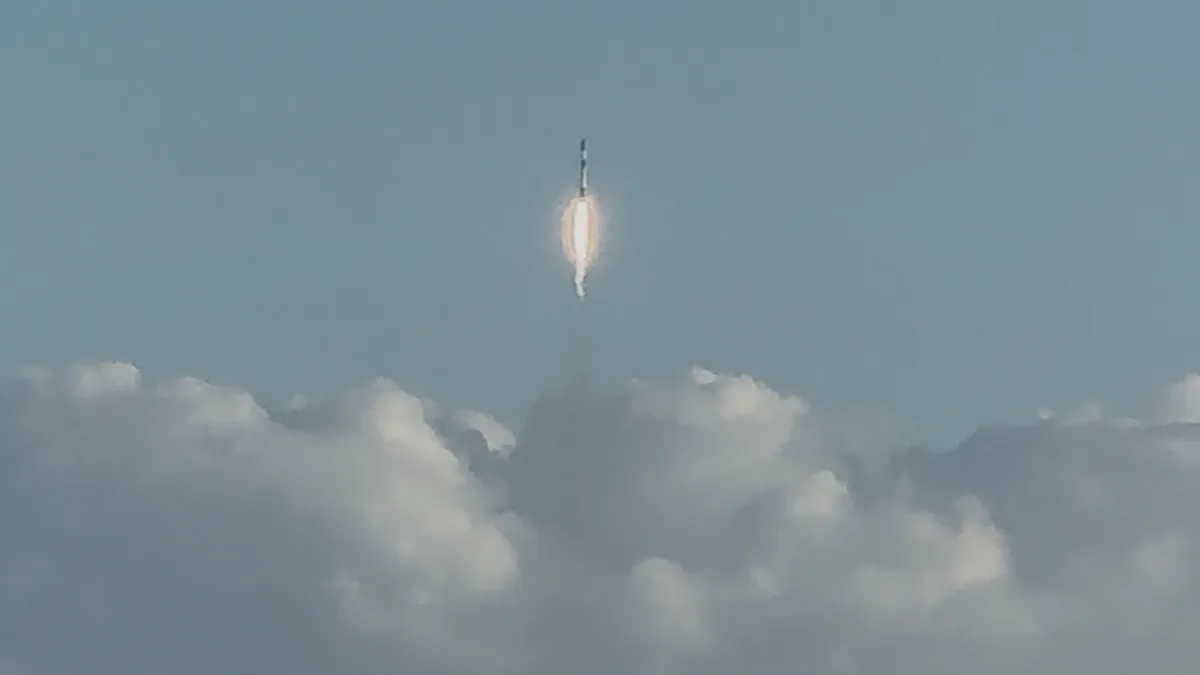
SpaceX’s second attempt at launching the Bandwagon-5 rideshare mission succeeded Tuesday morning after Monday’s weather scrub, carrying 32 payloads to orbit — including the second demonstration flight of SpaceX’s own Starfall return capsule, a disc-shaped vehicle designed to bring cargo from orbit back to Earth.
The launch
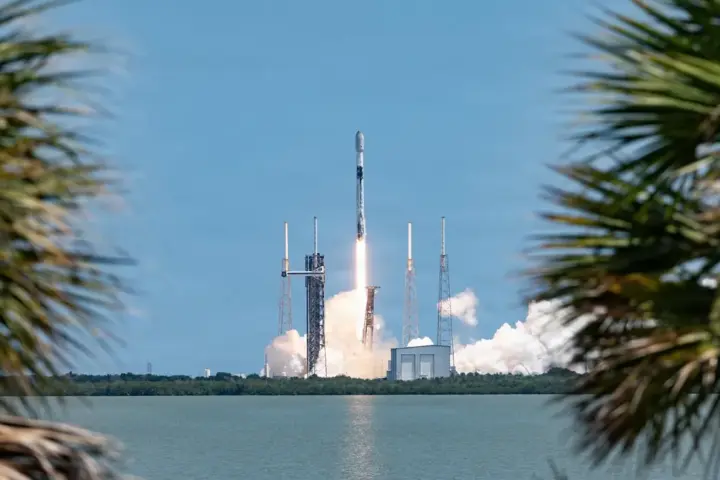
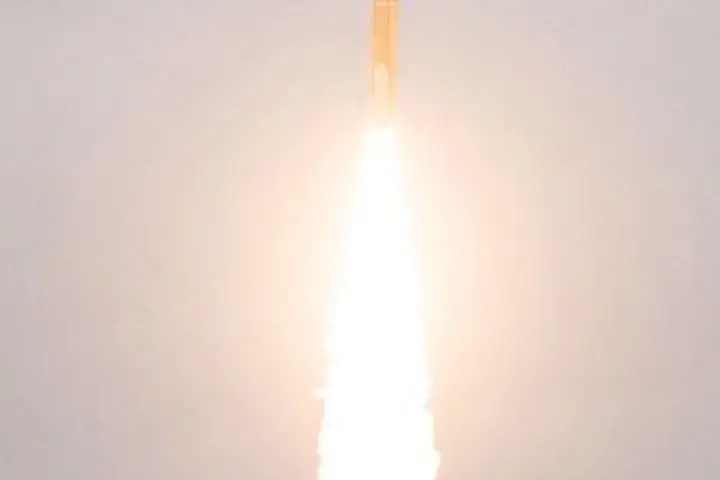
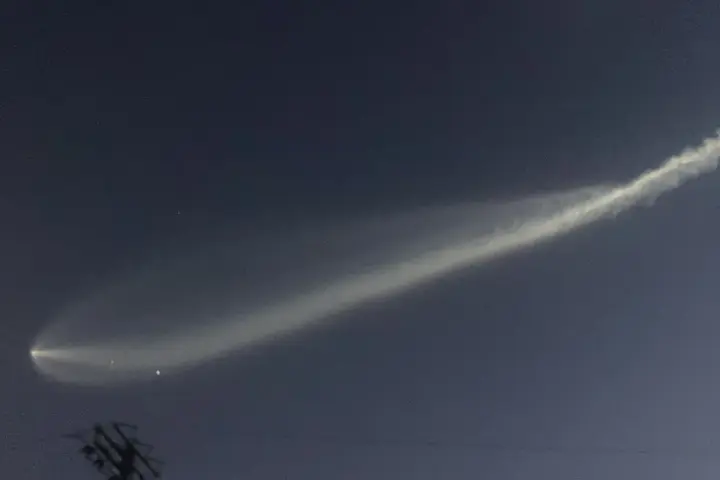
A Falcon 9 rocket lifted off from Space Launch Complex 40 at Cape Canaveral Space Force Station at 7:04 a.m. EDT (11:04 UTC) on October 20, 2026. Nine minutes after liftoff, the first-stage booster completed its 19th individual flight and touched down on the Atlantic Ocean drone ship A Shortfall of Gravitas. The upper stage then began deploying payloads in sequence, with the Starfall capsule scheduled as the final deployment at approximately two hours and 48 minutes after liftoff.
What Starfall is — and why it matters
The Starfall reentry vehicle is designed to return manufactured goods and research samples from low Earth orbit without requiring a crewed spacecraft. According to FAA environmental review documentation, the disc-shaped capsule stands 2.5 feet (0.75 meters) tall, measures 10.2 feet (3.1 meters) across, weighs roughly 4,600 pounds (2,100 kilograms), and is designed to return up to 2,200 pounds (1,000 kilograms) of cargo per flight.
Its first demonstration mission launched June 23, 2026. Tuesday’s flight marks its second demonstration, carrying Starfall alongside 31 customer payloads as part of the shared rideshare manifest.
The other payloads on board
Bandwagon-5 also carried Varda Space Industries’ W-Series 7 orbital pharmaceutical factory capsule — designed to manufacture drug compounds in microgravity — and Planet’s Pelican-12 high-resolution Earth-observation satellite.
Rideshare missions like Bandwagon-5 have made orbital access available for smaller research and commercial operators. The inclusion of return capsules opens an additional category: not just getting hardware to orbit, but bringing manufactured product back down.
The bigger picture for orbital manufacturing
The combination of Varda’s pharmaceutical factory and SpaceX’s Starfall capsule on the same mission reflects a commercial logic where in-space manufacturing is only economically viable if return logistics exist at a workable cost. Tuesday’s mission is an early practical test of that supply chain.