 Tejal Somvanshi
The supplement no one can regulate — and a DHS official’s stake
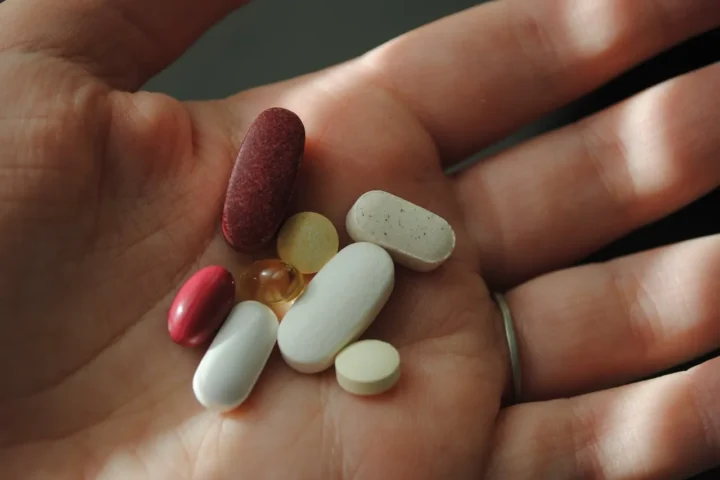
Jeffrey Deaver, a retired timber cutter from Washington, started taking kratom three years ago for chronic back pain. He never considered that the capsules sitting on his shelf—purchased legally at a local gas station—might contain a substance the FDA categorizes as a concentrated opioid. Last month, federal regulators issued another warning about kratom products, yet the gap between what they’re banning and what remains unregulated reveals a troubling policy failure.
Kratom, a leafy plant from Southeast Asia, has exploded into a billion-dollar U.S. market. Users credit it with pain relief and opioid withdrawal management. But the federal response has been fragmented. The DEA attempted to schedule kratom as a controlled substance in 2016, only to back down after public outcry. The FDA, meanwhile, has issued warning letters to manufacturers—but only targeting 7-OH, a concentrated opioid derivative, while leaving mitragynine, kratom’s primary active compound with opioid-like effects, entirely unregulated.
The consequence is stark for consumers like Deaver. Without FDA oversight, kratom products carry no quality assurances. A capsule labeled for pain management might contain undisclosed 7-OH levels, contaminants, or a fraction of advertised potency. Dr. Shane Speights, dean at NYIT’s College of Osteopathic Medicine, explains that supplement market opacity leaves users unable to verify what they’re consuming.
The Regulatory Blind Spot
The FDA’s selective focus on 7-OH while ignoring mitragynine appears strategically puzzling. Mitragynine is the compound producing kratom’s opioid-like effects. Yet the agency concentrates enforcement on trace 7-OH levels—a choice Public Citizen has called insufficient. The DEA remains equally passive, content to let states ban kratom individually while federal policy stalls.
This regulatory vacuum coincides with a conflict of interest warranting scrutiny. DHS Secretary Markwayne Mullin holds financial stakes in a kratom company. As a sitting cabinet official, Mullin’s investment creates an obvious tension between his department’s nominal coordination role in drug policy and his personal financial stake in keeping kratom unscheduled. While the FDA technically operates independently, the optics underscore why federal kratom policy resembles managed neglect rather than regulation.
Products marketed as “gas station heroin”—slang for concentrated 7-OH kratom—proliferate in convenience stores nationwide. Users seeking legitimate pain management unknowingly purchase products of unknown composition, relying on hope rather than verification.
What Users Need to Know
Kratom remains legal federally and across most states, though some jurisdictions have enacted bans. The DEA’s 2016 scheduling attempt collapsed after public comments. What distinguishes 7-OH? It’s a concentrated alkaloid marketed as a stronger kratom variant, often sold under vague labeling that obscures potency levels and contents.
For Deaver and the estimated millions of Americans using kratom, the regulatory gap poses genuine risk. Until the FDA enforces meaningful quality standards or applies equal scrutiny to mitragynine and 7-OH, users have no reliable method to verify purchases or assess safety. The current system protects neither public health nor consumer autonomy—it preserves the industry’s ability to operate without accountability. That’s the real danger lurking in convenience store shelves across America.