 Karmactive Staff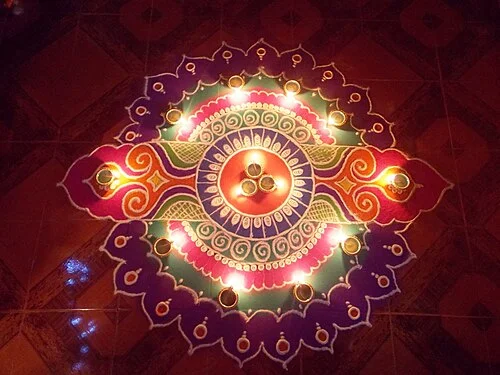
The colors on your Dussehra rangoli may contain lead, mercury, and cadmium — heavy metals that pose health risks to anyone who creates them and to the environment when they wash away. See Heavy metals in paint, Lead paint, Mercury (element)), and Cadmium.
Synthetic rangoli colors are the standard for modern Dussehra celebrations. They are cheap, vibrant, and easy to apply. But they contain chemical compounds that do not break down naturally. When rain washes the colors into waterways, these chemicals dissolve into the water, creating a toxic mixture that harms aquatic life and contaminates water sources. See Toxic chemicals and Chemical compound. The same colors that make the rangoli look beautiful make the water poisonous.
Natural alternatives exist and have been used in Indian art for centuries. Turmeric produces yellow. Indigo produces blue. Flower petals produce reds and pinks. Rice flour produces white. See Turmeric, Indigo, and Natural dye. These natural dyes are biodegradable, non-toxic, and safe for water systems. They may not be as vibrant as synthetic colors, but they honor the spirit of the festival without poisoning the environment.
Traditional Indian art forms already use natural dyes. Madhubani art from Bihar uses natural dyes derived from plants, flowers, and minerals. See Madhubani art and Indian art. Rangoli art across India traditionally used natural pigments from turmeric, indigo, flower petals, and rice flour. The same principles apply to modern rangoli — natural pigments are safer for both the artist and the environment. See Pigment.
The health risks of synthetic colors extend beyond water pollution. Artists who create rangoli with synthetic colors face chronic exposure to heavy metals. Lead affects the nervous system. Mercury damages the kidneys. Cadmium accumulates in the liver. See Occupational health and Environmental health. These risks are well-documented but rarely discussed in the context of festival preparation.
Switching to natural colors is not just an environmental choice — it is a health choice. For the artist, the community, and the waterways, natural colors are the safer option. See Public health.
Priority PAA: How to identify non-toxic rangoli colors? Look for natural dyes — turmeric (yellow), indigo (blue), flower petals (red/pink), rice flour (white). Avoid vibrant synthetic colors with no ingredient list.
—