 Sunita Somvanshi
The United Arab Emirates announced on August 20, 2026, that it is suspending all trade relations with Iran, a dramatic shift that upends a business relationship worth tens of billions of dollars annually and reflects the escalating regional crisis.
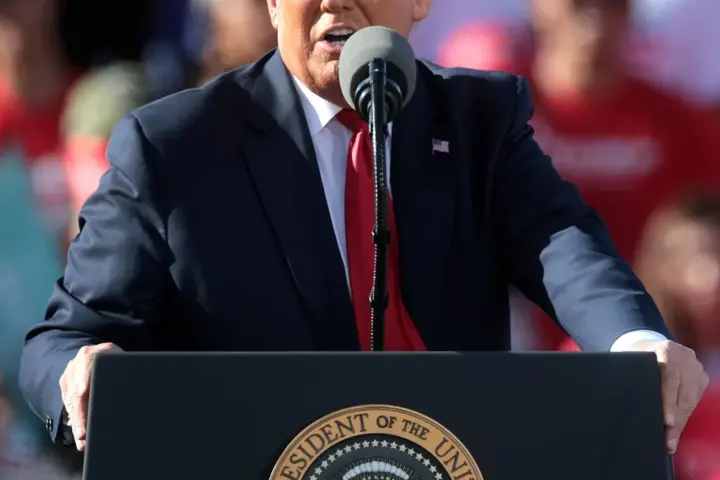
UAE Foreign Minister Abdullah bin Touq Al-Sulaitin confirmed the decision, stating that the suspension follows “a series of aggressive actions” by Iran, including recent missile and drone strikes. U.S. President Donald Trump backed the UAE\’s move on social media, writing: “We have a deal with [UAE] on the strikes.”
Before the conflict, the UAE was one of Iran\’s largest trading partners. According to the United Nations Conference on Trade and Development (UNCTAD), the UAE handled over 30% of Iran\’s imports, valued at approximately $21 billion annually. Iran exported roughly $7 billion worth of goods to the UAE, making the two countries significant economic partners despite political tensions.
“Any assistance or facilitation provided to the aggressor U.S. military amounts to participation alongside U.S. military forces,” warned Iranian Revolutionary Guard Corps Brigadier General Mohammad Reza Kaabi, reflecting Tehran\’s hardline stance against Gulf states supporting American operations.
The trade suspension compounds Iran\’s existing economic crisis. The International Monetary Fund projects Iran\’s economy will contract 5.4% in 2026, with inflation approaching 70%. The Iranian rial has hit record lows against the dollar, eroding purchasing power for ordinary citizens.
The disruption extends beyond bilateral trade. The Strait of Hormuz, which links the Persian Gulf to the Arabian Sea, carries approximately 21% of global petroleum liquids by volume. Reduced commercial traffic through the waterway affects energy markets worldwide. As of August 20, only 10 vessels transited the strait, down sharply from the hundreds that passed daily before the conflict began.
The UAE\’s pivot away from Iran also impacts food security for the Gulf region. The UAE traditionally served as a re-export hub for Iranian agricultural goods, including wheat and rice. With the trade suspension, alternative supply chains must be established, potentially straining global commodity markets.
This development builds on our earlier reporting on Iran\’s lithium reserves and the UAE\’s role in regional climate negotiations, highlighting how geopolitical tensions shape economic outcomes across the Middle East.
The economic fallout from the UAE-Iran trade suspension is already being felt in global commodity markets, with oil prices climbing on supply concerns as reported by Bloomberg and Reuters.