From Baby Bottles to IV Drips: The Microplastic Sources Most People Don’t Know About
A review of 350+ peer-reviewed studies maps where microplastics are entering the human body every day — and the list includes paint on your walls, your toothbrush, and hospital equipment.
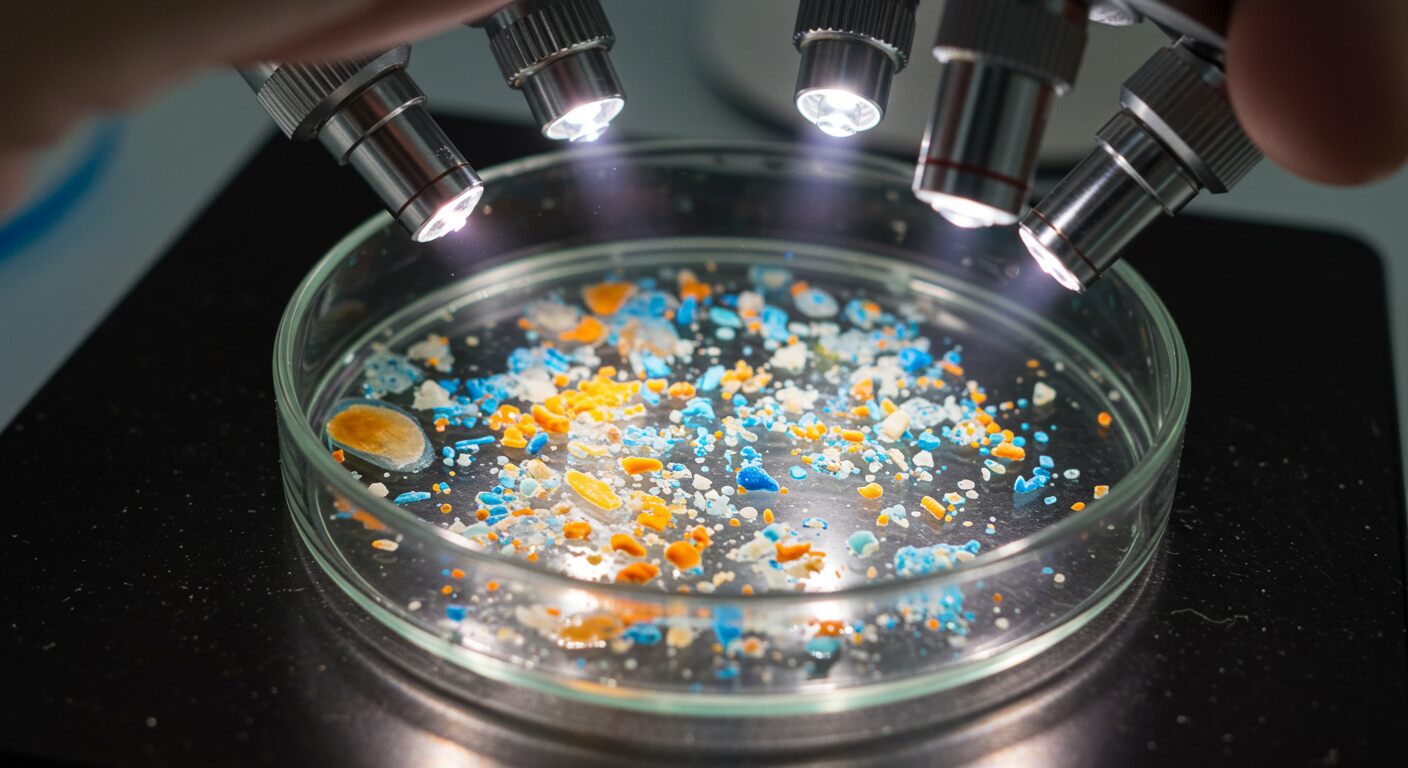
Plastic fragments in beach sand, where what the eye can see represents only a fraction of the particles now measured in human blood, brain tissue, and the placentas of newborns — each gram of brain tissue sampled in 2024 contained nearly 5,000 micrograms of plastic. (Oregon State University / CC BY 2.0)
A new review of more than 350 peer-reviewed studies, published by the Plastic Soup Foundation in April 2026, maps how microplastics enter the human body through five categories of everyday life. The report, authored by Dr. Heather Leslie and commissioned alongside the Flotilla Foundation, identifies paint, hospital IV equipment, oral care products, and children’s toys as significant contributors alongside the more widely discussed sources such as plastic bottles and seafood.
Microplastics have been detected in human blood, brain tissue, lungs, breast milk, placentas, amniotic fluid, semen, and ovarian follicular fluid. In April 2026, the U.S. Environmental Protection Agency added microplastics to its Drinking Water Contaminant Candidate List for the first time, alongside a $144 million research program called STOMP.
Most public discussion has focused on bottled water and ocean debris. The April 2026 report identifies several sources that receive far less attention — some of which deliver microplastics directly into the body with no filtration layer at all.
Where Microplastics Enter Your Body
The April 2026 Plastic Soup Foundation review organises exposure into five categories. Select each to see what research has found.
Outdoor Sources — Tires, Road Paint, and the Air Around Us
Every vehicle on the road continuously sheds polymer particles from its tires. These particles are now measured in rain, agricultural soil, urban waterways, and airborne dust. A chemical additive in tire rubber called 6PPD converts into 6PPD-Q when it reaches waterways, and has been found to kill 40–90% of coho salmon in West Coast streams it enters.
Road paint, applied for lane markings and signage, sheds polymer particles with every vehicle pass. These enter stormwater systems and eventually coastal waters. Combined, tire wear and road paint contribute a substantial share of the microplastics measured in both urban air and municipal waterways. Outdoor air concentrations are lower than indoor air on average — but sustained outdoor exposure (walking, running, cycling in traffic) represents a meaningful daily inhalation source.
Indoor Environments — The Source Nobody Sees
Household and architectural paints are largely composed of plastic binders. A single coat applied over 100 square meters is estimated to contain between 17 and 68 quadrillion polymeric particles. As paint ages, dries, or is sanded during renovation, these particles are released into indoor air, household dust, and eventually drainage systems. Despite contributing an estimated 58% of waterborne microplastics, paint appears in only 53 of approximately 800 microplastic studies published in 2019 — making it one of the most underresearched sources in the field.
Synthetic flooring materials (PVC, laminate), carpets, curtains, and upholstered furniture all continuously shed fibers indoors. For people who commute daily in a vehicle, the car cabin — with its synthetic seat materials, synthetic carpet, and limited air exchange — is likely their single highest microplastic inhalation environment.
Children’s Products — Earliest and Highest Relative Exposure
The April 2026 report identifies young children as a particularly vulnerable group. Crawling places them closer to floor-level concentrations of microplastic fibers shed by carpets and synthetic play mats. Teething on plastic toys and plastic utensils, combined with hand-to-mouth behaviors, adds direct ingestion on top of inhalation. Microplastics have been detected in amniotic fluid, placental tissue, and umbilical cord blood — meaning exposure begins before birth.
A 2020 study by researchers at Trinity College Dublin, published in Nature Food, found that standard polypropylene baby bottles release between 1 million and 16.2 million microplastic particles per liter of formula when prepared at the WHO-recommended temperature of 70°C. Sterilizing bottles with boiling water raises this figure further. Baby formula powder itself has been found to contain microplastics at levels ranging from less than 1 to 17 particles per gram depending on the packaging type.
Healthcare & Personal Care — Direct and Daily Exposure
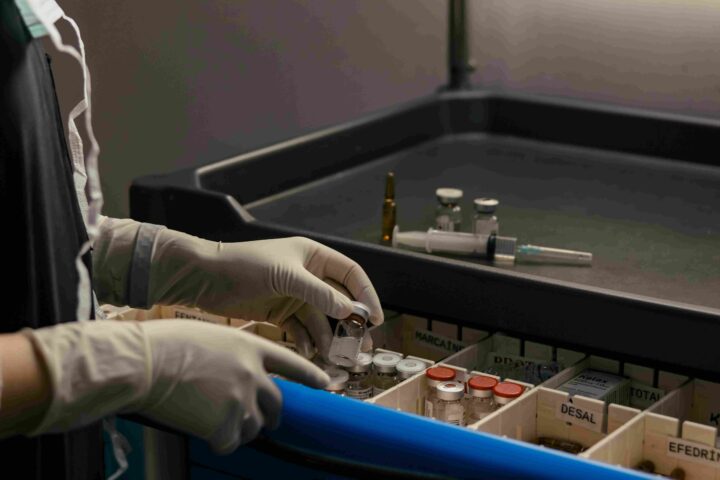
Medical-grade plastic IV tubing, cardiac catheters, orthopedic implants, and silicone breast implants all shed microplastics at the point of use. Research published in Frontiers in Public Health (2026) found that premature infants receiving intravenous nutrition are estimated to receive up to 115 microplastic particles in a single 72-hour window solely from plastic infusion circuits. Operating rooms, where plastic disposables are used constantly, have been measured at concentrations of up to 9,258 microplastic particles per square meter per shift.
In personal care: an analysis of 7,704 cosmetic products found that 9 out of 10 contained microplastics, with over 500 microplastic ingredients currently in use across the industry. Standard plastic toothbrushes release between 30 and 120 particles per use; mouthwashes and dental floss also carry polymeric residues from plastic components and coatings. The European Union banned added microplastics in rinse-off cosmetics in 2023, but leave-on products including sunscreens, moisturizers, and deodorants remain largely unregulated for microplastic content.
Food & Drink — From Tap to Tea to Shellfish
For tap water users, boiling before drinking removes at least 80% of micro- and nanoplastics. Using an NSF/ANSI 53-certified filter provides further reduction. A single plastic tea bag releases approximately 11.6 billion microplastic particles and 3.1 billion nanoplastic particles when steeped at brewing temperature. Research also found that chewing gum releases up to 3,000 microplastic particles per piece.
Seafood — particularly shellfish consumed whole — delivers some of the highest dietary microplastic loads, as shellfish filter seawater and accumulate particles in their tissues. Over one in three fish caught for human consumption has been found to contain microplastics. Ultra-processed foods packaged in plastic and hot beverages prepared in single-use plastic cups consistently carry higher microplastic loads than minimally processed, glass-packaged alternatives.
When Microplastics Were Found in the Human Body
A timeline of confirmed detections in peer-reviewed research
What Research Currently Shows
Peer-reviewed findings on health associations — correlations are noted where causation has not yet been established
Cardiovascular Risk
A 2024 study in the New England Journal of Medicine followed 257 patients with carotid artery stenosis. Those with detectable polyethylene in their excised arterial plaque were approximately four times more likely to have a heart attack or stroke over the following three years than patients without plastic in their plaque. 58.4% of the patients studied had measurable polyethylene in their plaque.
Strong association • Causal mechanisms under investigationBrain Accumulation
Research published in Nature Medicine (2025) found that brain tissue now contains nearly 5,000 micrograms of plastic per gram — approximately 50% more than in samples from 2016. Brain tissue showed 7–30 times higher microplastic concentrations than liver or kidney tissue from the same individuals. Concentrations were 3–5 times higher in individuals with documented dementia diagnoses. Researchers note the dementia finding is a correlation, not evidence of causation.
Correlation shown • Causation not establishedPrenatal Exposure
Microplastics have been detected in amniotic fluid, placental tissue, and umbilical cord blood. Research presented to the Society for Maternal-Fetal Medicine found placentas from preterm births had 28% higher microplastic concentrations than those from full-term deliveries, with specific polymers — PVC, PET, polyurethane, and polycarbonate — elevated in preterm cases. The PMC child health review (2025) notes that 76% of breast milk samples tested in published research contained detectable microplastics.
Detection confirmed in multiple studies • Clinical significance under studyCheck Your Daily Habits
Select the habits that apply to you. Figures are per-use or per-year estimates from peer-reviewed sources cited in this article.
What You Can Do Right Now
Steps supported by quantitative exposure data — each targets one of the largest identified daily sources
💧 Filter or boil tap water instead of buying bottled
Tap water averages ~5.5 particles/liter; bottled water averages 325+. Boiling tap water first removes at least 80% of micro- and nanoplastics. An NSF/ANSI 53-certified filter provides further reduction without boiling.
🍼 Replace polypropylene baby bottles
Glass and stainless steel baby bottles do not shed microplastics during hot formula preparation. Avoid sterilizing polypropylene bottles repeatedly in boiling water, which increases particle release significantly.
🔥 Stop microwaving food in plastic
Heat is the primary accelerant of microplastic release from containers. Transferring food to glass or ceramic before microwaving removes one of the most consistent daily exposure routes in typical households.
🍵 Switch from plastic tea bags to loose-leaf tea
A single plastic-mesh or nylon tea bag releases approximately 11.6 billion microplastic particles per steep. Loose-leaf tea in a stainless steel or ceramic infuser eliminates this source entirely.
🌿 Choose natural fibers for clothing and furnishings
Cotton, linen, wool, and silk shed far fewer particles than polyester, acrylic, or nylon. Washing synthetic clothing in cold water, less frequently, also reduces the number of fibers released. See also: fashion’s role in microplastic pollution.
🫁 Run a HEPA air purifier indoors
HEPA purifiers capture particles down to 0.3 microns. This is most relevant in rooms with synthetic carpets, upholstered furniture, or where renovation or painting is taking place. Change filters per manufacturer schedule.
🦷 Review your oral care products
Plastic toothbrushes release 30–120 particles per use. Bamboo alternatives and natural-bristle brushes significantly reduce this. Look for toothpaste and mouthwash formulations without polyethylene, polypropylene, or polyamide listed in ingredients.
🪟 Be cautious during paint renovation
Sanding or scraping interior paint in enclosed spaces releases high concentrations of polymer particles into the air. Ventilate thoroughly, use a HEPA vacuum to clean up dust rather than a broom, and wear an appropriate mask during the work.
The history of industrial substances in public health includes a recurring gap between early environmental detection and regulatory action. Lead in paint was measured in household dust for decades before it was banned in residential use. The same arc is visible in the microplastics timeline: first detected in ocean sediment in the 1970s, confirmed in human blood in 2022, in brain tissue in 2024, and now classified as a priority contaminant by the EPA in 2026. Whether daily, lifelong exposure across dozens of polymer types will follow a similar pattern of delayed consequence is something the current body of science is not yet equipped to answer with certainty — but the pace of new findings across cardiovascular, neurological, and reproductive research over the past three years has accelerated considerably.
What makes the microplastics question different from most past industrial chemical concerns is the sheer number of simultaneous sources. Unlike a single substance in a single product, microplastics enter the body through air, water, food, medical equipment, and personal care products — often in the same day. The practical actions listed in this article address only the most clearly quantified sources, but they cover the largest contributors by volume. For families with young children, the evidence on baby bottle preparation, indoor inhalation rates, and prenatal detection points toward the earliest years of life as the period where source reduction has the most biological relevance. For adults, switching from bottled water to filtered tap water and avoiding heating food in plastic are the two changes most consistently supported by quantitative data.
Regulatory frameworks are beginning to respond. The EU ban on microbeads in rinse-off cosmetics took effect in 2023. France’s mandate requiring filters on all new washing machines applies from January 2025. The EPA’s April 2026 Contaminant Candidate List addition opens a 60-day public comment period and is expected to lead to formal monitoring requirements. Research funding — including the EPA’s $144 million STOMP programme — is scaling alongside growing public and institutional concern. The gap between detection and action, while historically long for environmental contaminants, is narrowing for microplastics.
This article covered the April 2026 Plastic Soup Foundation review of 350+ studies on daily microplastic exposure across five source categories. Cardiovascular associations documented in the New England Journal of Medicine (2024), brain accumulation data from Nature Medicine (2025), and prenatal exposure findings from the Society for Maternal-Fetal Medicine were among the research reviewed. The EPA’s April 2026 classification of microplastics as a priority contaminant on the Drinking Water Contaminant Candidate List was noted, as were practical guidance steps from health and environmental research bodies. Related prior coverage on this site has addressed brain accumulation findings, cardiac microplastic discoveries, filtration technology, and ocean absorption of airborne particles.