 Karmactive Staff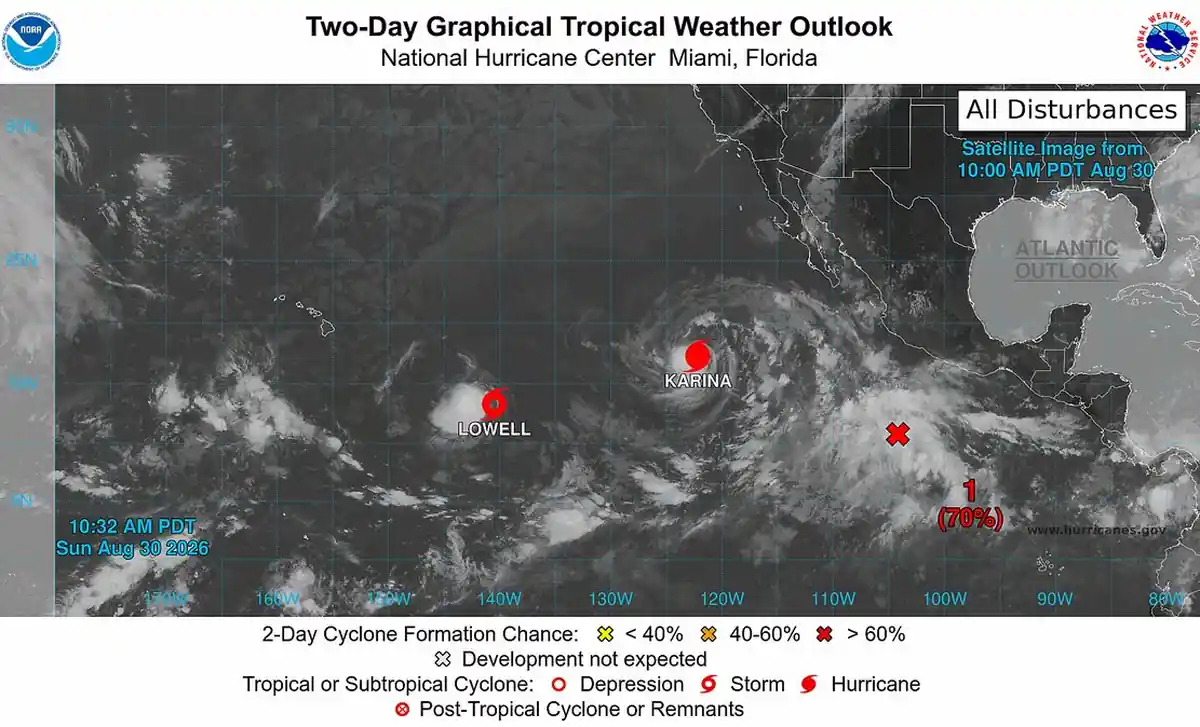
Hurricane Karina has rapidly strengthened into a major Category 3 hurricane over open waters in the eastern Pacific. However, the latest official forecasts do not establish a path toward Southern California, a critical distinction that separates actual risk from sensational reporting.
The National Weather Service in San Diego confirmed that Karina was forecast to remain well south of the California coast. The agency noted that while the hurricane’s tropical moisture could contribute to increased clouds along Southern California beaches, the probability of light precipitation remains confined to a narrow 5 to 15 percent chance. The National Hurricane Center said no coastal watches or warnings were in effect for California or Baja California.
Even when major tropical systems track well offshore, they still affect coastal regions through secondary hazards that residents often underestimate. Dangerous rip currents—narrow, fast-moving channels of water flowing away from shore—become particularly treacherous during swell events, catching swimmers by surprise.
Residents along Southern California and Baja California beaches should monitor official updates from the National Hurricane Center and local NWS offices rather than relying on sensationalized headlines. Attention should focus on secondary hazards such as dangerous rip currents rather than preparing for landfall.