 Enayat Garg
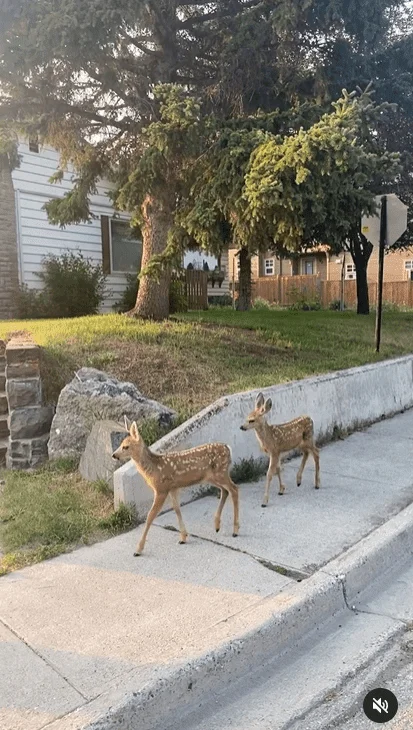
Samantha Reid is an outdoor enthusiast and she has captured this video in Canada. The video is a short clip that will clearly lighten everyone’s mood as it showcases the delightful bond of fawns and a deer while they travel together and explore the beauty of this world. Having Friendly Neighbours Like Deer’s
See: having.
See: having.
Deer behavior in human-dominated landscapes reveals surprising adaptability as these ungulates learn to interpret subtle environmental cues that signal safety or danger from human activities including vehicle traffic patterns, recreational activities, noise levels, and seasonal changes in human presence that influence their feeding schedules and habitat preferences. Researchers studying urban deer populations have documented behavioral changes in response to human-provisioned food sources including garden plants and ornamental landscaping that have altered natural foraging behaviors and migration patterns. Similar deer populations exist in other countries where behavioral studies have documented consistent patterns of social behavior and habitat preferences across different geographic regions. Understanding these adaptations provides insights into wildlife management strategies that balance conservation with human safety concerns in urban environments.
Similar deer populations exist in other countries including New Zealand, where sika deer were introduced in the early twentieth century and have established thriving populations in forested areas where they interact with native wildlife and modified landscapes that reflect a blend of natural and human-influenced environmental conditions. Behavioral studies conducted in New Zealand have documented consistent patterns of social behavior including dominance hierarchies, territorial marking, and mating rituals that closely resemble those observed in native range populations, suggesting that fundamental aspects of deer behavior are preserved across geographic barriers and environmental contexts through genetic inheritance and cultural transmission mechanisms that ensure continuity of essential survival behaviors and social structures that support population viability and adaptive responses to local environmental conditions and seasonal variations in resource availability and climate patterns across different latitudes and habitat types including temperate forests, alpine meadows, coastal scrublands, and urban parklands where deer populations face unique challenges and opportunities that shape their behavior, physiology, and long-term survival prospects through complex interactions between genetic factors, environmental conditions, human activities, and management interventions that require coordinated conservation strategies and community engagement to ensure sustainable coexistence between humans and wildlife in shared landscapes that provide essential ecosystem services including carbon sequestration, water filtration, soil conservation, and biodiversity support through habitat restoration programs and sustainable land management practices that benefit both deer populations and human communities through improved environmental quality and economic opportunities.