 Dipannita Sarkar
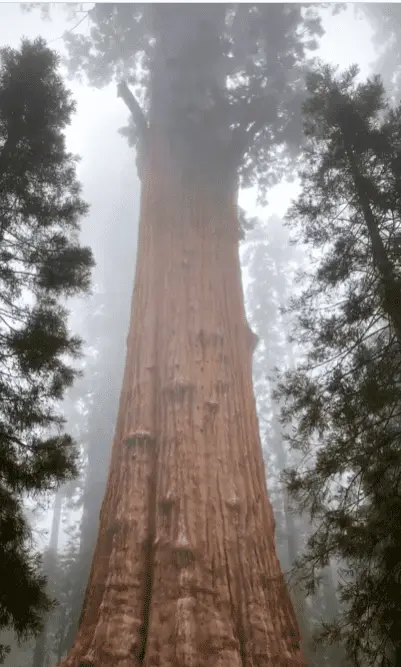
Ever wondered how tiny and insignificant we are before the universe? The General Sherman which is the World’s largest living tree will most certainly make one feel that way. We can see its giant trunk goes higher and higher without a sight of coming to an end giving us a sense of eternity.
The tree is located at Sequoia national park in Tulare County in the state of California. Cody Conk a travel Photographer from Utah who frequently posts shots of various wonders of nature captured and shared this video.
General Sherman, the giant sequoia tree in California’s Sequoia National Park, stands 275 feet tall with a trunk volume of over 52,000 cubic feet, making it the largest known single-stem tree on Earth. Estimated to be between 2,200 and 2,700 years old, the tree has survived countless wildfires, earthquakes, and human encroachment. Its massive bark, up to two feet thick, provides natural fire resistance. Climate change poses new threats, however, as changing precipitation patterns and rising temperatures stress these ancient giants. Conservation efforts include controlled burns to reduce fuel loads and genetic research to understand how sequoias might adapt to warmer, drier conditions.
See also: Yosemite National Park 3 9 Million Annual Visitors Explore 759620 Acres Of Natural Wonder; Huge Wildfire Raging Through Yosemite National Park Threatens Some Of The Worlds Oldest Trees
General Sherman, located in Sequoia National Park, is the largest known single-stem tree on Earth by volume, standing 275 feet tall with a diameter of 36.5 feet at the base. The tree is estimated to be between 2,200 and 2,700 years old, making it one of the oldest living organisms on the planet. Its massive trunk can hold 2.5 million cubic feet of wood, enough to fill 15 average-sized houses. The tree gets its name from Union General William Tecumseh Sherman, with whom President Rufus King Newberry named it during a 1879 expedition. Despite its massive size, the giant sequoia is relatively lightweight due to its wood being very porous and containing about 60% air space. The species has survived for millennia through natural adaptations, including thick, fire-resistant bark that can withstand temperatures exceeding 400 degrees Fahrenheit. However, climate change now poses an unprecedented threat.