 Govind Tekale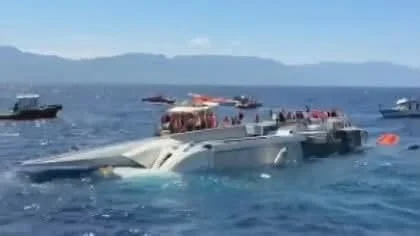
The passenger ferry Filo Jet capsized in the waters off Northern Cyprus on August 30, 2026, at approximately 12:00 PM (local time). The vessel, bearing International Maritime Organization (IMO) number 8962034, was built in 2000 and operated under a gross tonnage of 339 GT, making it a relatively small passenger vessel for the Turkey-Cyprus route. Maritime safety regulations govern these operations.
The Filo Jet had departed from Kyrenia Port bound for Tasucu, Turkey, when it capsized at an estimated position 2-4 nautical miles offshore. The vessel carried 259 passengers and 8 crew members—a total of 267 persons aboard at the time of the incident. The vessel was operating during daylight hours on a route regularly traveled by passengers and commercial traffic.
As of the latest reports issued on August 30 by Turkish Coast Guard and Turkish Republic of Northern Cyprus (TRNC) authorities, 7-8 persons were confirmed dead, approximately 236-240 persons had been rescued, and approximately 17-23 persons remained missing or unaccounted for. These figures were updated throughout the day as rescue operations continued and recovered individuals were processed by receiving hospitals and authorities.
The Search and Rescue (SAR) operation involved the Turkish Coast Guard, the TRNC Maritime and Coastal Guard (GKK), and TRNC Civil Defense units. Helicopters, naval patrol boats, and dive teams were deployed to the incident location to conduct rescue operations and recovery efforts. Survivors were transferred to Dr. Akcicek Hospital in Girne and Dr. Burhan Nalbantoglu Hospital in Lefkosa (Nicosia) for medical evaluation and treatment of injuries sustained during the capsize.
Initial investigations by TRNC authorities resulted in the detention of the ship’s captain and seven crew members pending a formal inquiry into the circumstances of the capsize. However, the cause of the capsize has not yet been officially established as of the time of this report.
It is important to note that weather conditions in the area are still being assessed by meteorological services. Preliminary weather reports do not constitute a determination that weather was the cause of the incident. The formal investigation by maritime safety authorities will examine multiple factors, including vessel condition, loading procedures, navigation practices, and environmental conditions at the time of the incident.