 Sunita Somvanshi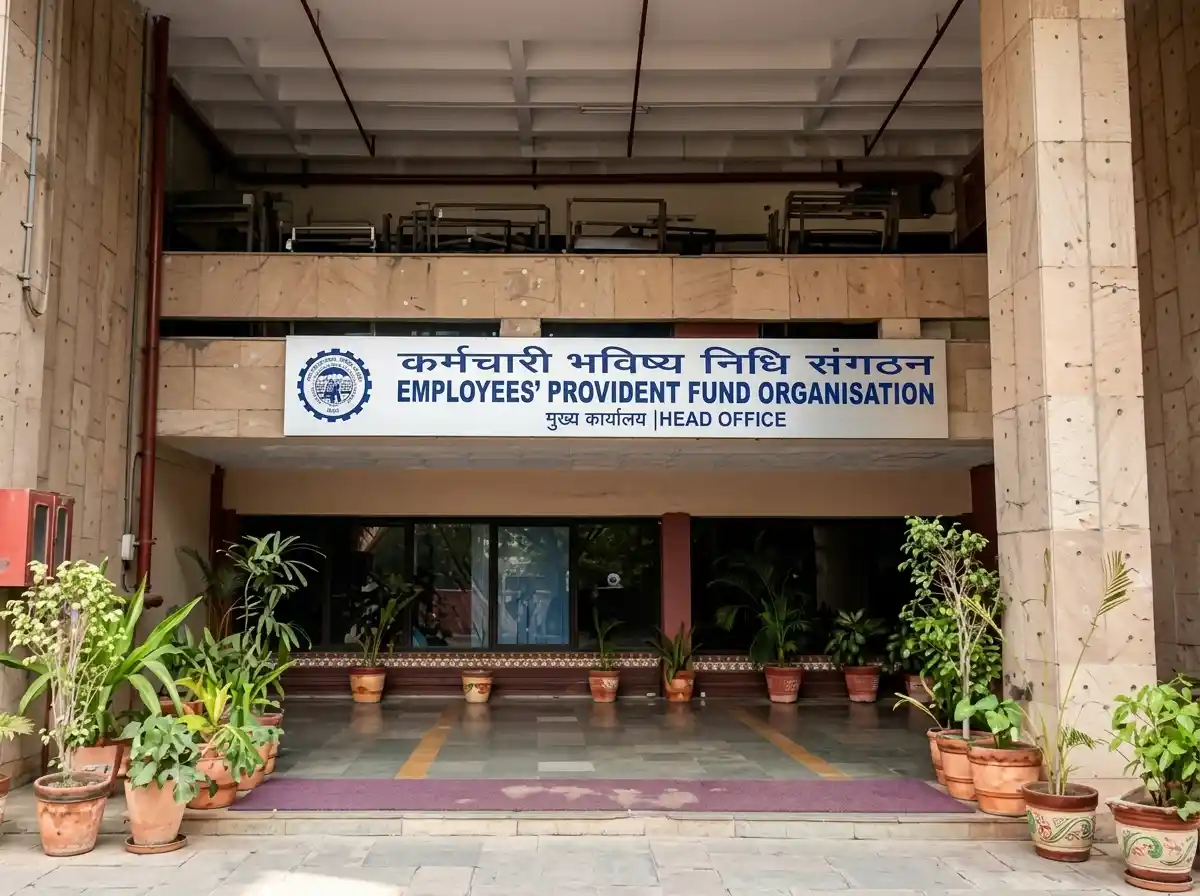
Estimated reading time: 2 minutes
India’s Employee Provident Fund Organisation (EPFO) administers pension and retirement savings for millions of Indian workers. The scheme provides crucial financial security for organized sector employees and retirees navigating India’s retirement landscape.
EPFO operates through mandatory contributions from both employees and employers, currently set at 12 percent of basic salary each. These contributions accumulate in individual accounts earning interest rates determined by investment performance and EPFO fund management. Upon retirement at age 60, members receive pension benefits calculated through pension fund corpus annuitization.
The pension calculation follows a statutory formula: monthly pension equals (accumulated pension fund corpus / 70). This divisor, established through actuarial assumptions, provides monthly income for life expectancy estimates. A worker with ₹25 lakh accumulated pension fund corpus at retirement receives approximately ₹35,714 monthly pension.
Recent EPFO reforms improved pension adequacy through higher interest crediting and enhanced pension fund management. Interest rates on EPF accounts reached 8.15 percent for 2024-25, among India’s highest risk-adjusted returns. This compounding effect significantly enhances retirement corpus over the typical 40-year working career.
Withdrawals before retirement are permitted under specific circumstances. Members may withdraw up to 50 percent of accumulated balance or last four months’ salary for medical emergencies, education, or home purchases. Post-retirement withdrawals remain available through regulated pension schemes that convert accumulated balances into lifetime income streams.
EPFO membership reached 260 million individuals as of 2024, making it among the world’s largest pension systems. Contribution density—percentage of months contributed during employment—significantly influences retirement benefits. Regular employment with consistent contributions yields substantially higher pensions than intermittent contributions.
Challenges persist regarding pension adequacy in India’s economic context. While ₹35,000 monthly pension provides reasonable income in smaller cities, it stretches thin in metropolitan areas with elevated living costs. Inflation erodes fixed pension purchasing power over retirement decades. Some retirees supplement EPFO pensions through continued part-time work, family support, or alternative income sources.
Coverage gaps remain significant. Agricultural workers, casual laborers, and self-employed individuals remain largely outside EPFO. These groups rely on informal savings mechanisms or government-administered social pensions providing subsistence-level support.
The EPFO scheme represents India’s most successful formal social security program, providing dignified retirement income to millions. Continued scheme sustainability requires balancing adequate pension provisions against fiscal constraints and demographic shifts affecting contribution-to-beneficiary ratios as India’s population ages.
—