Sunita Somvanshi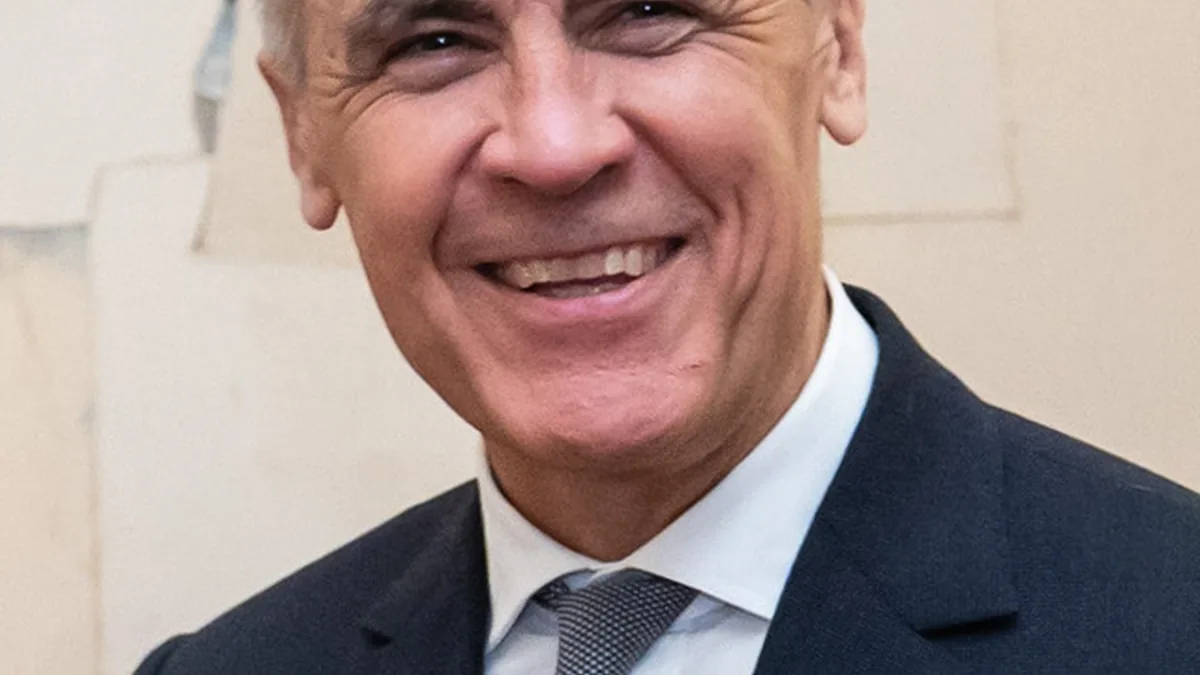
European Commission President Ursula von der Leyen opened the door on September 16, 2026 to Canada becoming the EU’s first associate member. The following day, Prime Minister Mark Carney addressed the European Parliament in Strasbourg to welcome that ambition and propose a deepened partnership that goes beyond the existing trade agreement.
Carney’s speech welcomed the associate-member concept and proposed cooperation covering energy, critical minerals, artificial intelligence, defence, and financial services. The speech came a day after von der Leyen raised the associate-membership idea—meetings that covered critical minerals, energy security, defence cooperation, and advanced technology.
The most important word to define clearly: “associate member” is not a path to EU membership. Canada is not applying to join the European Union, and the EU’s membership process applies to European countries under the bloc’s founding treaties. What the proposal describes is a different and currently undefined relationship—a closer alliance than the Comprehensive Economic and Trade Agreement (CETA) currently provides, but without the legal and political obligations of EU membership.
The practical weight of this proposal is significant regardless of what institutional form it eventually takes. Canada is a major supplier of critical minerals that European industry needs as it shifts away from Russian energy and builds out clean technology. A deeper energy partnership could mean long-term supply commitments or joint investment in extraction and processing. On defence, Canada and EU member states are already NATO partners; a formal bilateral alignment would add a layer on top of that existing structure.
What is known—and what remains to be negotiated
The concept is not new in European political vocabulary, but it has never been applied in quite the way von der Leyen described. The EU has various forms of partial relationship with neighbouring countries—the European Economic Area includes Norway, Iceland, and Liechtenstein, which have access to the single market but are not EU members. Switzerland has a series of bilateral agreements with the EU. Turkey has a customs union but no membership path. None of those models map cleanly onto what is being proposed, partly because Canada is not geographically adjacent to Europe and partly because the scope outlined goes beyond trade into defence and technology.
The precise institutional form would need to be negotiated and agreed between Canada and the EU’s member states. That process would involve the European Commission, the European Parliament, and the governments of all 27 EU member states. The timeline for any such process is not yet known, and the final arrangement might look quite different from the language used in Carney’s September 17 speech.
Carney made the proposal directly in his European Parliament address, a prominent public setting for a non-EU head of government. The speech signalled that Canada is seeking broad political buy-in across EU institutions, not just an executive-level agreement.
The geopolitical backdrop matters here. Carney’s speech comes at a time when European countries are actively looking to diversify their economic and security partnerships. Both sides have reasons to pursue closer ties that go beyond the normal pace of international diplomacy.
Is Canada joining the European Union?
No. The proposal concerns a deeper partnership and a possible “associate member” relationship, not EU membership. EU membership is open only to European countries under the bloc’s founding treaties. Von der Leyen raised the associate-member concept; Carney said Canada welcomes the ambition to move beyond CETA toward a deeper alliance. The precise institutional form would still need to be developed, negotiated, and agreed with the EU’s 27 member states.
The September 16–17 speeches are the starting point, not the conclusion. Formal negotiations, if they begin, would require time. The next signal to watch is whether the EU’s institutions formally respond with a proposal of their own.