 Karmactive Staff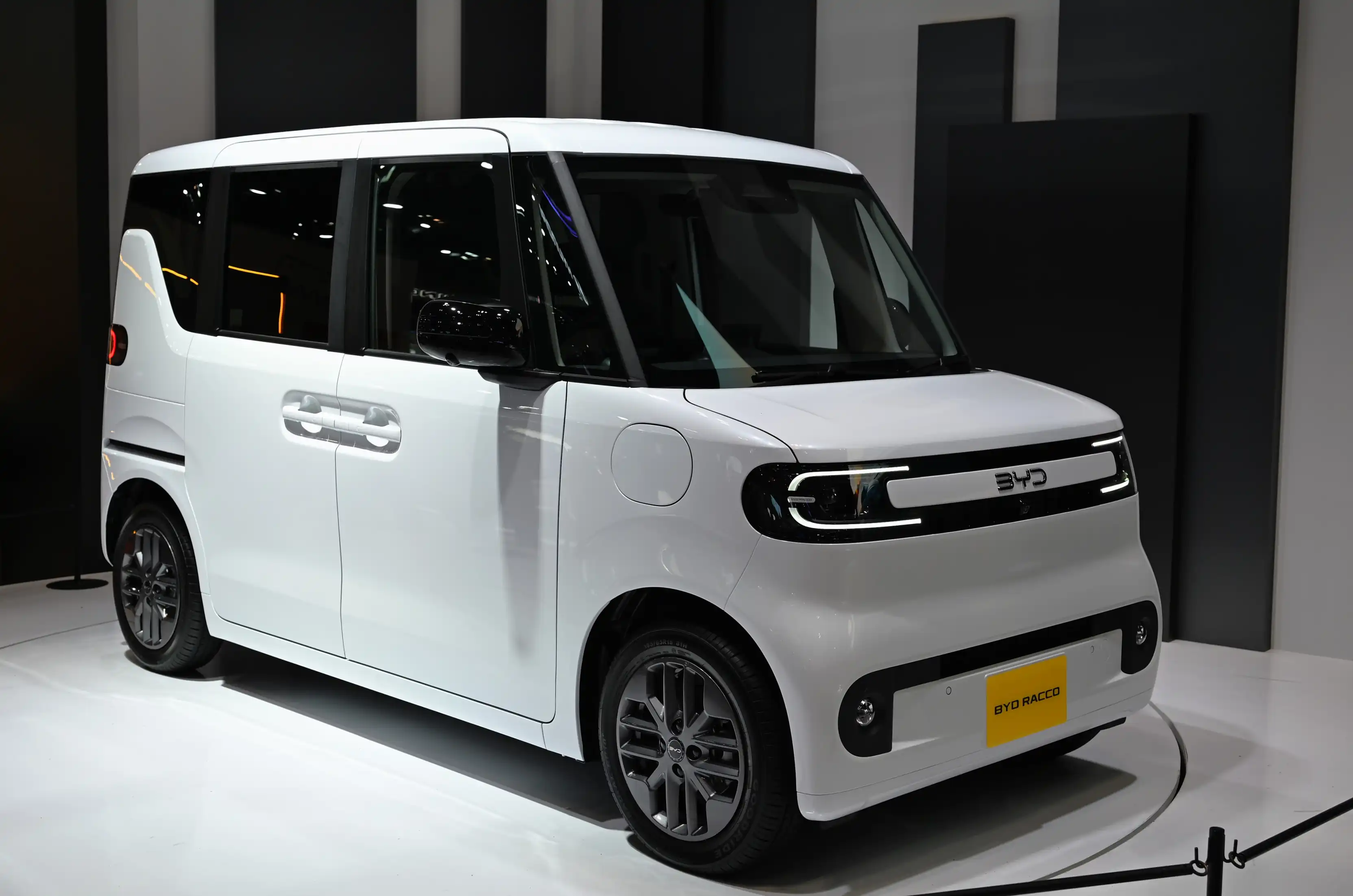
BYD’s Racco reached 1,002 orders in its first 14 days of sales in Japan—a milestone that signals growing appetite for affordable electric vehicles in the world’s most competitive small-car market.
The Chinese automaker launched the Racco on July 28. By August 9, it had beaten its 1,000-order target. That pace ranks as the fastest order run for any BYD model in Japan, though the company remains far from its stated goal of 10,000 orders by year’s end.
“We’re 10 percent of the way there,” said BYD Japan president Atsuki Tofukuji, describing the 10,000-unit target as driven by “conviction rather than detailed market analysis.”
The Racco is Japan’s first all-electric kei car—a category that accounts for roughly 40 percent of new vehicle sales in the country. It’s also the first light EV in Japan with a range exceeding 300 kilometers.BYD’s electric vehicle expansion has been a subject of close observation globally.
The Racco’s 35.84-kWh lithium iron phosphate battery delivers a range of 210 to 320 kilometers depending on trim and driving conditions. After Japan’s government subsidies for clean energy vehicles, prices start at 1,995,000 yen (about $12,650 USD) for the entry 200 model and reach 2,347,000 yen for the top Premium trim.
The Premium trim, priced at 2,497,000 yen before subsidy, claimed 80 percent of orders. The Plus variant took 14 percent, while the 200 accounted for 6 percent.
The Racco ships with a feature rare in kei cars: power sliding doors. That matters in Japan’s crowded parking lots and narrow streets.BYD’s kei car innovations build on the company’s broader EV advancements.
Nissan’s Sakura, the incumbent leader in electric kei cars, carries a smaller 20-kWh battery and achieves 112 kilometers of range. Its price sits at 2,448,600 yen before subsidies. The Sakura has been Nissan’s volume play in the segment since 2023.BYD’s growth trajectory has reshaped the competitive landscape.
The Racco’s broader range and lower base price position it as a direct challenge to Nissan’s market share in a category where hundreds of thousands of units sell annually.
BYD’s data on early purchasers showed a diversified buyer pool: 37.5 percent bought the Racco as an additional vehicle, 35.7 percent as a replacement for an existing car, and 26.8 percent as their first vehicle. That spread suggests the Racco is reaching different consumer segments.
In July alone, 125 Raccos were registered—mostly demo vehicles for dealers.
The Racco launch arrives as BYD’s global sales reached 411,072 vehicles in July 2026, up 20.5 percent from the same month last year.BYD’s July performance confirms the company’s global momentum continues. Japan remains a small market for the company, but the Racco’s fast start suggests there’s room to grow.