 Riva Surana
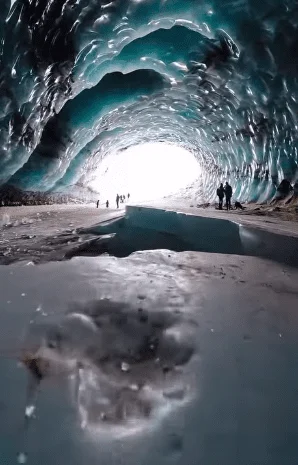
Formed when a flowing stream moves beneath a glacier or snowfield and carves a kind of tunnel, ice caves are rare specimens of the beauty of nature. When the melted water freezes again, the channel is often preserved as a narrow cave.
One such ice car, located in Paxson, Alaska has been unveiled in this clip by @johnderting, an adventurer and videographer from Alaska.
Alaska ice caves, sculpted by millennia of glacial movement and meltwater erosion, showcase spectacular blue ice formations and towering frozen walls that create surreal underground landscapes accessible only during specific winter months when temperatures remain cold enough to maintain structural integrity. These ephemeral natural wonders form within glaciers and ice fields through geothermal heating, meltwater channeling, and ice crystal formation processes that create intricate networks of tunnels, chambers, and arches displaying vivid blue hues caused by dense ice crystal structures that absorb red wavelengths while transmitting blue light through their translucent structure. Access to these fragile environments requires specialized mountaineering skills, glacier safety knowledge, protective equipment, experienced guide supervision, and strict environmental protocols that minimize impact on these delicate ice formations through Leave No Trace principles, group size limitations, seasonal timing restrictions, and responsible tourism practices that support glacier preservation and climate change research while providing transformative experiences for visitors who witness these remarkable natural wonders in Alaska’s pristine wilderness areas including Matanuska, Mendenhall, and Hubbard glaciers where these ice caves attract adventurers, photographers, scientists, and nature enthusiasts who seek to experience and document these ephemeral masterpieces of ice sculpture and geological artistry that reflect the profound beauty and fragility of our planet’s cryospheric systems and their critical role in regulating global climate patterns, sea level stability, freshwater resources, and ecosystem health across polar and alpine regions worldwide through continued research, monitoring, conservation action, and sustainable tourism practices that protect these remarkable ice formations and support long-term glacier preservation and climate research.
See: inside.
See: inside.
See: inside.