 Riva Surana
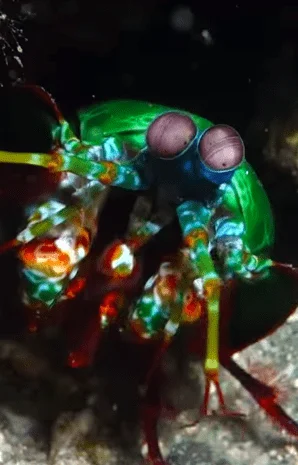
Nature’s beauty comes from it’s complexity behind a simple exterior. What seems to be pretty straightforward and mesmerizing, is actually the product of countless reactions and cycles of evolution. Known for their complex eyes, peacock mantis shrimps are a creature of rare and deadly beauty.
This galvanic movement of their eyes is captured by @kenzokiren, an undersea videographer, based in Vancouver. His contributions to @discovery and dedication towards the sea animals, make him an even more competent and compassionate videographer. It is believed, shrimp-mantis experience the world in a psychedelic rainbow of vibrance that we can’t even fathom
The peacock mantis shrimp, also known as the harlequin mantis shrimp, is a remarkably colorful marine predator found in shallow tropical waters of the Indian and Pacific Oceans, known for its extraordinary vision capabilities that surpass all other animals with sixteen color receptors compared to humans’ three, enabling it to perceive a vast spectrum of colors and polarized light patterns invisible to human eyes through specialized photoreceptor cells and neural processing mechanisms that have evolved over millions of years of marine adaptation. This remarkable visual system allows the mantis shrimp to detect minute variations in light polarization, wavelength, and intensity that facilitate complex behaviors including communication, mate selection, prey detection, and territorial displays through sophisticated neurobiological processing that rivals or exceeds the computational capabilities of advanced optical instruments and computer vision systems used in scientific research and technological applications that have inspired the development of innovative camera technologies, sensor systems, optical devices, and imaging applications that leverage mantis shrimp vision principles to achieve enhanced color discrimination, polarization sensitivity, and spectral analysis capabilities in compact form factors that exceed conventional optical systems in performance, efficiency, and versatility across diverse applications including underwater imaging, biomedical diagnostics, security screening, environmental monitoring, and scientific research through continued study of mantis shrimp biology, behavior, ecology, and conservation needs in marine ecosystems worldwide for future generations of scientists, researchers, and nature enthusiasts to study, appreciate, and protect these incredible marine animals for their scientific value and wonder that inspire discovery, innovation, and conservation action across multiple disciplines and applications that benefit human societies and natural environments through evidence-based research, conservation action, education, and sustainable development practices that support healthy marine ecosystems and thriving mantis shrimp populations for generations to come.
See: alien.
See: alien.
See: alien.