 Karmactive Staff
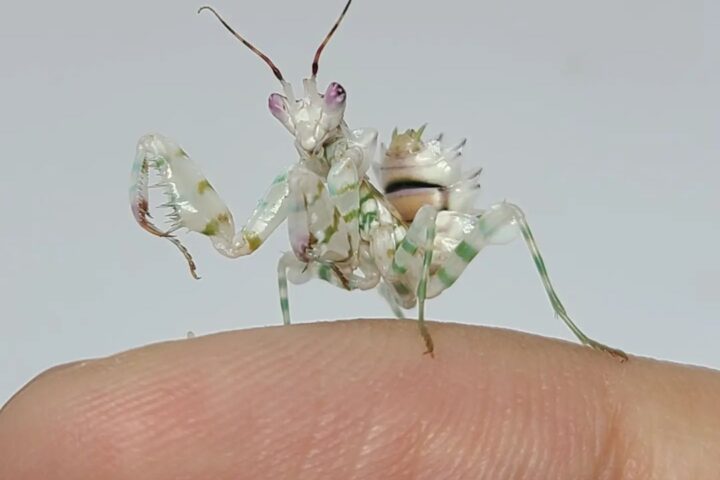
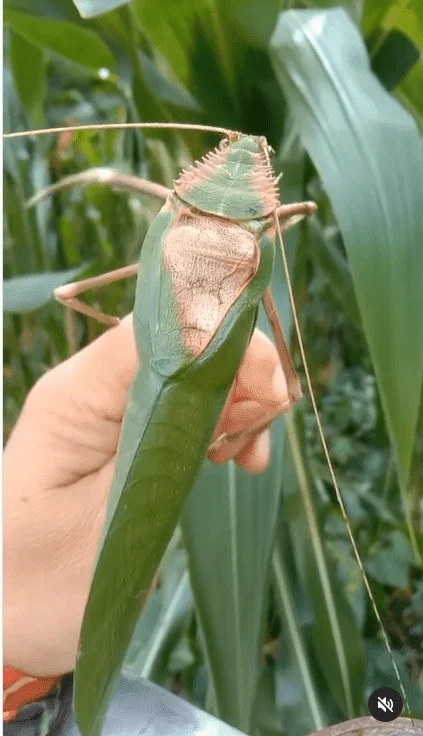
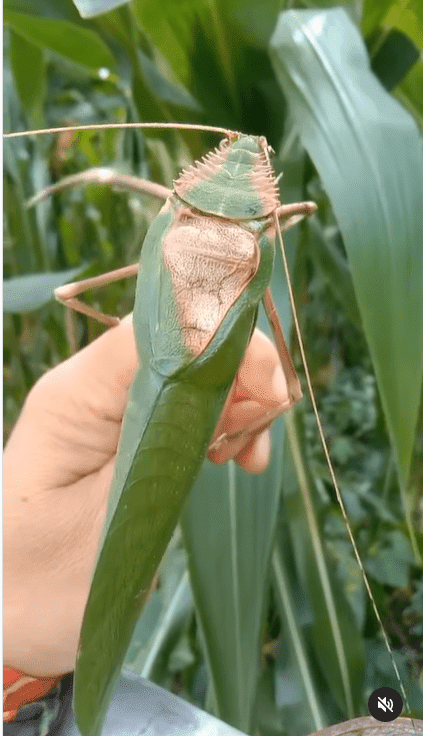
Hear The Music By Crickets they are sharing a video of a “katydid” – an insect, which is also known as “busy crickets”. Katydids are a large group of insects that are usually green and camouflaged to blend in with foliage in the order Orthoptera. We can count them as relatives of grasshoppers and crickets
.
Some katydids have been called long-horned grasshoppers for their long and slender shape. There are approximately 6,400 species worldwide, with the greatest diversity being related to them. Moreover, they are heard rather than seen because of the noises they make. Hear The Music By Crickets they have a tall, wide, and thin body.
See: music.
See: music.
Crickets produce their characteristic chirping sounds through a process called stridulation where they rub specialized structures on their wings together to create patterns that vary between species, temperature, and individual condition. Male crickets chirp primarily to attract females for mating but also to establish territory boundaries and communicate with other males through complex acoustic signals. The relationship between cricket chirping rates and ambient temperature follows Dolbears Law that allows scientists to estimate environmental temperatures by counting cricket chirps. Research has also shown that cricket vocalizations serve additional purposes beyond mating calls, including territorial defense, warning signals for predator detection, and synchronization behaviors where large groups of crickets chirp in unison creating collective sound patterns that resonate through vegetation and soil, influencing mating success, predator avoidance strategies, and ecosystem dynamics across diverse habitats including agricultural fields, grasslands, urban gardens, and forest edges where human activities have introduced new stressors such as pesticide exposure, habitat fragmentation, light pollution, and climate change impacts that affect cricket behavior, survival rates, and population genetics through selective pressures that shape evolutionary trajectories and adaptive responses across generations and inform conservation strategies for these ecologically important insects that serve as food sources for numerous predators and contribute to ecosystem functioning through nutrient cycling and soil aeration processes.
Crickets produce chirping sounds through stridulation, a process where they rub specialized structures on their wings together to create distinctive patterns that vary between species. Male crickets chirp primarily to attract females for mating, with chirp rate and frequency serving as indicators of individual health, size, and genetic fitness that influence female mate choice decisions. The relationship between cricket chirping rates and ambient temperature follows Dolbears Law, which allows scientists to estimate environmental temperatures by counting chirps over specific time intervals.
Research has shown that cricket vocalizations serve additional purposes beyond mating calls, including territorial defense, predator warning signals, and synchronization behaviors where large groups chirp in unison creating collective sound patterns that resonate through vegetation and soil. These acoustic communications influence mating success, predator avoidance strategies, and ecosystem dynamics across diverse habitats including agricultural fields, grasslands, urban gardens, and forest edges where human activities have introduced new stressors such as pesticide exposure, habitat fragmentation, light pollution, and climate change impacts that affect cricket behavior, survival rates, and population genetics through selective pressures that shape evolutionary trajectories and adaptive responses across generations of crickets and other orthopteran insects that produce acoustic signals for communication and survival in diverse environmental conditions and ecological niches across the globe through complex behavioral adaptations and physiological mechanisms that have evolved over millions of years of natural selection and adaptation to terrestrial environments.