 Govind Tekale
How Africa’s Semi-Aquatic Sitatunga Hides Almost Entirely Underwater
When alarmed, a sitatunga can slip beneath the surface and breathe with only its nostrils above water. Its long, splayed hooves help it cross soft ground at the water’s edge.
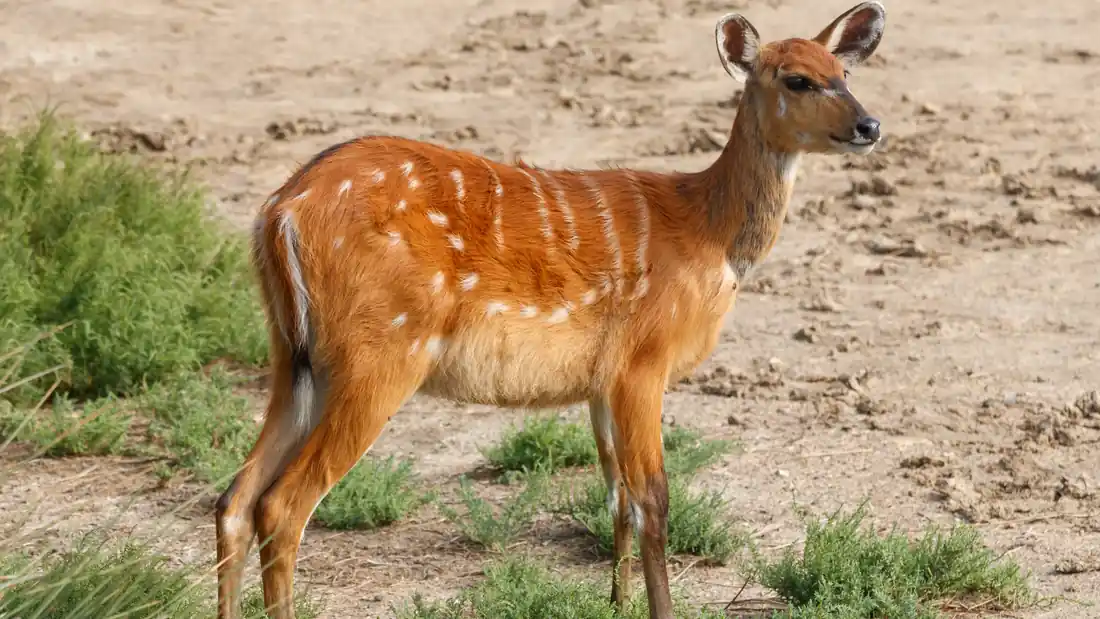
Also called the marshbuck, the sitatunga (Tragelaphus spekii) is a highly specialized semi-aquatic antelope. It lives in densely vegetated wetlands across parts of sub-Saharan Africa, including the Congo Basin and Botswana’s Okavango Delta. Papyrus stands and reed beds provide food and cover. The Maryland Zoo gives a weight range of 50 to 57 kilograms for females and 70 to 125 kilograms for males. Adult males grow spiral horns and generally have darker coats. Females lack horns and typically have reddish-brown coats. Their pale stripes can be prominent, faint or absent. Both sexes have shaggy, water-resistant fur.
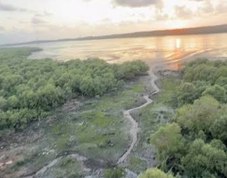
Kenya’s Saiwa Swamp National Park and Botswana’s Okavango Delta show travelers the kind of wetland the sitatunga depends on. Draining a marsh can strip away feeding grounds, thick cover and the deep water the antelope uses to escape predators.
How the Sitatunga Walks on Mud and Hides in Water
The sitatunga’s long, splayed hooves work like snowshoes. They spread its weight over a wider area, reducing the average pressure on the mud and giving it better footing on soft ground and floating mats of vegetation. When alarmed, the antelope can retreat into the water and swim into deeper areas. The Smithsonian describes alarmed sitatungas swimming with “only their nostrils above the surface.”
Sitatungas eat young papyrus and reed shoots, along with other wetland plants. They can also leave the water at night to feed on land. Their predators include leopards, crocodiles and pythons.
The IUCN lists the species globally as Least Concern, with a decreasing population trend. Agricultural drainage can shrink wetland habitat, and uncontrolled burning is a documented threat in the Okavango swampland. In its 2015–2017 conservation status report, Kenya Wildlife Service identified upstream water withdrawals for agriculture as a threat at Saiwa.
The Maryland Zoo in Baltimore takes part in the Association of Zoos and Aquariums’ cooperative sitatunga breeding program. It has also helped maintain the species’ North American studbook and population management plan. In Australia, New South Wales’s Great Koala National Park law is another example of protecting habitat that a species depends on.
The same long, splayed hooves that give a sitatunga traction in mud make it less agile on firm ground. As sitatungas travel the same routes, they wear paths through the reeds where hunters can set snares. Patrols can help reduce hunting pressure, one reason ranger-led conservation matters alongside habitat protection.
How Does a Sitatunga Breathe While Almost Entirely Underwater?
A sitatunga holds its nostrils just above the surface to breathe air while most of its body stays underwater. Its eyes may remain visible too. With so little of its body exposed, it can stay hidden or swim into deeper water.
Kenya set aside Saiwa Swamp National Park in 1974 to protect sitatunga habitat. At 2.9 square kilometers, it is the country’s smallest national park. It protects the swamp waters and reed beds where sitatungas feed, move and hide. The IUCN may revise its assessment of the global population trend as new evidence becomes available.