 Govind Tekale
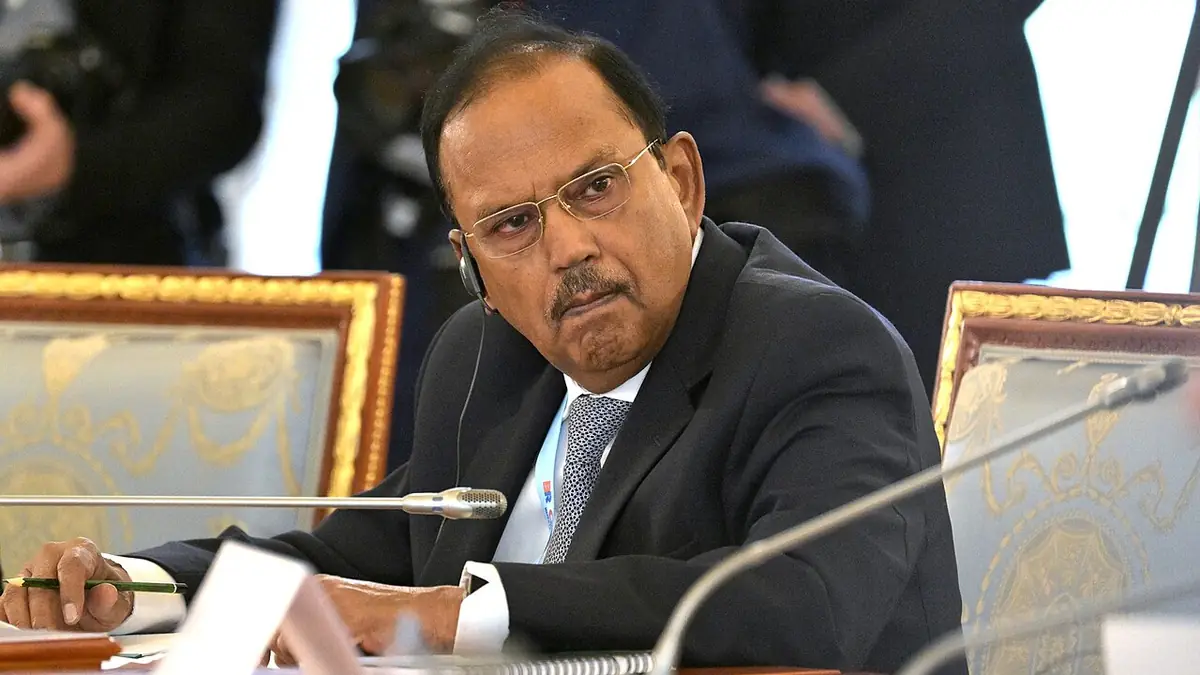
A US federal court has asked Delhi courts to deliver summons for National Security Advisor Ajit Doval and former RAW chief Samant Goel in a civil lawsuit filed by Sikh separatist Gurpatwant Singh Pannun. Judge Katherine Polk Failla of the Southern District of New York issued the order, directing notices to three Delhi court complexes on behalf of the American court.
The case, docketed as 1:24-cv-06938 in the Southern District of New York, is a private civil tort filed by Pannun, a US-based Sikh separatist. He alleges both men were involved in a plot to assassinate him on American soil. Judge Failla’s order directs the US Clerk of Court to send summons to the administrative judges of Patiala House, Dwarka, and Tis Hazari court complexes in New Delhi. Hague Service Convention—the treaty framework that allows US courts to request foreign courts to deliver civil notices. India’s Ministry of External Affairs has described the suit as “fabricated and malicious.”
This US order carries no criminal power, no arrest authority, and no enforcement mechanism within Indian territory. The civil summons only satisfies American procedural notice requirements in a private lawsuit. Neither Ajit Doval nor Samant Goel is compelled to appear before any Delhi or US court. Sovereign immunity doctrines and India’s Central Authority review process under the Hague Convention block direct foreign extraterritorial jurisdiction over senior public officials.
Civil Tort, Not Criminal Case: What the US Court Summons on Ajit Doval Actually Means
The SDNY order differs sharply from the separate US criminal prosecution of another alleged conspirator in a connected murder-for-hire case. That is a criminal prosecution. Pannun’s lawsuit against Doval and Goel is a private civil action seeking financial damages only—not a criminal charge. The legal difference matters for every question of enforcement, compulsion, and personal liability.
Judge Failla’s order relies on Article 19 of the Hague Service Convention and Section 29 of India’s Code of Civil Procedure, which allow foreign civil summonses to be transmitted through Indian courts. The US can request India’s Central Authority to arrange document delivery. Article 13 of the Convention, however, gives any receiving country the right to refuse service if executing the request would infringe upon national sovereignty or security. India has not formally filed a refusal, but its Central Authority faces no binding treaty obligation to cooperate. Cross-border civil notice procedures follow a comparable pattern in other high-profile cases, including US civil litigation involving government enforcement conduct and foreign nationals. The sensitivity around intelligence officials in foreign courts has grown sharper in recent months, particularly following US intelligence disclosures that strained cooperation between Washington and allied governments.
Headlines framing this order as New York commanding Delhi judges to serve India’s own National Security Advisor overstate what the Hague Convention permits. India’s Central Authority retains full discretion under Article 13 to reject the request if it finds the proceeding threatens national sovereignty or security. No Indian court is obligated to execute the summons, and no personal liability attaches to either official until the civil case reaches a merits hearing.
Can a US court serve legal notices to Indian officials? Under the Hague Service Convention, US courts may request foreign courts to deliver civil notices. However, foreign public officials enjoy sovereign immunity protections, and India’s legal framework allows its Central Authority to reject service if the request is deemed prejudicial to state sovereignty. Compliance remains entirely procedural rather than mandatory.
India’s Ministry of External Affairs has already rejected the lawsuit’s basis. The Ministry of Law and Justice now holds the decision on whether to file a formal Article 13 refusal. No arrest, criminal trial, or confirmed personal legal liability for either official has been established under the current proceedings, and diplomatic channels between Washington and New Delhi remain the arena where this dispute will ultimately be managed.