If you care for a parent, partner, or adult with a disability, you know the daily load. Scheduling and paperwork pile up fast. Now the federal government is funding tools meant to ease that work. The U.S. Department of Health and Human Services (HHS) has named the first winners of its Caregiver AI Prize Challenge.
The HHS Caregiver AI Prize Challenge has named 19 Phase 1 winners, sharing $2.25 million in prize money. Each Phase 1 winner can receive up to $100,000. The challenge also offers an extra award of up to $50,000 for solutions that meet its meritorious criteria. The Administration for Community Living (ACL), an HHS agency, runs the competition. HHS announced the winners on November 18, 2026. Seven winners received special recognition for tools that support people with intellectual and developmental disabilities or dementia.
Executive Order 14434 directs executive departments and agencies to use “Super Intelligence” (SI) instead of “Artificial Intelligence” (AI). The order applies only where the law allows. The competition keeps “AI” in its name.
For a family caregiver, the practical result is this: the winning tools now move into Phase 2, which means real-world testing. Phase 1 winners qualify for Phase 2 automatically, so they do not need to apply again. The tools you may later use will be tested in real-world settings before they reach a wider market.
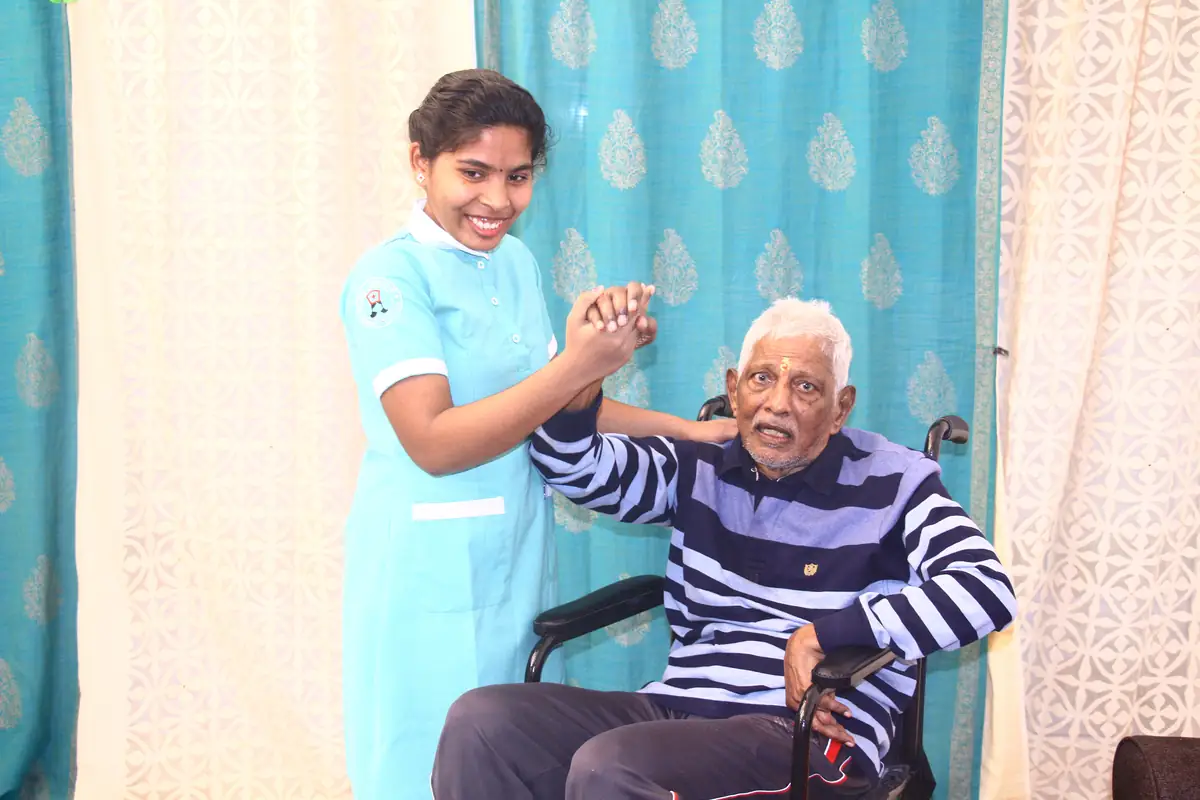
More than 70 million paid and unpaid caregivers in the United States help older adults and people with disabilities live in their communities. Many carry physical strain, emotional stress, and financial pressure. Their load grows heavier because the paid direct-care workforce is short of staff. Direct-care workers help with daily tasks such as bathing, dressing, and eating. When they are hard to find, families take on more of that work themselves.
That shift brings more scheduling and paperwork for people who already have full days. The competition aims to give them tools that handle some of that admin work. That leaves more of their time for the person they care for.
How the Two Tracks and Three Phases Work
The competition has two tracks. Track 1 covers AI tools for caregivers, including family and friends, who help people at home or in their communities. Track 2 covers AI tools that help home care organizations improve efficiency, scheduling, and training. To qualify, a tool had to reach
Technology Readiness Level 3 or higher. That is a scale from 1 to 9 that measures how mature a technology is. Level 3 means the core idea has been tested at a proof-of-concept stage.
The competition runs in three phases. Phase 1 is the stage that has just produced winners. Phase 2 is real-world implementation and testing. Phase 3 focuses on scalability and sustainability, meaning whether a tool can grow and keep running over time.
| Phase | Focus |
|---|
| Phase 1 | 19 winners named; up to $100,000 each |
| Phase 2 | Real-world implementation and testing; Phase 1 winners qualify automatically |
| Phase 3 | Scalability and sustainability |
Because Phase 2 puts tools into real use, only Phase 2 winners will be eligible for Phase 3. Applicants must win each phase to advance.
The challenge sets seven Caregiver Challenge AI Principles. They cover privacy, dignity, and choice. They require human-in-the-loop accountability, which means a person can review, verify, or override AI decisions. They also cover caregiver well-being, supplementing rather than replacing human connection, personalized care, safety, reliability, and transparency, and affordability and access.
Federal partners supporting the challenge include the Veterans Health Administration at the VA. The FDA’s Center for Devices and Radiological Health, which oversees medical devices, is another partner. The National Institute on Aging at NIH is a partner too. ASTP/ONC, the Assistant Secretary for Technology Policy and Office of the National Coordinator for Health Information Technology, rounds out the federal list. The non-federal partner is the
Caregiver Action Network.
Phase 2 will test the winning tools in real use. Phase 3 will test whether they can grow and last. The shift from “AI” to “Super Intelligence” follows Executive Order 14434. The competition itself still uses “AI” in its name. For wider background on federal AI policy, read our
Trump AI Voluntary Safety Pact and data centers coverage and our report on how
artificial intelligence may reshape the job market by 2035.
Nineteen Phase 1 winners share $2.25 million, and seven were recognized for tools that support people with dementia or intellectual and developmental disabilities. The next test is Phase 2, where those tools move into real-world use. More than 70 million caregivers across the country are the people these tools are meant to help.

 Tejal Somvanshi