Sunita Somvanshi
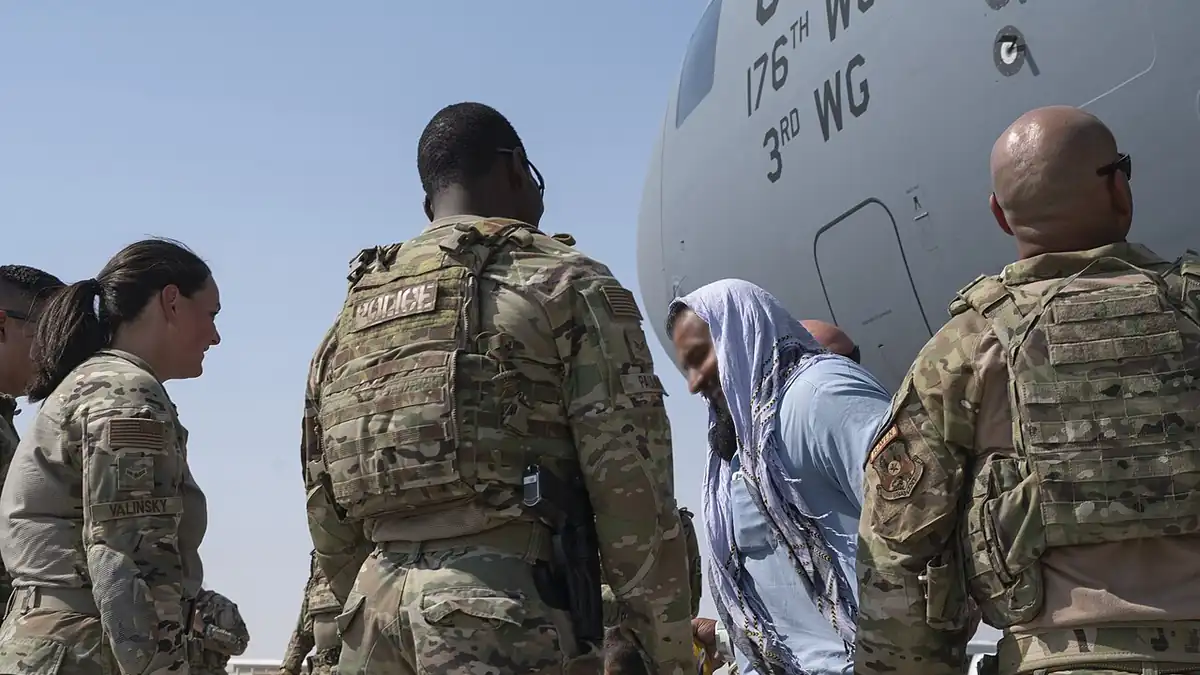
Kuwait and Bahrain both said their air defenses intercepted incoming aerial drones on November 17 and 18, 2026, after the United States carried out strikes on an Iranian Revolutionary Guard Corps missile site on Qeshm Island. Kuwait reported that hostile drones were engaged near Ali Al Salem Air Base, a logistics hub that hosts American and allied transport aircraft. Bahrain’s military said it intercepted aerial threats in its airspace. Neither government released a damage assessment, and US Central Command had not confirmed damage to American installations.
Iran has claimed that its forces successfully struck US military facilities in both countries. That claim has not been independently verified. Kuwaiti and Bahraini officials have described interceptions rather than confirmed hits on base infrastructure, and no formal damage assessment from CENTCOM or from either foreign ministry had been published.
The drone attacks followed precision strikes on Qeshm Island, which the US military described as targeting an IRGC missile site. US Central Command press releases
Why Ali Al Salem Sits Within Range of Gulf Drone Attacks
Ali Al Salem Air Base functions as a rear-echelon logistics hub, hosting transport aircraft, maintenance units and coalition personnel who support operations across the Gulf. Installations of that kind were long treated as lying outside direct combat engagement zones. A drone reaching that far inland forces regional air defense commanders to widen interception coverage over support bases rather than only over forward combat airfields.
The incident is the latest in a series of regional exchanges involving American and allied positions. Earlier engagements around Bahraini naval facilities and the broader maritime confrontation in the Strait of Hormuz show how quickly a single strike draws in commercial shipping and energy infrastructure.
Kuwait’s Ministry of Foreign Affairs and Bahrain’s Ministry of Foreign Affairs have both issued formal statements on sovereign airspace violations. Readers following the story should treat those statements and CENTCOM advisories as the primary record, and treat casualty figures, launch counts and damage claims circulating on social platforms as unverified until an official assessment appears.