Rahul Somvanshi
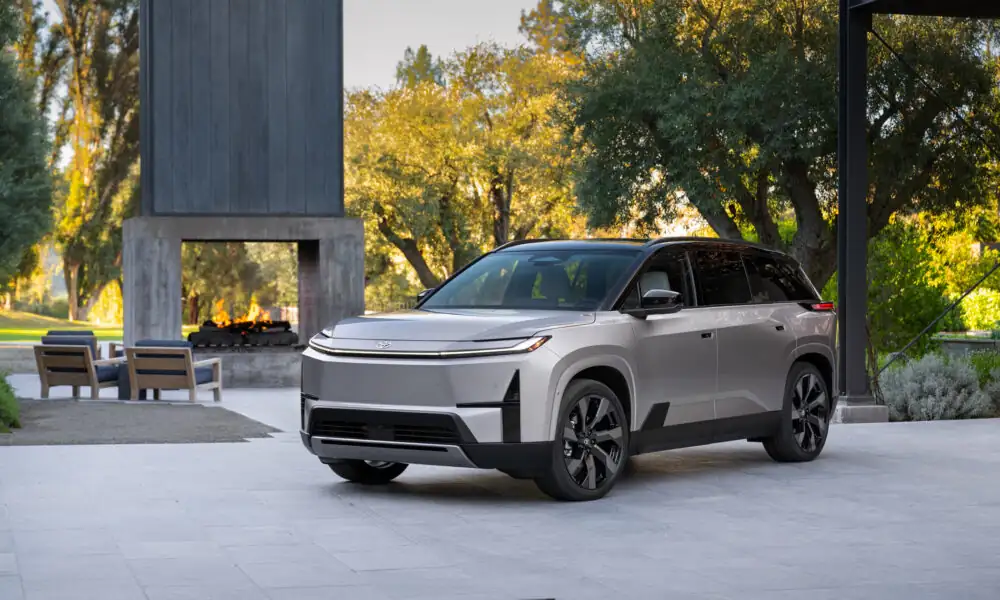
Families shopping for a three-row Toyota SUV in late 2026 are walking into two surprises at once. The gas and hybrid Highlander is being discontinued, with roughly 20 days of supply left sitting on U.S. dealer lots. Its all-electric replacement, meanwhile, has been pushed out of a late-2026 launch window into a 2028 model year, leaving buyers to choose between securing an outgoing combustion model now or waiting more than a year for a fundamentally redesigned vehicle.
The Toyota Highlander EV arrives in four confirmed configurations, each pairing a 77.0-kWh or 95.8-kWh battery with front- or all-wheel drive. The two smaller-battery XLE trims split on output and range: the front-wheel-drive version produces 221 horsepower and returns an estimated 287 miles, while the AWD variant pairs two motors for 338 combined horsepower at a reduced 270-mile range. Stepping up to the 95.8-kWh pack extends range to between 315 and 320 miles across both the XLE AWD and range-topping Limited AWD, each rated at the same 338 combined horsepower.
If your family needs a three-row SUV before spring 2027—or regularly tows a 5,000-pound camper—you need to move quickly on the remaining 20-day U.S. dealer supply of 2026 gas and hybrid Highlanders. Toyota has eliminated gas engines from the next-generation Highlander and delayed the electric launch into a 2028 model year. However, waiting for the Kentucky-built EV unlocks a native NACS port, 320-mile range, and eligibility for the federal auto loan interest deduction.
The new Highlander grows substantially on every horizontal axis. Its 120.1-inch wheelbase stretches 8.1 inches beyond the outgoing model, while overall width expands by 2.3 inches to 78.3 inches—though height actually drops 0.8 inches to 67.3 inches for a lower, more planted stance. Inside, a 14-inch touchscreen anchors the center stack alongside a 12.3-inch digital gauge cluster, and a built-in Drive Recorder captures 20-second clips through the exterior cameras without requiring an aftermarket dashcam. Chief Engineer Yoshinori Futonagane described the design goal plainly: “Our goal with the new Highlander was to develop a BEV that fits customers’ lives and brings a smile to their faces with sharp acceleration feel and a quiet ride.” That vehicle will roll off the line in Georgetown, Kentucky, drawing its battery packs from Toyota’s Liberty, North Carolina facility—making this the first Toyota model in North America to offer Vehicle-to-Load backup power capable of running 120V or 240V devices at home or at a tailgate.
The towing capacity has not been released, which matters for buyers who relied on the outgoing gas model’s 5,000-pound rating for camper or boat duty. That gap in the spec sheet is the clearest reason to consider the remaining dealer stock now. On the other side of the ledger, Georgetown final assembly qualifies the Highlander EV for the federal Schedule 1-A auto loan interest deduction—up to $10,000 per year—a benefit that Toyota’s Japanese-assembled bZ4X and the Subaru Trailseeker cannot claim, and one that materially changes the five-year cost comparison between waiting and buying today. EV Tax Credit 2026: What Remains After Federal Credits End explains how the deduction works for qualifying buyers.
Why is the Toyota Highlander EV delayed, and when will it come out? Toyota originally scheduled the all-electric Highlander to go on sale in late 2026 as a 2027 model, but confirmed a launch delay in mid-2026 to complete final pre-production adjustments. Now designated as a 2028 model in dealer guides, production at Toyota’s Georgetown, Kentucky plant is expected to begin in 2027.
For most buyers willing to wait, the XLE AWD with the 95.8-kWh battery and the optional three-row seven-seat bench is likely to represent the sweet spot between range, utility, and price. MSRP and the long-awaited towing figure are the two numbers still needed before that recommendation can be made with full confidence. Kia EV9 Slashed to $41,000 at Select Dealers—$16,000 Discount Fills Lost Federal Credit Gap offers a current three-row electric alternative, while Ford Fathom EV home backup system cuts bidirectional charging hardware costs by 60 percent details another EV with built-in home backup power.