Sunita Somvanshi
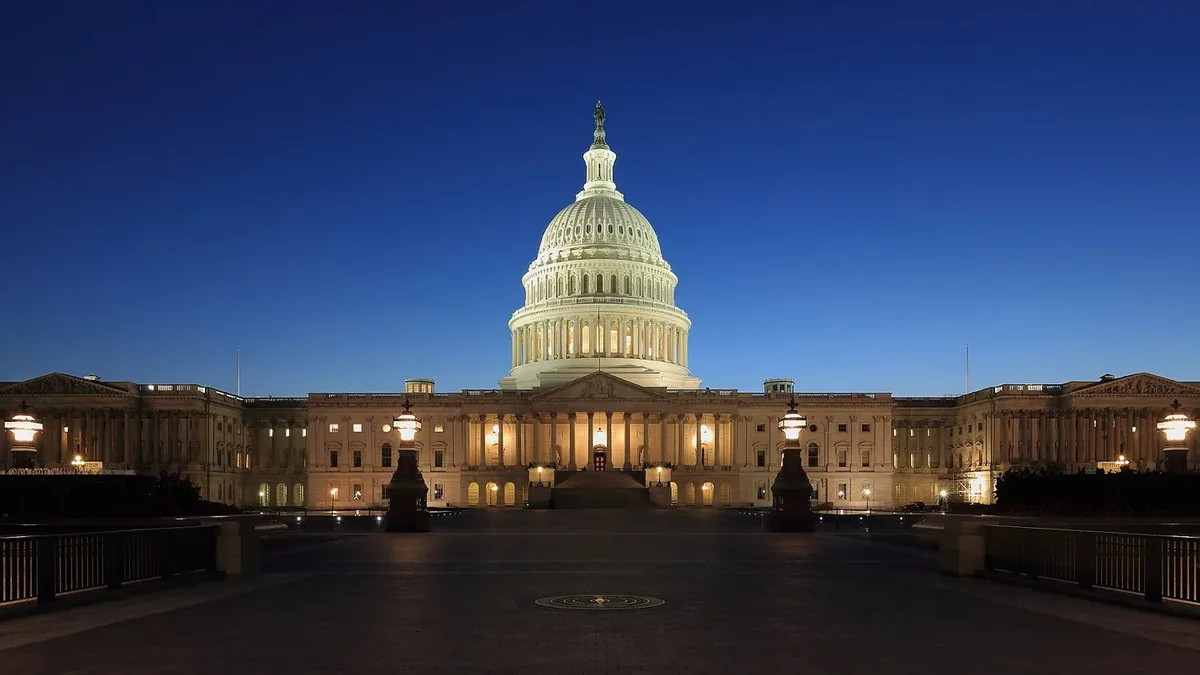
Clocks fell back one hour on the morning of November 1, 2026. Most people simply reset their phones and moved on. But buried inside a bill that passed the U.S. House of Representatives just months earlier is a drafting quirk — and that quirk is where the Sunshine Protection Act midwinter time jump becomes a real concern for every American household.
Daylight saving time ends November 2026 the same way it always has: quietly, predictably, and on the first Sunday of November. What happens next in Washington is anything but predictable.
What H.R. 139 Actually Says
H.R. 139, the latest version of the Sunshine Protection Act, passed the House on July 14, 2026, by a strong bipartisan vote of 308 to 117. The bill would amend the Uniform Time Act of 1966 to make daylight saving time the permanent, year-round standard across the United States.
Donald Trump has backed the measure publicly. Supporters argue that ending the twice-yearly clock change would reduce traffic accidents, improve sleep health, and simplify scheduling across time zones.
The bill, however, stalled in the Senate. Senator Tom Cotton (R-AR) has publicly opposed permanent daylight saving time, calling instead for permanent standard time. Cotton and a handful of other senators have pointed to the 1974 emergency trial, when the U.S. ran on year-round daylight saving time for a single year. That winter, parents and pediatricians raised sharp objections to children leaving for school in total darkness. The H.R. 139 effective date quirk is what makes this standoff more than a procedural delay. You can review the full text of H.R. 139 and the House roll call vote on Congress.gov.
Why a Post-November Senate Vote Changes Everything
Here is the problem. Even though clocks fell back on November 1, that does not mean the country is locked into a quiet winter under standard time. H.R. 139 contains no delayed effective date. The bill’s text uses standard “upon enactment” language.
If the Senate passes H.R. 139 during the lame-duck session — the period between November 1 and January 3, 2027, when the 119th Congress adjourns — the law would take effect immediately. That means clocks would jump forward one hour again, in December or January, weeks after falling back. The H.R. 139 effective date quirk is not hypothetical. It is written into the bill as it currently stands.
The bill would also block new state-level opt-outs. Under current law, only Arizona and Hawaii have exemptions from observing daylight saving time. Those exemptions would remain. But no additional state could apply for or receive a waiver after enactment.
Why H.R. 139 Risks a Winter Clock Chaos
The core issue is a missing transition clause. Most major federal time law changes have included a defined start date that aligns with an existing clock-change date, typically the second Sunday in March. H.R. 139 does not include that buffer.
Section 2 of H.R. 139 closes the door on future state exemptions by amending the underlying authority that currently allows them. That has implications for states that have been considering opting out, particularly those in the western edges of time zones where winter sunrises are already late. The Uniform Time Act of 1966 (15 U.S.C. §260a) currently permits state exemptions — a provision H.R. 139 would repeal prospectively.
Sleep medicine researchers have published data suggesting that standard time — not daylight saving time — better aligns with human circadian rhythms. The American Academy of Sleep Medicine has formally recommended permanent standard time. That body of research conflicts directly with what H.R. 139 would lock in permanently. You can read more about the health framing in our coverage of sleep health and public policy and the AASM position statement.
The Energy Policy Act of 2005 (P.L. 109-58) extended daylight saving time by four weeks — the same law that moved the fall-back date to the first Sunday in November. That extension was itself sold on energy savings grounds, but subsequent Department of Energy studies found the savings marginal. The same argument is now being recycled in support of H.R. 139. For context on how energy policy and daily life intersect, see our piece on federal energy rules and household impact. The DOE 2008 report to Congress details the marginal energy savings findings.
The Window That Closed — and the One That Opened
There was a cleaner path. If the Senate had passed H.R. 139 before November 1, 2026, the bill could have taken effect in March 2027 — the next scheduled spring-forward — with a simple transition clause. That window closed when clocks fell back. Under the bill’s current “upon enactment” language, any Senate vote now would trigger an immediate one-hour advance in the middle of winter, creating a second clock disruption within a single season.
What Readers Are Asking
Will there be a midwinter time jump in 2026 or 2027?
Only if the Senate passes H.R. 139 before January 3, 2027. As of November 1, 2026, no Senate vote has been scheduled.
Does the Sunshine Protection Act apply to Arizona and Hawaii?
No. Both states have existing federal exemptions and would remain on standard time. No other state could apply for a similar exemption after the bill becomes law.
What happens if the Senate adds an effective date before passing H.R. 139?
Any Senate amendment to the bill — including adding a delayed effective date — would send it back to the House for another vote. The 119th Congress adjourns on January 3, 2027. If the House cannot reconvene and pass the amended version before that date, the bill dies and the next Congress would need to start the process again from scratch.
The Clock Is Running for Congress, Too
The 119th Congress has until January 3, 2027, to act. If the Senate passes H.R. 139 without changes, an immediate winter clock jump follows. If the Senate amends it to add a sensible effective date, the House must vote again — and time is short. For now, standard time holds. But the outcome is still unresolved.