 Govind Tekale
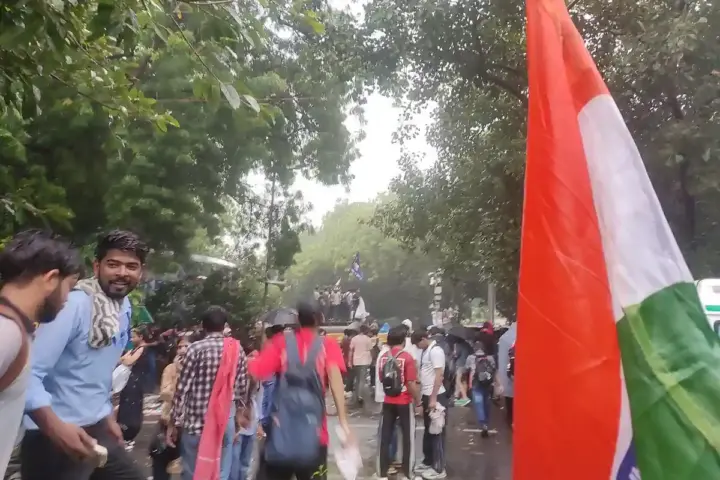
Since our initial coverage on October 2, French school protests have expanded from isolated Paris demonstrations to coordinated blockades across multiple cities, with police deploying tear gas and making arrests in clashes involving both high school students and university students. More than 250,000 people participated nationally on October 6, with blockades reported across schools in Paris, Lyon, Marseille, and Strasbourg. The scale of the escalation reflects a shift that goes beyond spontaneous youth unrest.
High school students have blockaded entrances at schools in Paris, Lyon, Marseille, and Strasbourg, with local police confirming multiple arrests and use of dispersal agents. Student unions FIDL and MNL are coordinating actions alongside teachers' union FSU. The protests center on teacher shortages, school overcrowding, under-resourced facilities, and the loss of around 4,000 teaching positions in the 2026 school year — with rural schools facing the steepest staffing pressures. University students joining the high school blockades since early October has broadened the movement's base significantly. Political parties across the spectrum have responded to the unrest, with varying positions on the government's education funding decisions.
For travelers in France and families in urban centers, school blockades can spill into street demonstrations near major urban areas. UK government travel advice says demonstrations can take place with little warning. Travelers should check their carrier and local authority updates and avoid active demonstrations. Long-distance flights and high-speed rail should be confirmed against current RATP and SNCF service status.
What distinguishes this escalation from the first week of October is the breadth of participation and the coordination across student and teacher organizations. While media framing has centered on youth-led street disruption, the mobilization has drawn in teacher unions who have supported the movement and called for improved school conditions. The initial trigger was the cumulative effect of teacher shortages, overcrowding, and funding constraints — issues that affect rural France hardest, where staffing ratios are already at minimum thresholds.
The combination of documented teacher shortages, poor school infrastructure, and educational inequality has given the protests broad resonance across different segments of French society. The grievances are concrete and specific to school conditions rather than abstract political objections.
On why students are protesting in France: French high school and university students are protesting teacher shortages, school overcrowding, under-resourced facilities, and cuts to teaching positions. Demonstrators are calling for improved school staffing and conditions across France.
National union coordination meetings are scheduled for the coming days, at which organizers will determine whether to call a broader general education strike. Confirmed transport disruption notices from RATP and SNCF will be updated on their official apps as demonstration dates are finalized.
Related coverage: earlier nationwide student blockades in France; French domestic policy tensions. For primary-source context, see French education ministry updates.