 Govind Tekale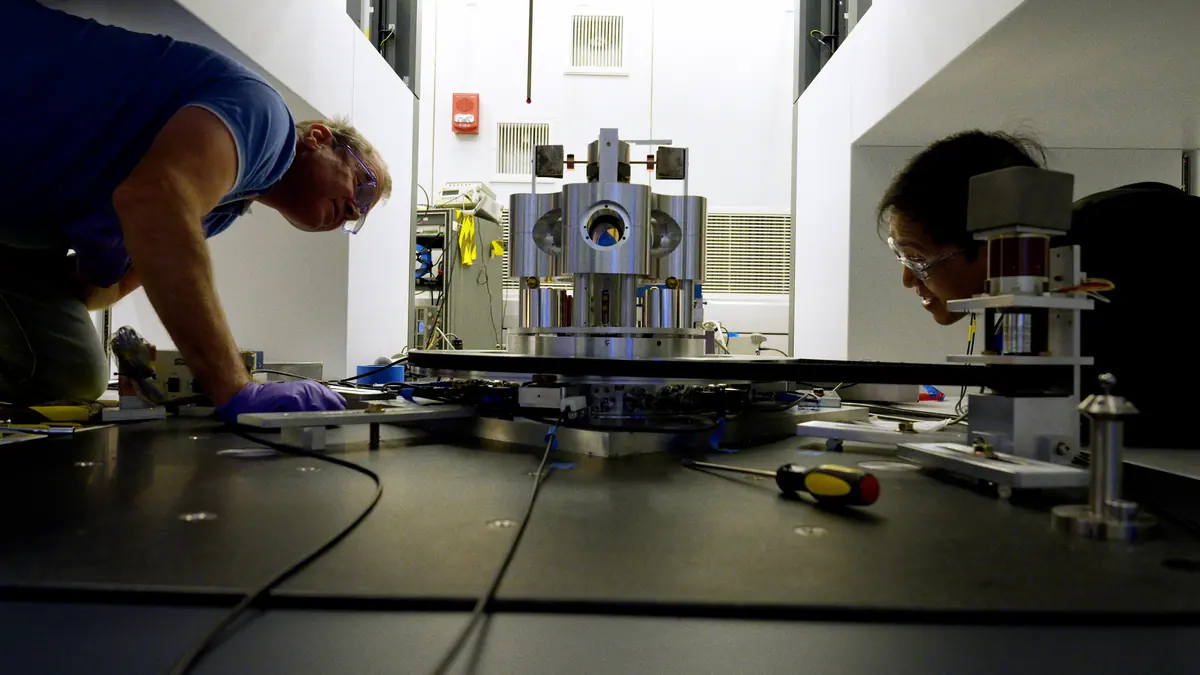
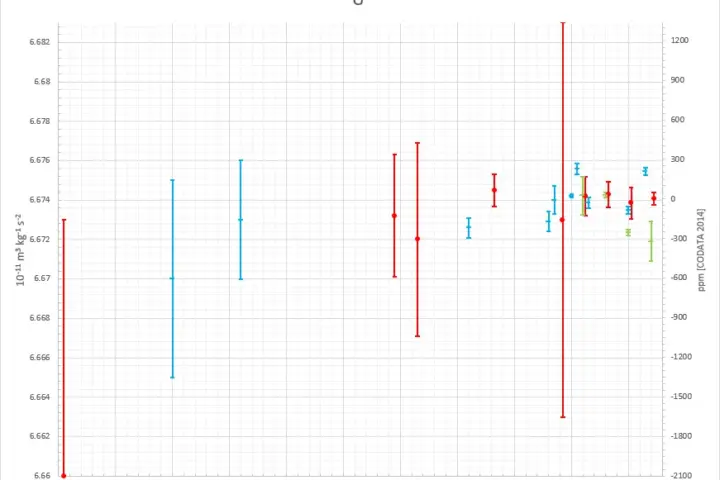
More than 225 years after the first laboratory measurement, the gravitational constant—known as big G—is among the least precisely measured fundamental constants in physics. A NIST result published in April 2026 has re-emerged in science media this week, reviving a long-standing measurement puzzle: why do independent, carefully conducted experiments keep producing slightly different answers?
The NIST result was published April 16, 2026. NIST’s news release reports a measured value of 6.67387 × 10⁻¹¹ m³ kg⁻¹ s⁻². The peer-reviewed paper published in Metrologia gives the reported value as 6.67366 ± 0.00020 × 10⁻¹¹ m³ kg⁻¹ s⁻². These figures reflect the difference between the headline value in the news release and the reported value in the published paper.
NIST’s experiment independently replicated the approach used by France’s International Bureau of Weights and Measures in its torsion-balance setup. NIST’s result was 0.0235% lower than the French measurement, continuing a discrepancy between independent laboratories that has persisted for years.
Big G is used in calculating gravitational forces between objects—from the orbital mechanics of satellites to the large-scale dynamics of galaxies and cosmological models. The measurement discrepancy does not undermine practical calculations, which use the recommended CODATA value of 6.67430 × 10⁻¹¹. But the inability to pin down G to the same precision as other fundamental constants is a genuine open problem in metrology and fundamental physics.
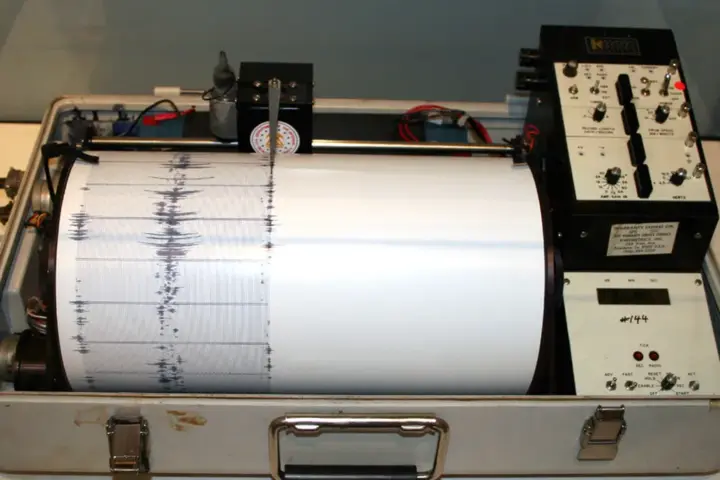
Most physical constants—like the speed of light or the electron’s electric charge—have been measured to extreme precision across multiple independent labs with consistent results. Big G is different. NIST explains that measuring it requires detecting an extraordinarily small gravitational attraction between objects in a laboratory setting. Those measurements are extremely sensitive to environmental interference: seismic vibrations, temperature changes, and the gravitational pull of nearby structures. NIST notes that an overlooked experimental error remains the most likely explanation for the persistent discrepancy, but the mystery remains unresolved.
For a broader introduction to physical constants and how they are measured, see . For background on NIST’s role in precision measurement science, see .
NIST’s April 2026 experiment replicated the BIPM torsion-balance approach with modifications, using cylindrical test masses. The result adds to a collection of published G measurements that show differing values—a pattern the physics community has not yet fully explained. Future experiments using alternative methods, including atom interferometry approaches, may help resolve the discrepancy.
Why is the gravitational constant G so hard to measure?
Unlike most physical constants, G is determined by detecting a tiny gravitational attraction between laboratory objects. The measurement is extremely sensitive to environmental interference—including seismic vibration, temperature, and nearby structures. Independent labs using different methods consistently produce slightly different results, a discrepancy that remains unresolved. NIST says an overlooked experimental error is the most likely explanation.
The NIST April 2026 result is published in the journal Metrologia and available through the NIST website.